

She didn’t run. That’s what made it feel unfamiliar at first. No packed bags, no burning bridges, no dramatic exit framed as destiny calling louder than everything else. While the world kept repeating the same myth—that to become something, you must abandon everything—she stayed. And in that stillness, something quietly radical began to take shape.
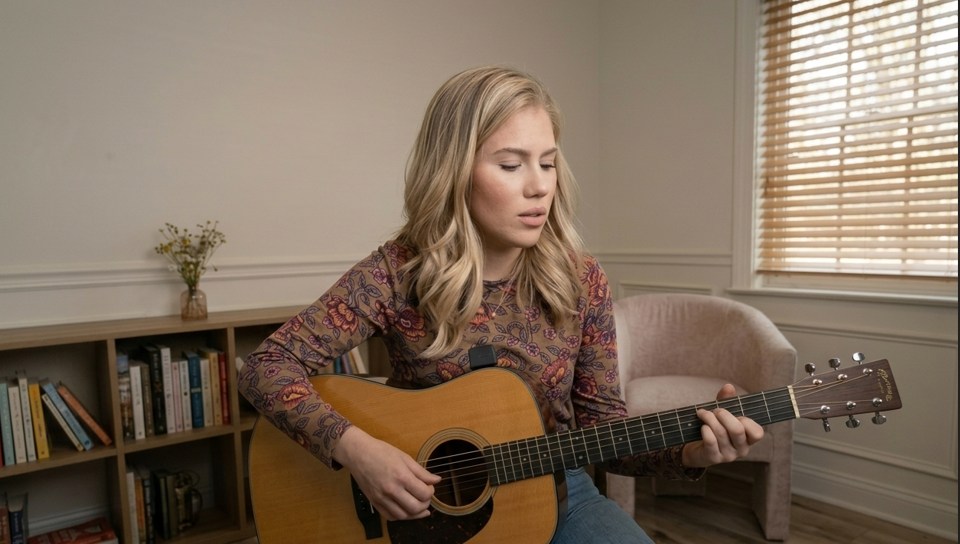
Her life didn’t pause for music. It moved with it. The dishes still needed washing, the conversations still unfolded at the dinner table, the ordinary rhythms of living remained untouched. But somewhere between those moments, melodies started threading themselves into the fabric of her days—not as interruptions, but as extensions.
This is where the rebellion lives. Not in noise, but in refusal. A refusal to accept that passion must come at the cost of presence. A refusal to believe that artistry demands exile from the very life that shapes it. She didn’t escape her world to create—she created because she was fully inside it.
There’s a quiet courage in choosing integration over escape. Because escape is easier to romanticize. It comes with a script, a narrative people understand. Integration doesn’t. It looks messy. It looks slow. It looks like someone daring to believe that fulfillment doesn’t have to be singular.
In her world, music wasn’t a destination—it was a companion. It didn’t ask her to become someone else. It asked her to listen more closely to who she already was. And that subtle shift changed everything. Because when art grows from lived reality, it carries a kind of truth that can’t be manufactured.
What she built wasn’t just a sound—it was a new model. One where life isn’t something you sacrifice for art, but something that deepens it. Where experience isn’t a distraction, but the very source of meaning. Where the chaos, the tenderness, the repetition of daily existence all become part of the composition.
This path doesn’t scream for attention. It doesn’t fit neatly into headlines about overnight success or dramatic transformation. But it lingers. It resonates. Because it reflects something many people feel but rarely see represented—the desire to pursue something deeply without losing everything else in the process.

There is something profoundly human about that. To want both. To refuse the binary choice between living and creating. To believe that a full life and a meaningful craft can coexist, not as competitors, but as collaborators.
And maybe that’s why her story feels different. Not because it’s louder, but because it’s quieter. Not because it breaks the rules in obvious ways, but because it gently rewrites them without asking for permission.
In the end, her rebellion isn’t about music at all. It’s about redefining what it means to follow something you love—without leaving yourself behind.