
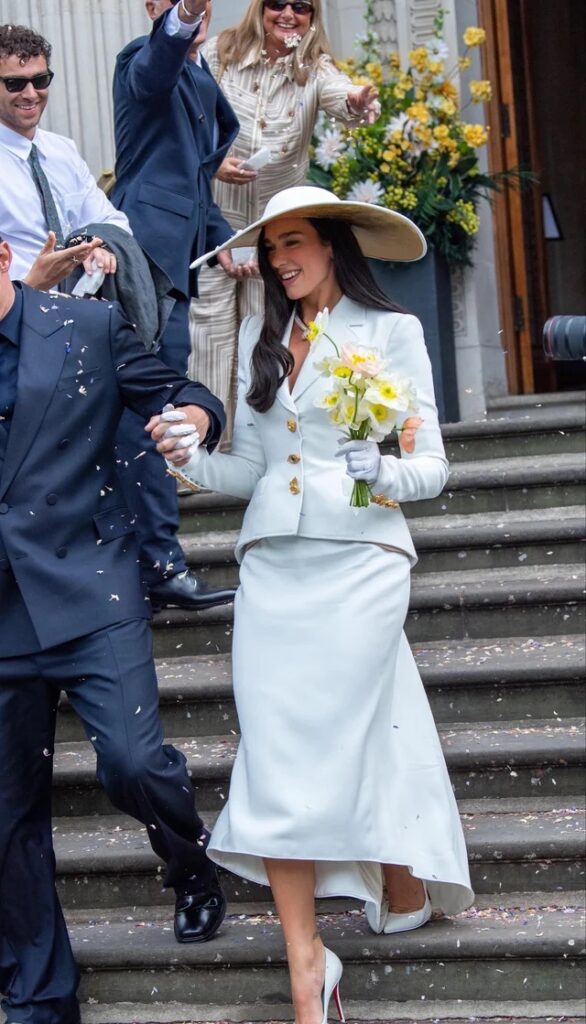
For most celebrities, a wedding is often treated as a public event before it is ever allowed to become a private one. Every detail is scrutinized, every photograph analyzed, and every guest list transformed into a headline. Yet when global pop sensation Dua Lipa and acclaimed actor Callum Turner legally married in London, they chose something remarkably different. There were no flashing cameras outside a grand venue, no extravagant displays, and no carefully orchestrated media spectacle. Instead, there were just eight witnesses, a bouquet of yellow flowers, and a quiet civil ceremony that seemed almost impossible to imagine for two people whose lives are constantly lived under public observation.
The contrast is what makes the story so compelling. Dua Lipa is one of the most recognizable artists on the planet, performing before massive crowds and commanding attention wherever she goes. Her career exists in an ecosystem where visibility is currency. Yet when it came to one of the most significant moments of her life, she intentionally stepped away from the spotlight. The decision feels less like a rejection of fame and more like a reminder that even the most public figures still crave spaces that belong only to them.
What makes this choice particularly fascinating is that Dua herself has spoken about the complexities of privacy. In interviews, she has acknowledged feeling conflicted about keeping parts of her relationship hidden from fans. There is often an unspoken expectation that celebrities share everything, especially in an era where social media rewards constant access. Fans are invited into homes, vacations, and relationships, creating a sense of intimacy that can blur the boundaries between admiration and entitlement. Against that backdrop, a wedding with only eight witnesses becomes a powerful statement.
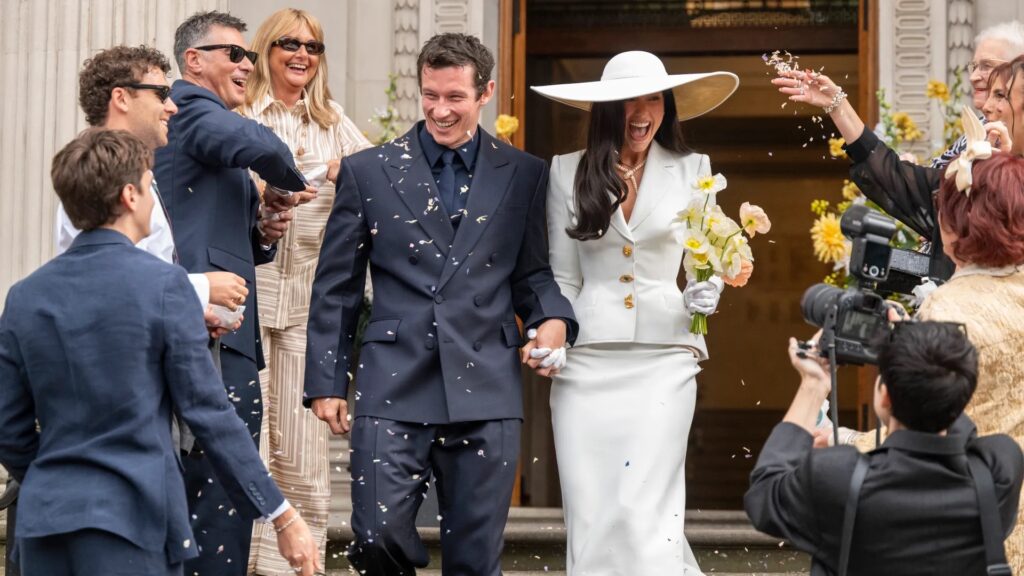
The simplicity of the ceremony carries a symbolism that extends beyond celebrity culture. Weddings have increasingly become performances of their own, documented through countless photographs, videos, and posts. For many people, the pressure to create a picture-perfect event can overshadow the actual purpose of the day. By stripping their legal ceremony down to its essentials, Dua Lipa and Callum Turner appeared to focus on the commitment itself rather than the presentation of it. The marriage came first; the spectacle, if any, could wait.
That does not mean there will be no celebration. Reports suggest a larger three-day gathering in Palermo, Sicily, is planned, offering friends and family an opportunity to celebrate in a more festive setting. Yet even this detail reinforces the distinction between the public and the personal. The legal moment—the one that officially changed their lives—was reserved for an intimate circle. The celebration can be shared later, but the promise remained protected.
There is also a deeper psychological dimension to this decision. Public figures spend much of their lives existing as brands. Every appearance, interview, and social media post contributes to a narrative consumed by millions. Over time, maintaining ownership of personal experiences becomes increasingly difficult. Choosing privacy in such circumstances is not merely about avoiding attention; it is about preserving authenticity. Some memories lose their meaning when they become content before they have been fully lived.
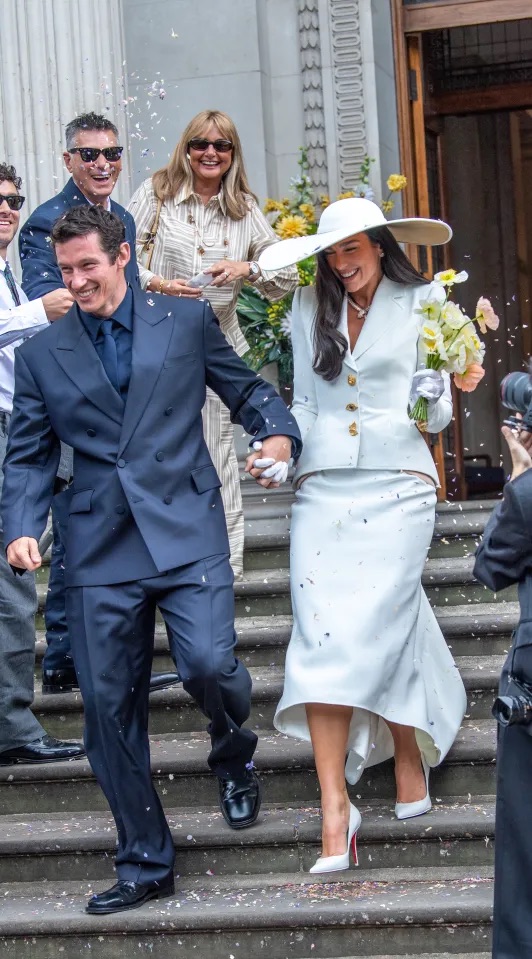
In many ways, the wedding reflects a growing cultural shift. Across industries, more public figures are becoming selective about what they reveal. Audiences may feel closer to celebrities than ever before, but many stars are recognizing the value of boundaries. True intimacy often requires exclusion. Not every meaningful moment benefits from an audience, no matter how supportive that audience may be. Privacy is increasingly viewed not as secrecy, but as a form of self-preservation.
The image of a simple bouquet of yellow flowers is particularly striking within this narrative. In a world accustomed to luxury and excess, such details feel refreshingly human. The flowers become a symbol of restraint, emphasizing emotion over extravagance. Rather than competing for headlines through grandeur, the ceremony captured attention precisely because it resisted the temptation to do so. Its power came from what it omitted.
Perhaps that is why people are so captivated by the story. It offers a rare glimpse into something genuine. At a time when nearly every life event can be transformed into a carefully curated online moment, there is something unexpectedly moving about a couple choosing to keep a milestone mostly to themselves. The decision reminds us that significance is not measured by audience size. Sometimes the moments that matter most are the ones witnessed by the fewest people.
Ultimately, the wedding of Dua Lipa and Callum Turner is not memorable because it was extravagant. It is memorable because it was intentional. It challenged assumptions about fame, visibility, and what modern love should look like under constant public scrutiny. While the world may eventually see photographs from larger celebrations, the quiet London ceremony has already left the stronger impression. In choosing a town hall over a stadium-sized spectacle, they demonstrated that even in the age of endless documentation, some moments are most meaningful when they remain beautifully private.