
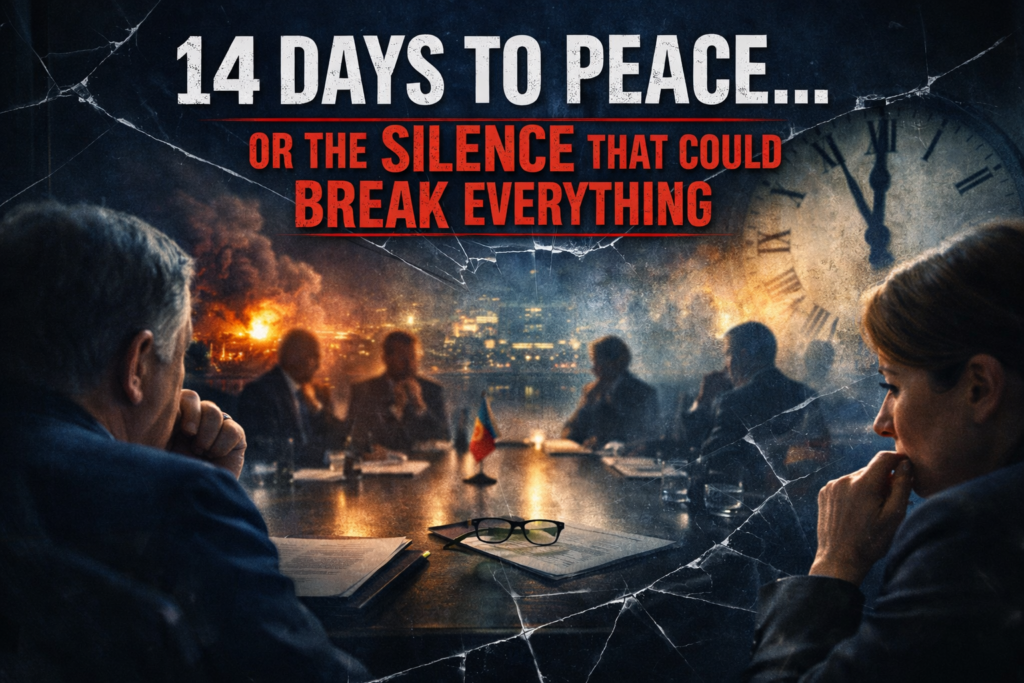
The world counts days. Fourteen, to be precise. Two weeks that sound deceptively short, yet stretch endlessly inside closed rooms where history is negotiated in whispers. Outside, headlines promise hope. Inside, uncertainty breathes heavily between every sentence left unfinished.
No cameras are allowed where peace is truly shaped. There are no grand speeches—only careful pauses, exchanged glances, and documents rewritten until meaning itself begins to blur. What the world calls “talks” is often a quiet battle of patience.
Sometimes, the most important moment is not when someone speaks—but when they stop. Silence, in diplomacy, is not absence. It is pressure. It is calculation. It is the unspoken question hanging in the air: who will break first?
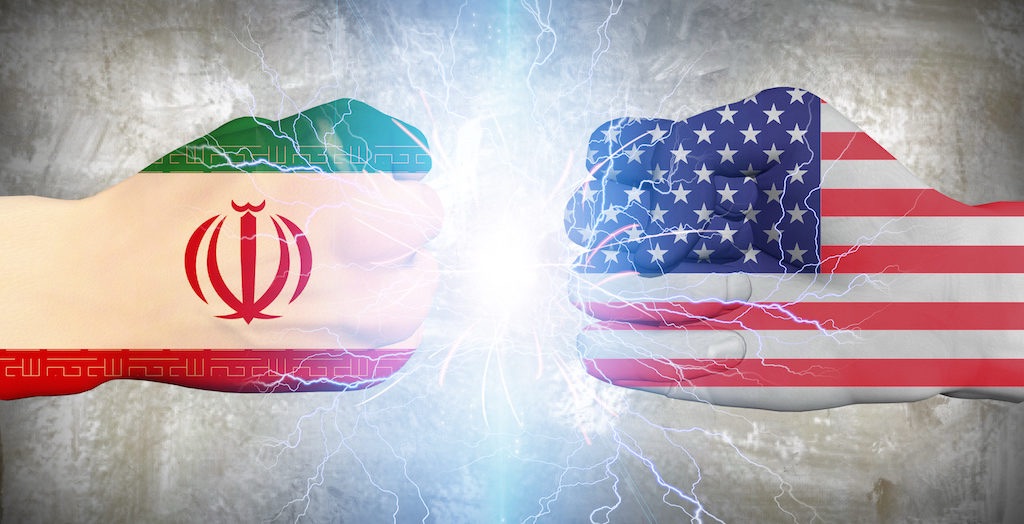
Deadlines, like this “two-week window,” are rarely about time. They are psychological instruments. They compress fear, urgency, and expectation into a ticking narrative that both sides must perform for—whether they believe in it or not.
Behind the official negotiators, there are shadows moving just as deliberately. Advisors who never appear in press briefings. Intelligence voices that reshape decisions overnight. Messages that travel through unofficial channels, carrying more weight than public declarations ever could.
And then there is language—the quiet battlefield no one sees. A single word can stall everything. “Withdrawal” feels like defeat. “Repositioning” feels like control. Peace, it turns out, is often held hostage by vocabulary.
While leaders speak confidently outside, inside the room, doubt lingers. Promises are made carefully, often with invisible conditions attached. Every agreement carries a second version—one spoken only in strategy, not sincerity.
There are also those who do not want peace. Not openly, not loudly—but effectively. For some, conflict is leverage. Stability removes advantage. These silent disruptors don’t sit at the table, yet their presence is felt in every hesitation.
What makes these two weeks fragile is not the absence of solutions—but the abundance of consequences. Every decision echoes beyond the room: into economies, alliances, and lives that will never know these conversations happened.
And so, the world waits. Watching statements, decoding gestures, searching for certainty where none exists. Because sometimes, peace is not decided by what is agreed upon—but by what remains unresolved, just beneath the surface.