
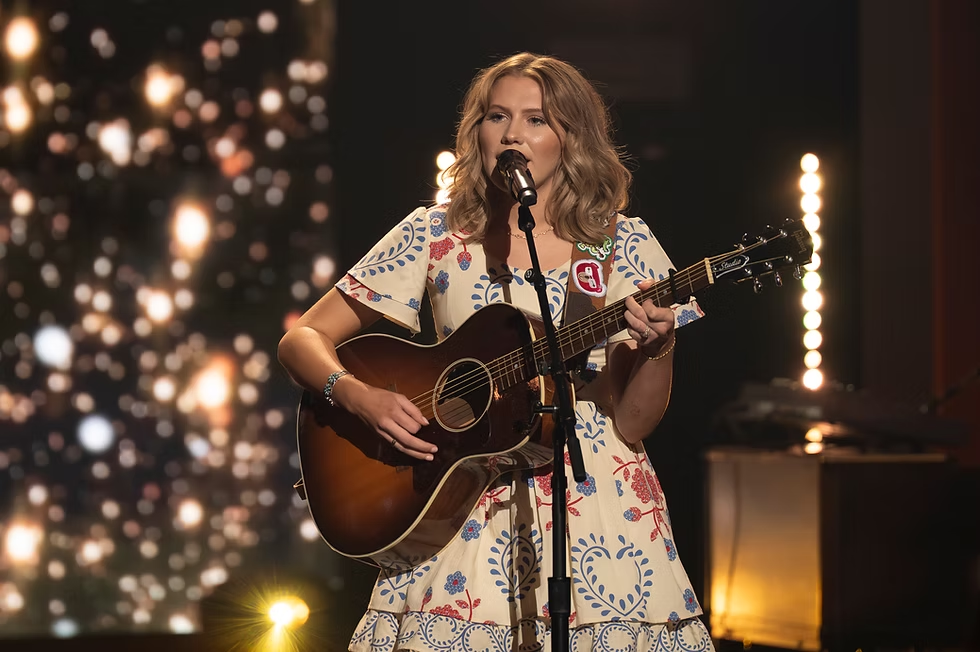
There are performances that arrive with noise—big notes, bigger reactions, and the kind of spectacle designed to leave no doubt. And then there are moments like this, the kind that slip in quietly, almost unnoticed at first. When Hannah Harper began her latest cover, it didn’t demand attention. It simply existed—soft, unguarded, and almost too simple to carry weight. But that simplicity was the point.
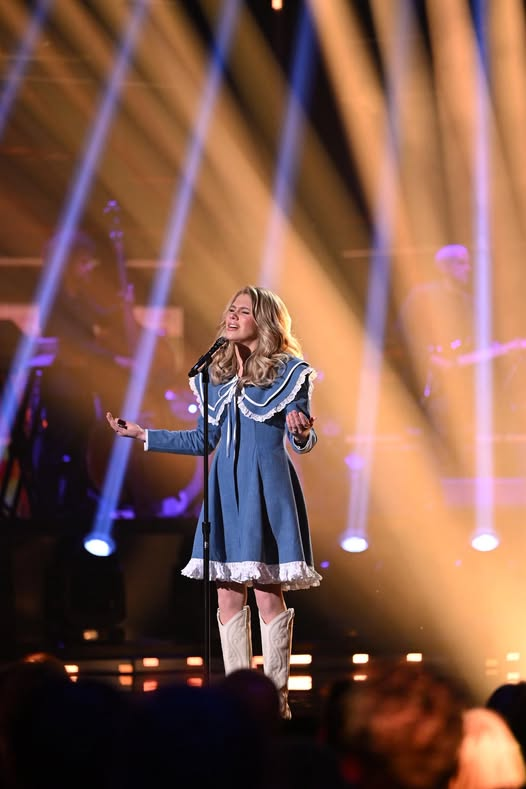
Because what she offered wasn’t performance in the traditional sense. It was presence.
From the very first line, there was no rush to impress, no urgency to prove anything. Her voice didn’t stretch for power—it settled into truth. Each lyric felt less like something sung and more like something lived. And in that stillness, something unusual began to happen: the room didn’t grow louder, it grew quieter. Not out of indifference, but out of recognition.
This is where most artists would build toward a moment. Hannah Harper did the opposite—she let the moment come to her.
There’s a rare kind of courage in holding back. In trusting that the smallest delivery can carry the deepest meaning. And that’s exactly what this performance became—a reflection of her belief that God’s presence isn’t found only in grand gestures or perfect settings, but in the ordinary, the overlooked, the spaces we often pass through without noticing.
You could feel that belief in the way she phrased every line.
Nothing felt forced. Nothing felt embellished. There were no unnecessary vocal runs, no dramatic pauses designed for applause. Instead, there was a steady, grounded honesty that made the song feel almost conversational—as if she wasn’t singing to an audience, but reminding them of something they already knew, something they may have forgotten.
And that’s when the shift happens.
Because somewhere between the quiet delivery and the unshaken sincerity, the song begins to land differently. What once sounded simple starts to feel intentional. What once seemed small begins to feel infinite. The lyrics, unchanged, suddenly carry new weight—not because they were altered, but because they were believed.
That belief is what separates this moment from so many others.
In a competition where voices are often measured by range, power, and precision, Hannah Harper is quietly redefining what impact looks like. She isn’t trying to out-sing the room. She’s inviting it to feel something deeper than sound—something closer to stillness, to reflection, to faith.
And that’s not easy to do.
It requires a kind of restraint that many performers never master. It asks for vulnerability without spectacle. It demands that you trust the audience enough to meet you in the quiet, rather than pulling them in with force. And somehow, she makes it feel effortless.
By the time the final note arrives, there’s no explosion of sound, no dramatic finish designed to overwhelm. Instead, there’s a lingering silence—the kind that doesn’t come from confusion, but from absorption. The kind that tells you something meaningful just passed through the room, and no one wants to interrupt it.
That silence says more than applause ever could.
Because in that moment, the song proves its point. It was never too simple. It was never lacking. It was waiting—for the right voice, the right belief, the right stillness to reveal what it had been holding all along.
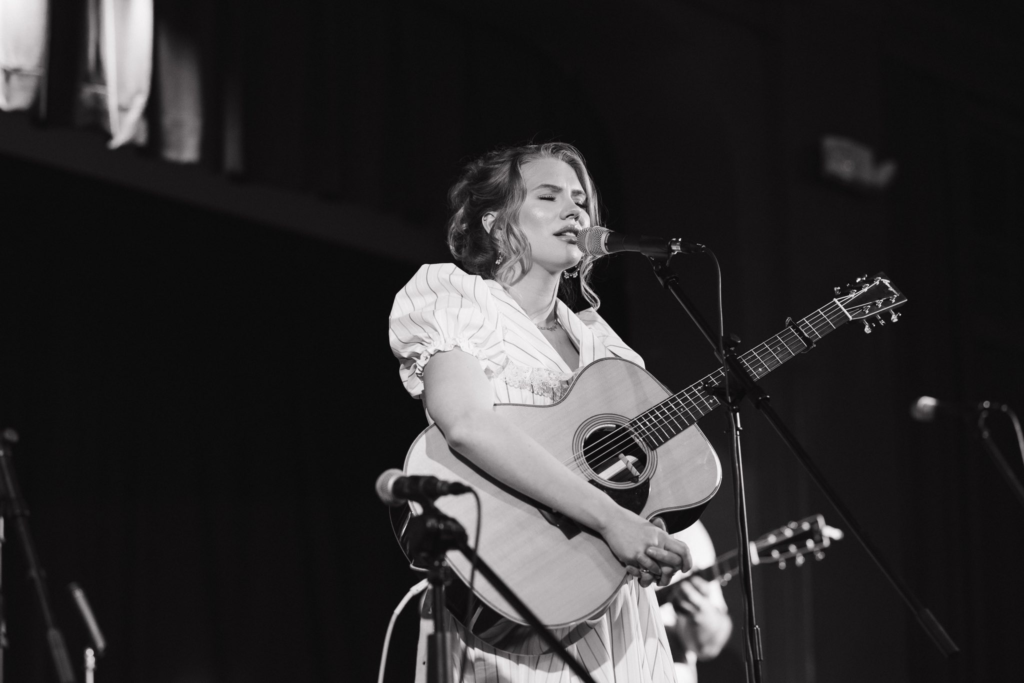
And through Hannah Harper, it finally did.
Not with power. Not with spectacle. But with something far more lasting—truth, carried gently enough that you almost miss it… until you don’t.