
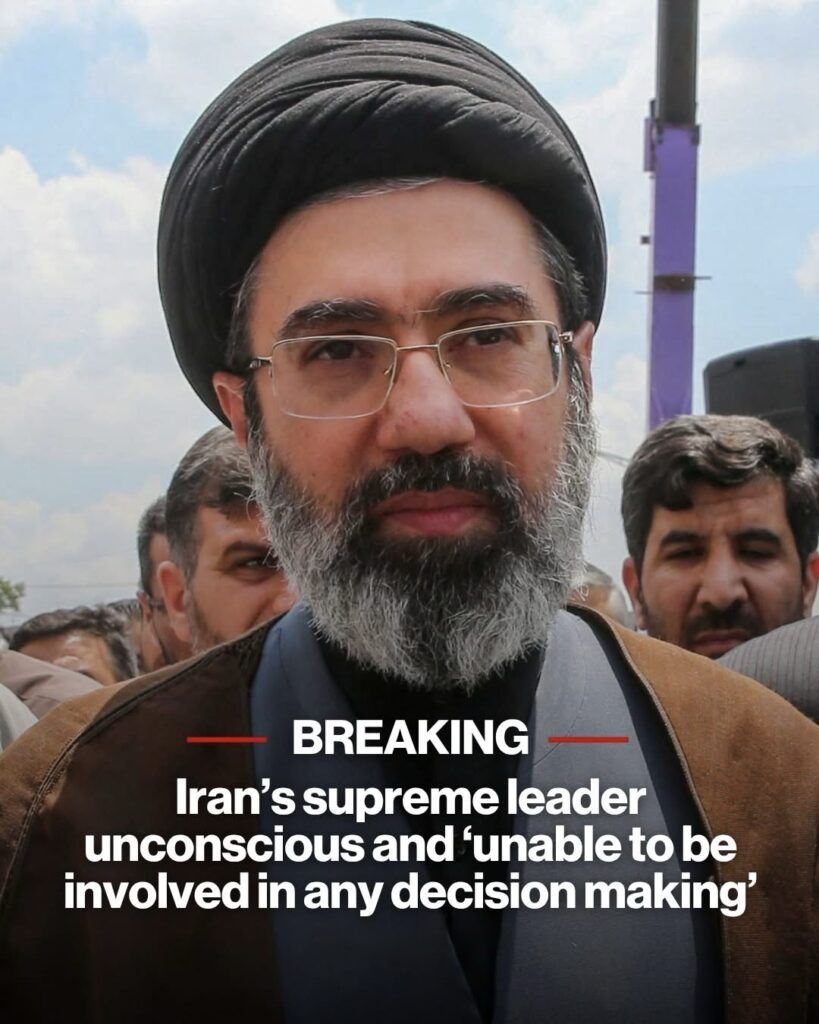
The room is silent, but the silence feels louder than any speech ever delivered. In a system built around the singular authority of Ali Khamenei, even the faintest suggestion of absence does not create emptiness—it creates tension. Not chaos, not yet—but a subtle, almost imperceptible shift in the air, as if the entire structure is holding its breath.
Power, in Iran, has never been just about presence. It is ritual, symbolism, and carefully maintained continuity. The Supreme Leader is not merely a decision-maker; he is a living embodiment of ideology. So when whispers emerge about incapacity, the question is not simply “who leads?”—it becomes far more unsettling: can the system function without its central symbol being visibly alive within it?
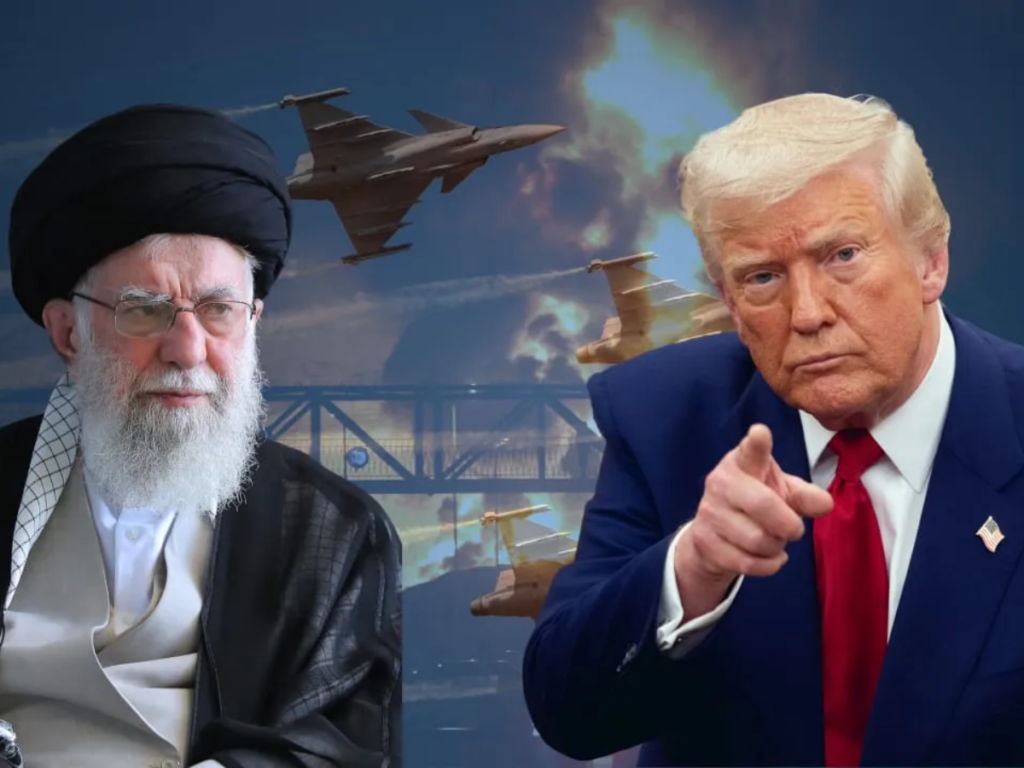
Behind closed doors, the machinery does not stop. It recalibrates. Committees meet. Advisors interpret. Signals are decoded from absence rather than speech. In this peculiar state, silence itself becomes policy. Every delayed statement, every unchanged routine, becomes a message—intentional or otherwise. Governance continues, but with a different kind of gravity.
There is a paradox at play. The stronger the centralized authority, the more fragile it appears when that authority becomes uncertain. Yet Iran’s system has been quietly engineered to resist visible fractures. Layers of institutions—clerical bodies, military leadership, political councils—form a web that can hold tension without tearing, at least for a while.
But beneath that surface lies a different story. Power, when not actively exercised, begins to redistribute itself in subtle ways. Influence shifts not through announcements, but through proximity. Who is consulted? Who speaks on behalf of whom? Who is suddenly more visible? These are the quiet indicators of a system negotiating with itself.
And then there is the public—watching, speculating, interpreting. In a world of instant information, even the absence of confirmation becomes a narrative of its own. People do not just consume news; they read between it. A missing appearance, a delayed address—these become fragments of a larger, unofficial story.
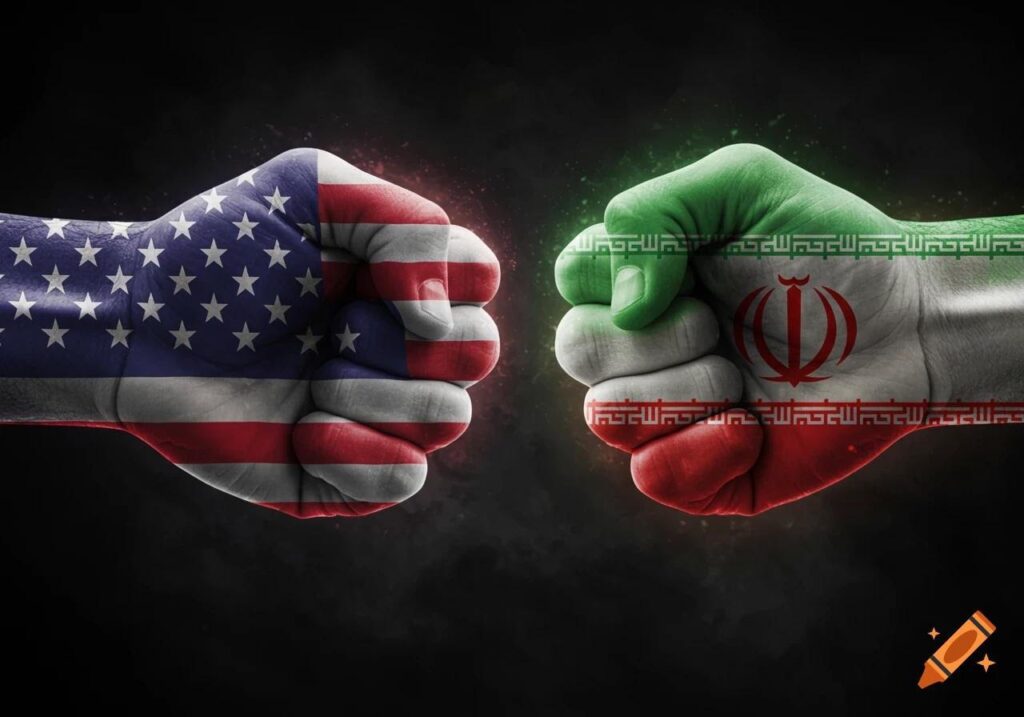
Globally, the silence echoes louder. Allies become cautious. Rivals become observant. Diplomacy, which often depends on clarity, now operates in a fog of interpretation. Every move from Iran is analyzed not just for what it is, but for what it might reveal about what is happening internally.
Yet, what makes this moment truly fascinating is not uncertainty—it is control. The system does not collapse into confusion; it adapts into ambiguity. It becomes deliberately unreadable, almost resistant to external interpretation. In that resistance lies a kind of strength, even as questions continue to grow.
History has shown that power structures rarely break in dramatic moments. They evolve quietly, almost invisibly, until one day the change feels inevitable. What we may be witnessing is not a crisis, but a transition disguised as stillness—a moment where everything appears unchanged, yet nothing is exactly the same.
And so, the silence continues. Not empty, not passive—but filled with decisions we cannot hear, movements we cannot see, and a future that is already being shaped behind closed doors. In the absence of a voice, the system speaks in its own language—and the world listens, trying to understand what it is saying without saying anything at all.