
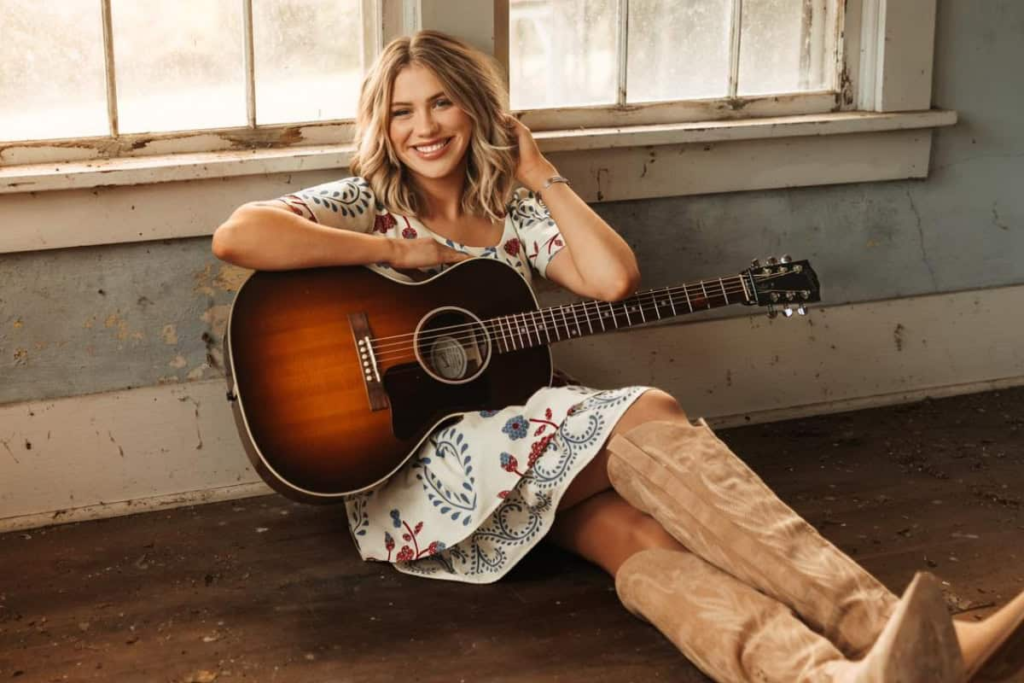
There are performances on American Idol that win applause, and then there are moments that spark questions no one expected to ask. When Hannah Harper stepped onto the stage for Judges’ Pick night, it wasn’t just another round—it felt like something quietly shifting beneath the surface.
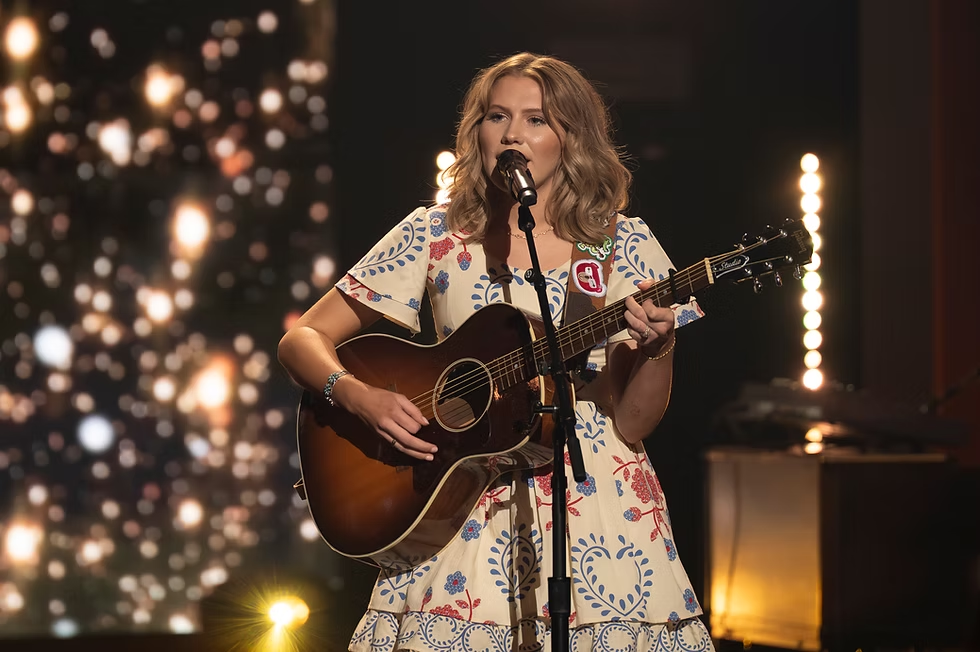
She chose “Heads Carolina, Tails California,” a song already rich with nostalgia, but what she delivered wasn’t a simple tribute. It felt lived-in. Personal. As if every lyric had passed through her own story before reaching the audience.
From the first note, there was a difference.
Harper didn’t perform the song—she carried it. Her tone held a softness that drew people in, but beneath it was control, a kind of steady confidence that never needed to prove itself. It was subtle, but undeniable.
And then came the reaction that changed everything.
Luke Bryan didn’t just applaud. He stood. And he didn’t sit back down.
Through the entire performance, he remained on his feet, fully present in a way that felt less like judging and more like witnessing. By the time the final note faded, his words came quickly—almost too quickly to filter. He called it his favorite song choice ever. He praised her voice with a kind of admiration that didn’t sound rehearsed.
And that’s when the conversation began.
Because fans noticed.
It wasn’t just what he said—it was how he said it. The tone, the energy, the visible pride in his expression. Social media didn’t take long to react, filling with comments that blurred the line between admiration and curiosity. Some called it pure respect for artistry. Others leaned into something more playful, asking the question now echoing everywhere: Was there something more in that moment?
But here’s where the story becomes more interesting.
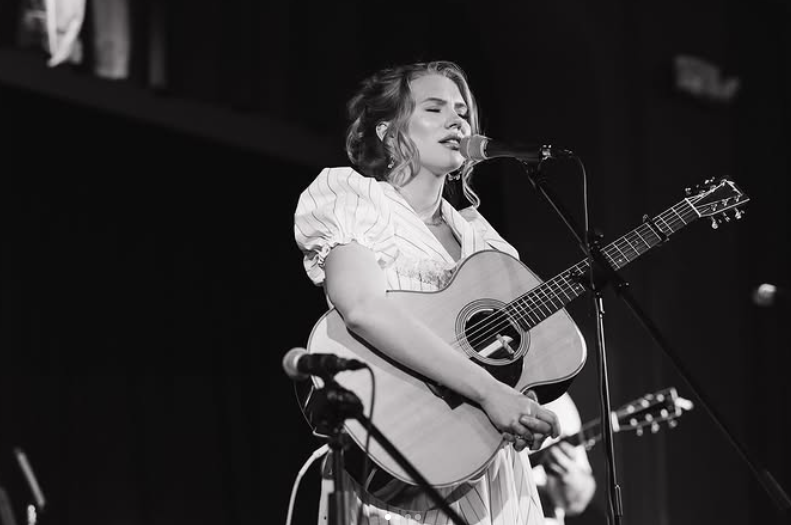
Because what people are really reacting to might not be chemistry—it might be recognition.
Luke Bryan has spent years in country music, surrounded by voices that chase perfection. But Harper represents something different. A mother of three, grounded in real life, bringing a voice shaped by experience rather than industry polish. There’s an honesty in that kind of artistry that can catch even seasoned performers off guard.
And maybe that’s what he responded to.
Not just a great performance—but a rare one.
You could see it ripple across the judging panel. There wasn’t immediate critique, no rush to analyze technique. Instead, there was a pause—a shared understanding that what they had just heard wasn’t easily reduced to feedback.
Meanwhile, the audience felt it too.
The applause didn’t feel routine. It built from a place of realization, as if people needed a moment to catch up to what had just happened. By the time it reached its peak, it wasn’t just appreciation—it was acknowledgment.
And still, the question lingers.
Was it chemistry? Or was it something deeper—an artist recognizing another artist in a moment that couldn’t be manufactured?
Because sometimes, what looks like connection isn’t about romance or attention. Sometimes, it’s about truth meeting someone who knows how rare that truth really is.
For Hannah Harper, this moment may end up meaning more than just another successful performance.
It may mark the point where she stopped being seen as a contestant—and started being seen as something far more lasting.
And for Luke Bryan, whether intentional or not, his reaction may have revealed something equally important: that even in a competition built on judgment, there are still moments powerful enough to leave even the judges without one.
Now fans are watching more closely than ever.
Not just for the performances, but for the moments in between—the glances, the reactions, the unspoken language that unfolds when something real breaks through the structure of the show.
Because whether it was chemistry or simply recognition… one thing is certain.
That night didn’t just spark applause.
It sparked a question no one can seem to stop asking.