
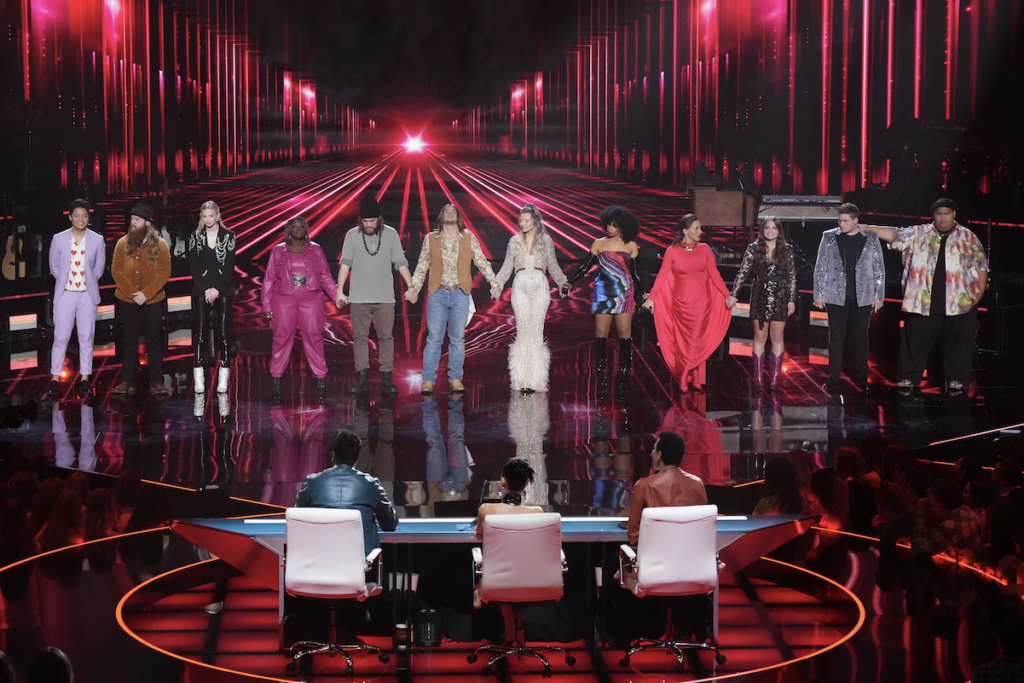
There are seasons of television that entertain—and then there are seasons that remember. This year of American Idol is doing something far rarer than spectacle. It is reaching back into something deeply rooted, something worn and honest, something that doesn’t need to shout to be heard. And somehow, in the middle of flashing lights and modern expectations, country music has found its way back to center stage.
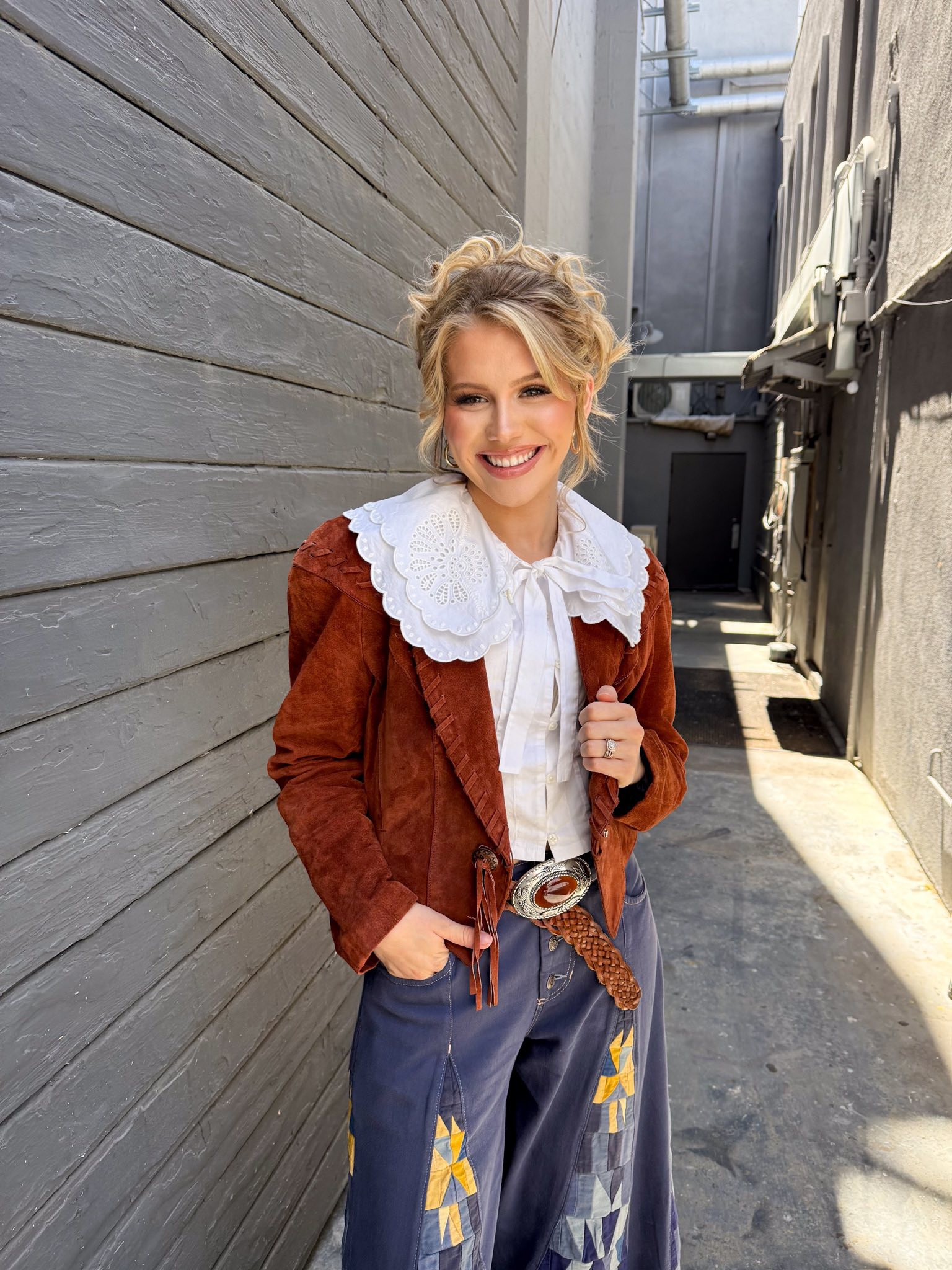
Not loudly. Not forcefully. But undeniably.
The Top 11 feels less like a competition and more like a quiet revival of storytelling. Each performance carries not just a melody, but a memory—of gravel roads, of front porch evenings, of songs passed down rather than manufactured. And in that space, a few voices are beginning to stand apart not because they are louder, but because they are truer.
At the heart of it all stands Hannah Harper—a presence that doesn’t chase the moment, but becomes it. When she stepped into Heads Carolina, Tails California, originally by Jo Dee Messina, it could have easily been just another cover. But it wasn’t. There was something in the way she carried the song—less like a performance, more like a return. A return to where country music breathes, where it lives quietly in the spaces between words.
It wasn’t perfect. And that’s exactly why it worked.
Because country music has never been about perfection. It’s about recognition. And in those few minutes, people didn’t just hear Hannah—they recognized something in themselves.
But she isn’t alone in this quiet resurgence.
Lucas Leon brought something equally grounded with It’s Your Love, a song immortalized by Tim McGraw and Faith Hill. His delivery didn’t try to reinvent the song. Instead, it respected it. There’s a discipline in that—a rare understanding that sometimes the most powerful thing a singer can do is step aside and let the song speak for itself.

And in doing so, he reminded the audience why that song has lasted as long as it has.
Then there is Jordan McCullough—a name that may not dominate headlines, but quietly anchors the show in something older than trends. His connection to Tennessee roots music doesn’t feel like branding. It feels lived-in. Every note he sings carries the weight of influence, of tradition, of something inherited rather than learned overnight.
He doesn’t perform country music. He belongs to it.
And just when you think the lane couldn’t deepen any further, Braden Rumfelt steps in with something even more elemental—bluegrass-gospel authenticity. There’s a rawness in his artistry that resists polish, and that resistance is precisely what makes it compelling. In a competition that often rewards control, he offers conviction.
And conviction is harder to teach.
What makes this moment so powerful is not just that country music is present—it’s that it’s evolving without losing itself. These contestants are not imitating legends. They are extending them. Each performance feels like a thread being added to a much larger tapestry, one that began long before this stage and will continue long after.
This is not nostalgia. This is continuity.
The audience feels it, even if they can’t fully explain it. There’s a shift happening—not in votes or rankings, but in connection. Viewers are leaning in differently. Listening differently. Because in a world that often feels overproduced, these moments feel real.

And reality, when it’s honest, is magnetic.
As the competition moves forward, the question isn’t just who will make it to the finale. It’s something quieter, but far more meaningful: who will carry this sound forward? Who will take this fragile, powerful thing called country music and protect it—not by preserving it exactly as it was, but by allowing it to grow without losing its soul?
Because if this Top 11 has proven anything, it’s this—
Country music was never gone.
It was just waiting for the right voices to bring it home again.