

Most people assume votes are decided at the end of a performance. They imagine viewers waiting for the final note, the climactic run, the judge reactions, or the closing camera shot before making up their minds. It sounds logical. But in many talent competitions, decisions are often made much earlier. Sometimes the audience knows by the halfway mark. Sometimes by the first chorus. Sometimes by a single moment so subtle it barely registers consciously. By the time the last note arrives, the real decision has already been made. Hannah’s rise may be a perfect example of that hidden phenomenon.
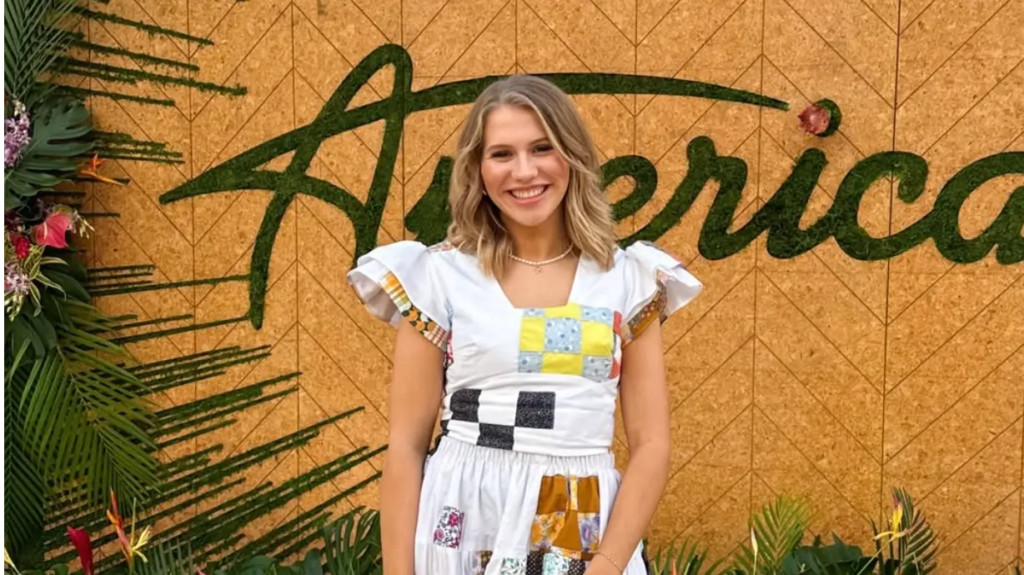
This can be called mid-performance emotional lock-in—the point where viewers stop evaluating and start believing. Before that moment, they are comparing contestants, noticing flaws, judging nerves, measuring vocals, and deciding who feels strongest. After it, the internal conversation changes. They are no longer asking, “Was that good?” They are asking, “How far can this person go?” That shift is powerful because once belief begins, later imperfections are often interpreted more generously.
Emotional lock-in does not require perfection. In fact, it often happens before the biggest vocal moment. It occurs when something deeper lands: sincerity, identity, vulnerability, command, relatability, or narrative payoff. The audience senses they are not merely watching a contestant perform—they are watching a contender arrive. That recognition can happen in seconds, and once it does, momentum becomes difficult to reverse.
Hannah’s rise may be tied to her ability to create that switch earlier than many realize. Some contestants save everything for the ending, hoping the final thirty seconds erase a forgettable beginning. Others understand that the first half of a performance is where trust is built. If Hannah captures viewers emotionally before the song reaches its peak, then the climax becomes confirmation rather than rescue.
One common trigger for emotional lock-in is authenticity. Audiences are highly sensitive to when someone feels real. A contestant can sing impressively while still seeming distant. Another can sing less aggressively but feel instantly human. When viewers sense honesty in tone, expression, or presence, they relax into support. If Hannah projects sincerity early, she may win hearts before technical comparisons fully begin.
Another trigger is control. Not flashy control, but calm command. Some contestants enter performances visibly trying to prove themselves. That effort can create tension in viewers. Others step into the song as though they belong there already. The room feels safer in their hands. If Hannah carries that kind of grounded confidence, audiences may decide mid-performance that she is someone worth backing.
Song interpretation also matters. Familiar songs often risk predictability, but a fresh emotional angle can create instant buy-in. If Hannah takes a known lyric and suddenly makes it feel personal, viewers experience surprise and connection simultaneously. That combination is potent. They no longer hear a cover—they hear a person telling the truth through borrowed words.
Micro-moments often seal momentum. A held pause before a line. Eye contact into the camera at the exact right lyric. A breath that sounds vulnerable rather than rehearsed. A smile after tension. A still posture when everyone else would choose theatrics. These moments are small enough to miss analytically but strong enough to feel emotionally. Hannah’s rise may be built on repeatedly winning those invisible battles.
Once lock-in happens, the audience begins protecting the contestant psychologically. They forgive minor pitch issues. They reinterpret nervousness as charm. They view risks as bravery rather than mistakes. This is not irrational—it is human. People support those they believe in differently than those they are still testing. If Hannah consistently reaches that threshold early, she gains more than applause; she gains margin.
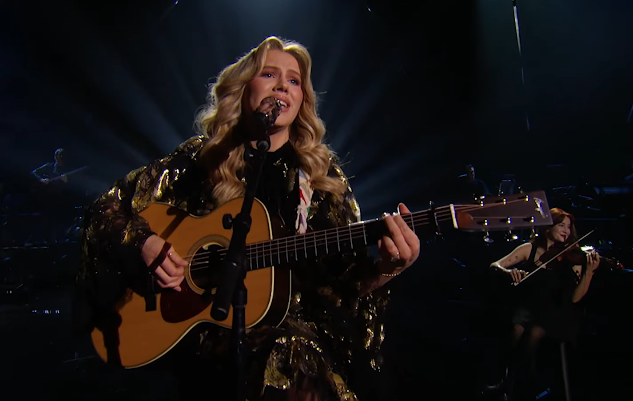
Momentum also compounds across weeks. A contestant who repeatedly creates mid-performance lock-in becomes associated with certainty. Viewers start expecting to feel something before the performance even begins. That anticipation becomes its own advantage. They watch with openness rather than skepticism. Hannah’s rise may therefore be more than one strong night—it may be the result of trust built through repeated emotional conversions.
There is a strategic lesson here many contestants miss. They chase endings because endings are visible. Big notes trend online. Judge standing ovations clip well. But audiences live through the whole performance in real time. If the first half fails to create connection, the final flourish can feel like decoration on an empty structure. Hannah may understand that momentum is built earlier, in quieter places.
This does not mean endings do not matter. They do. A strong finish can crystallize emotion and send viewers to vote with urgency. But endings work best when the audience has already decided internally. Then the final note becomes a release of feelings already formed. Without that earlier bond, even a spectacular ending may feel impressive but transactional.
There is also something psychologically satisfying about deciding before the end. It allows viewers to feel instinctive, perceptive, even loyal. They like sensing potential before it is officially validated. Supporting someone mid-performance feels like recognizing truth early. If Hannah inspires that response, she turns audiences from judges into allies.
So what is the momentum behind Hannah’s rise? It may be less about explosive finishes and more about early emotional capture. She may be winning the room before the room realizes it has chosen her. By the time the last note arrives, many viewers are no longer deciding whether to vote—they are simply waiting for permission to do what they already wanted.
That is the hidden power of mid-performance emotional lock-in. It changes voting from analysis into momentum, from comparison into conviction. And once a contestant consistently creates that feeling, results stop looking surprising. They start looking inevitable.