

Every public voting competition has forces operating beneath the surface. Some are obvious: talent, stage presence, momentum, storytelling, judge praise. Others are quieter but equally powerful. One of the strongest is familiarity bias—the human tendency to prefer what already feels known, comfortable, and emotionally accessible. In music competitions, this often appears through song choice. When a contestant selects a song audiences already love, they are not starting from zero. They are stepping onto emotional ground the audience has walked before. Hannah seems to understand that advantage—but more importantly, she appears to have used it without disappearing inside it.
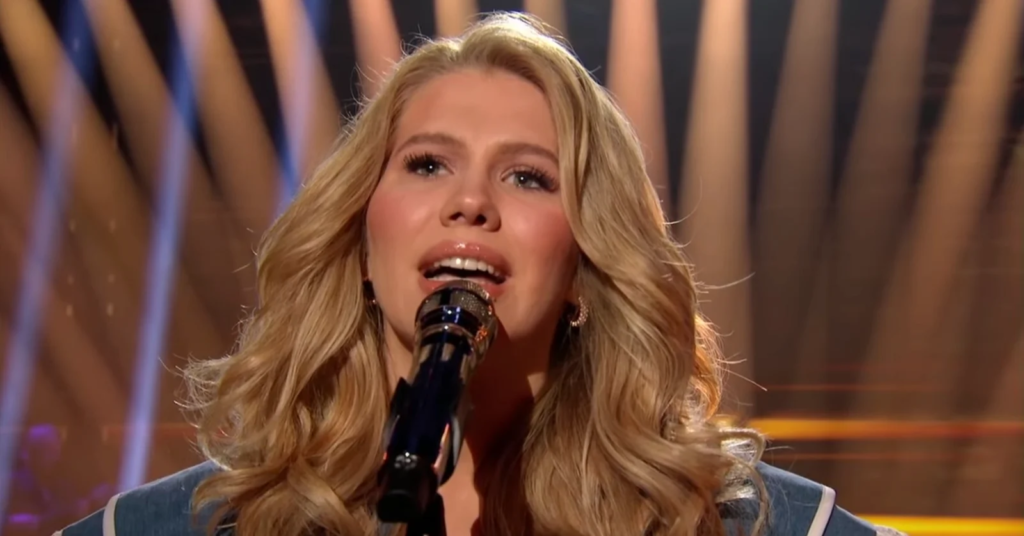
Familiarity bias is not necessarily manipulation. It is psychology. People trust what they recognize. A known melody lowers resistance. A beloved lyric arrives with built-in memory. Viewers who may be hearing ten performances in one night suddenly relax when the first lines of a familiar song begin. They lean in faster. They compare less harshly at first. They already know where the emotional peaks are supposed to be. That recognition can become a competitive edge before the contestant even sings the second verse.
This is why song choice is rarely just artistic—it is strategic. An unfamiliar masterpiece may showcase taste but ask more effort from viewers. A familiar hit gives immediate entry. Audiences do not need to learn the melody, decode the structure, or decide how they feel about the material. They already know. In a fast-paced voting format, ease matters. The contestant who removes friction often gains precious seconds of emotional attention.
But familiarity carries danger. A famous song arrives with expectations, comparisons, and memory. Sing it too safely, and you sound generic. Mimic the original, and you vanish into someone else’s shadow. Overcorrect too aggressively, and you lose the qualities that made the song beloved in the first place. It is one of the hardest balances in performance: use recognition as a bridge without letting it become a cage.
That is where Hannah’s approach becomes interesting. She may have benefited from familiar material while still preserving a clear sense of self. Instead of treating the song as a museum piece, she may have treated it as a conversation. The melody remained recognizable, but the emotional lens changed. The lyrics still landed where audiences expected, but the feeling behind them belonged to her. This is how identity survives familiarity.
One way artists do this is through phrasing. The notes may remain intact, yet the timing shifts subtly. A pause before a line. A softer attack on a famous lyric. A held word where the original moved quickly. These micro-decisions tell audiences: you know this song, but you have not heard this person inside it before. If Hannah made those choices well, viewers would receive both comfort and novelty at once—a potent combination.
Tone is another tool. Two singers can perform the same song and create entirely different emotional climates. A powerful anthem can become intimate. A heartbreak ballad can become quietly resilient. A nostalgic classic can feel newly wounded or newly hopeful depending on vocal texture alone. If Hannah’s tone carries warmth, restraint, or sincerity distinct from the source version, then familiarity becomes a canvas rather than a limitation.
There is also the matter of identity consistency. Contestants often lose themselves chasing what they think voters want. One week they become edgy, next week theatrical, next week sentimental. Viewers struggle to locate who the artist actually is. Hannah may have avoided this trap by filtering known songs through a stable artistic personality. Whether the material was big, soft, classic, or contemporary, the audience could still recognize her inside it.

That recognition is crucial. Familiarity bias works best when there are two layers of comfort operating simultaneously: comfort with the song and comfort with the contestant. If viewers know the melody and also feel they know the artist’s style, trust compounds. The performance feels easier to support because nothing about it feels random. Hannah may have built exactly that kind of cumulative trust.
Another overlooked advantage of known songs is communal memory. People attach personal stories to music—road trips, heartbreaks, weddings, childhood rooms, late-night drives. When a contestant performs a beloved song well, they are not only singing to the room; they are activating private archives in every listener. But to truly benefit, the performer must handle that memory respectfully. If Hannah approached familiar songs with emotional honesty instead of gimmickry, she likely invited viewers into their own memories while still introducing herself.
This is why generic performances fail even with strong song choices. Recognition may win the first ten seconds, but identity wins the rest. Once the initial thrill of “I know this song!” fades, audiences ask deeper questions. Why this version? Why this artist? What did they reveal that was not already there? Hannah’s success may suggest she had answers to those questions embedded in the performance itself.
There is also maturity in knowing not every song needs reinvention through theatrics. Some contestants mistake originality for shock. They radically rearrange classics simply to appear bold. But true originality often lives in emotional perspective rather than structural change. Singing a known song plainly but truthfully can feel fresher than a dramatic rearrangement with no inner logic. Hannah may have understood that authenticity is more memorable than unnecessary disruption.
Voting audiences reward that instinct. They appreciate contestants who know how to play the game without looking consumed by it. Choosing a familiar song can be smart strategy. Choosing it while still sounding unmistakably like yourself is smarter. It suggests not only competitiveness, but artistry. It says the contestant understands psychology without sacrificing identity to it.
So did Hannah use familiarity bias? Quite possibly. But the more impressive part is how she may have used it cleanly. She accepted the advantage of recognition while refusing the trap of sameness. She let the audience meet her through songs they already trusted.
That is a rare skill in competition settings and an even rarer skill in long-term artistry. Because trends change, audiences shift, and strategy eventually expires. Identity is what remains. If Hannah can keep pairing smart choices with a recognizable self, then familiar songs were never the whole story. They were simply the doorway.