
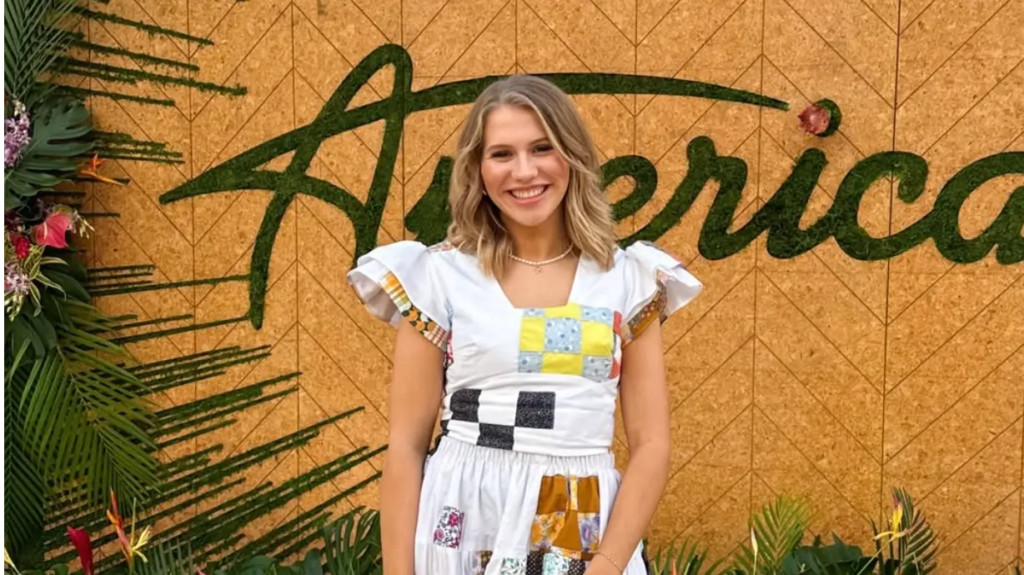
There are moments in life that never make headlines. They don’t come with applause, cameras, or dramatic music in the background. They happen in silence—inside parked cars, behind closed doors, in the space between fear and courage. For Hannah Harper, one of those moments nearly changed everything. Before the audition that would place her name in front of millions through American Idol, she almost didn’t walk in.

It’s the kind of confession that lands differently because it feels so human. Fans often see the polished version of success—the stage lights, the cheers, the emotional reactions, the life-changing opportunities. What they rarely see is the hesitation that comes first. Harper recently shared that on the day of her audition, the pressure became overwhelming. Sitting outside, heart racing, responsibilities heavy on her shoulders, she considered turning around and going home.
And why wouldn’t she? She wasn’t just chasing a dream for herself. She was a young mother of three, carrying the invisible weight that so many parents know well. Dreams don’t disappear when children arrive, but they often become quieter. They wait behind grocery lists, school schedules, bills, exhaustion, and the daily work of caring for others. Somewhere in that reality, Harper still held onto music—but even hope can feel fragile when real life is loud.
Then came the doubt. That familiar inner voice that shows up right before important moments. The one that says maybe you’re not ready. Maybe now isn’t the time. Maybe someone else deserves it more. Maybe you’ve waited too long. Maybe this is foolish. It is the voice that has stopped countless people from stepping toward the very thing meant for them. And for a moment, it almost stopped Hannah Harper too.
What makes her story powerful is not that she never doubted herself. It’s that she doubted herself and went in anyway.
That distinction matters. Too many people believe courage looks fearless. It doesn’t. Courage often looks like shaking hands, watery eyes, second thoughts, and still opening the door. It looks like taking one step while uncertainty walks beside you. Harper didn’t enter that audition room because she felt unstoppable. She entered because somewhere beneath the fear, something stronger whispered back.
Imagine how different life might have been if she had listened only to fear that day. No audition. No unforgettable introduction. No fans connecting with her journey. No example for other parents wondering if their dreams expired when responsibility arrived. One decision—small on the outside, enormous on the inside—stood between the life she knew and the life waiting for her.
That is why people connect so deeply with stories like hers. They recognize themselves in them. Most people have their own version of that parked car moment. A job application left unsent. A call never made. A class never joined. A business idea delayed. A talent hidden. A chapter postponed because the timing felt imperfect. Harper’s story reminds us that life can turn not only on grand gestures, but on quiet choices made in ordinary places.

There is also something deeply moving about the image of a mother carrying dreams into a room where many might assume she no longer belonged. Society often celebrates ambition until it comes wrapped in diapers, responsibilities, and fatigue. Then it asks people—especially women—to shrink their desires. Harper’s decision challenged that expectation. She showed that motherhood and aspiration are not opposites. They can walk side by side.
Success stories usually begin where the audience starts watching. But the real beginning is often earlier—when no one is looking, when the person is scared, when quitting feels reasonable. That was Hannah Harper’s true first performance: not the audition itself, but the battle she won in silence before she ever sang a note.
And perhaps that is the lesson fans didn’t expect to receive from her revelation. The biggest turning points rarely announce themselves. They arrive disguised as uncomfortable moments that ask one question: will you go in, or will you drive away?
Hannah Harper went in.
Because of that, the world heard her voice. But more importantly, people heard something else too—the sound of a person refusing to let doubt write the ending. And somewhere today, someone standing outside their own opportunity may need to hear that story more than any song.