
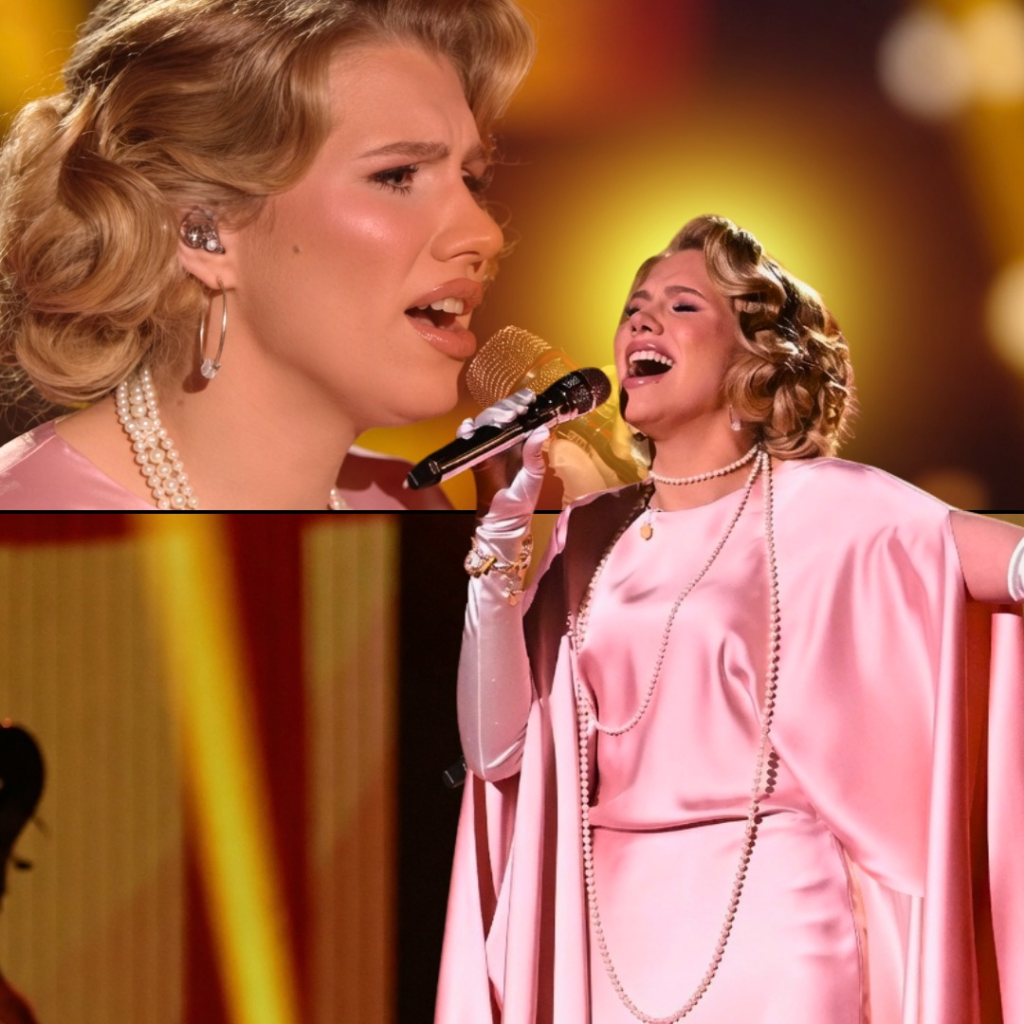
There are moments in competition television when a contestant sings well, earns praise, and moves on. Then there are moments when something deeper happens—when a performer turns criticism into fuel and transforms public doubt into undeniable growth. Hannah Harper’s Disney Night performance was one of those moments. It was not simply another song on another episode. It was a response, a reckoning, and for many viewers, a breakthrough.
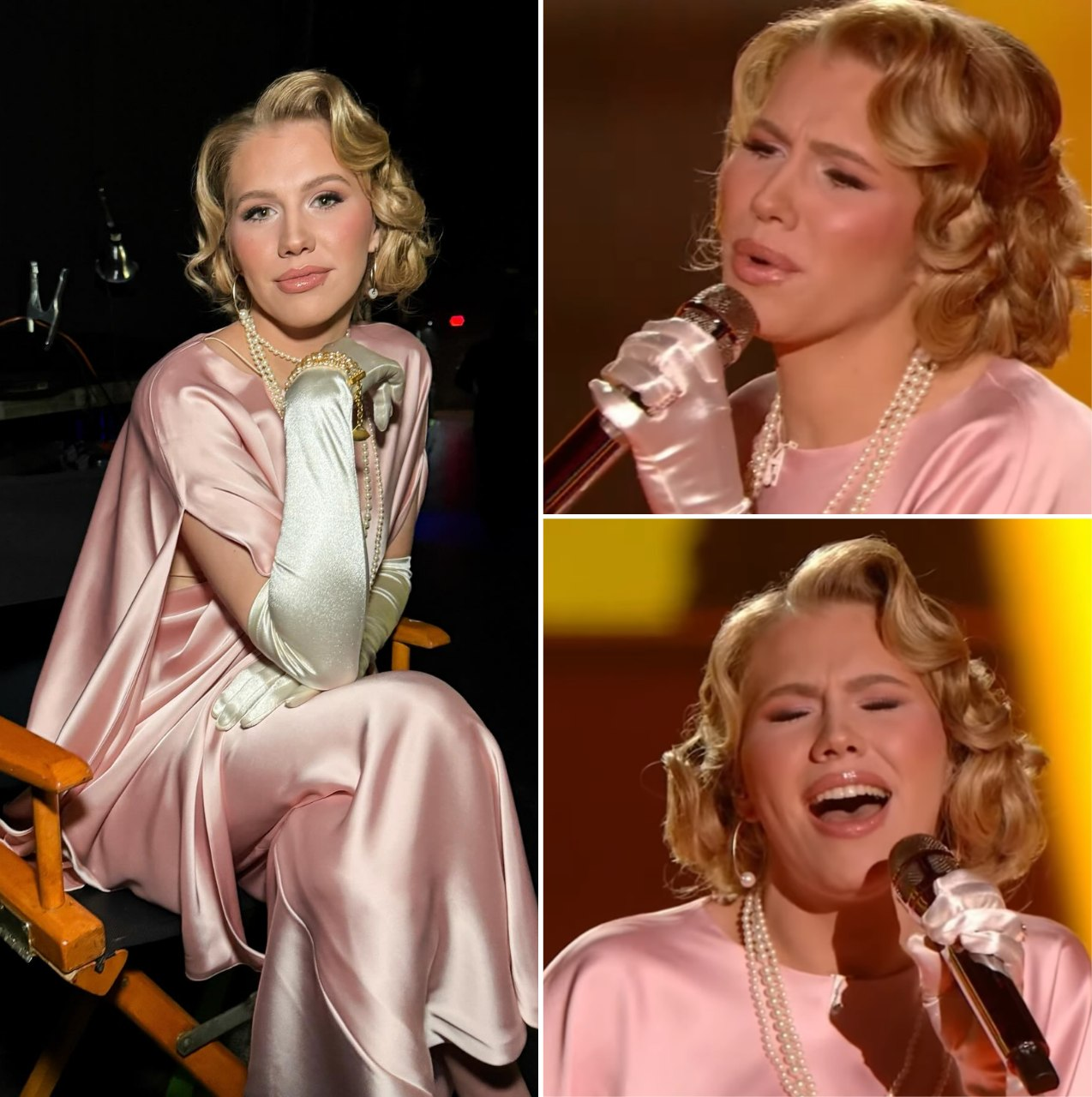
Before Disney Night, Hannah carried a criticism that followed her louder than applause. Many acknowledged her voice, but questioned everything around it. The label was blunt and repeated often: she can sing, but she cannot perform. In entertainment, that kind of statement can be difficult to shake. It challenges not just technique, but identity. It tells an artist that talent alone may not be enough.
What made Hannah’s story compelling was that she did not run from the criticism. She did not deny it, excuse it, or blame nerves without reflection. Instead, she openly admitted that during her earlier performance of Heads Carolina, Tails California, she froze under pressure. That kind of honesty is rare in a world where image often comes first. Rather than protecting herself with polished answers, she chose truth.
That decision changed everything.
Audiences can be tough on contestants, but they also recognize humility. When someone owns a weakness and works to improve it, people pay attention differently. Hannah understood that if the criticism was about performance, then the next stage had to become the answer. Disney Night was not just another opportunity—it was her chance to rewrite the narrative.
To prepare, Hannah worked closely with Jennifer Hudson, whose own career has long balanced powerhouse vocals with commanding presence. The guidance she received was refreshingly simple: make it feel like home. Those words mattered because stage presence cannot survive when it feels borrowed. Movement that is forced looks unnatural. Confidence that is copied rarely lasts. Hannah needed to find a version of performance that belonged to her.
And when she stepped onto the stage to perform Almost There, it was clear something had shifted.
She did not begin with oversized gestures or theatrical desperation. She started with control. There was restraint in the opening moments, as if she understood that growth does not need to announce itself immediately. Then, little by little, she opened up. Her body language softened. Her expressions became freer. Her movement matched the rhythm instead of competing with it. It felt less like someone trying to perform and more like someone finally allowing herself to be seen.
That gradual transformation became the performance’s most powerful element.
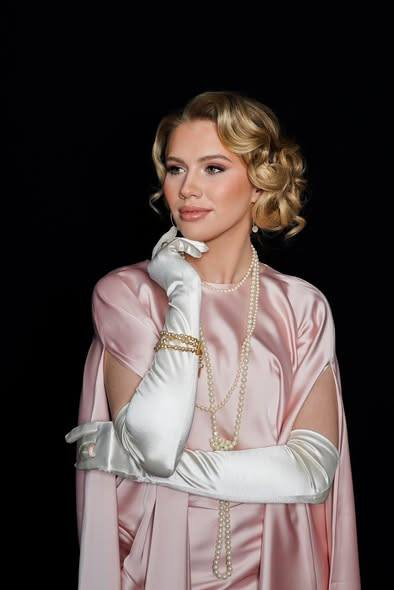
By the middle of the song, viewers could sense a new confidence emerging. Hannah was no longer standing inside the fear of getting it wrong. She was stepping into the joy of getting it right. The audience responded because authenticity often lands stronger than perfection. Every smile, every shift across the stage, every lifted phrase seemed to say the same thing: I am not hiding anymore.
By the final note, she had fully claimed the moment.
This is where redemption stories become memorable—not when someone avoids failure, but when they grow through it publicly. Hannah’s earlier struggles gave this success emotional weight. If she had always been polished, Disney Night would have been impressive. Because she had stumbled before, it became inspiring.
The judges recognized it instantly.
Luke Bryan called the performance a personal favorite, a strong endorsement on a night filled with competition. Carrie Underwood, who knows firsthand how artists evolve under public scrutiny, saw echoes of her own journey in Hannah’s progress. Lionel Richie noticed the change as well, acknowledging the visible evolution in front of him. Their reactions were not just about vocals. They were responding to development, resilience, and self-discovery.
What made their praise meaningful was that it reflected something audiences had also witnessed in real time. Hannah did not merely perform better. She seemed freer. And freedom on stage is often the final barrier contestants spend entire seasons trying to break.
There is a lesson in why this resonated so strongly. Viewers are not only searching for flawless singers. They are drawn to stories of becoming. They want to watch people confront fear, sharpen themselves, and return stronger. Hannah Harper gave them that story in one performance. She turned critique into momentum and vulnerability into connection.
The internet often moves quickly to judge. Labels are assigned in seconds and repeated endlessly. But growth rarely happens at internet speed. It happens in rehearsal rooms, in uncomfortable reflection, in choosing honesty after disappointment, and in walking back onto the stage despite knowing people doubt you.
That is exactly what Hannah did.
Disney Night may be remembered for costumes, nostalgia, and big performances, but for many viewers, it belonged to Hannah Harper. Not because she was flawless, but because she was brave enough to evolve where everyone could see it. She entered carrying criticism. She left carrying momentum.
Critics spoke first.
Hannah Harper finished the story.