
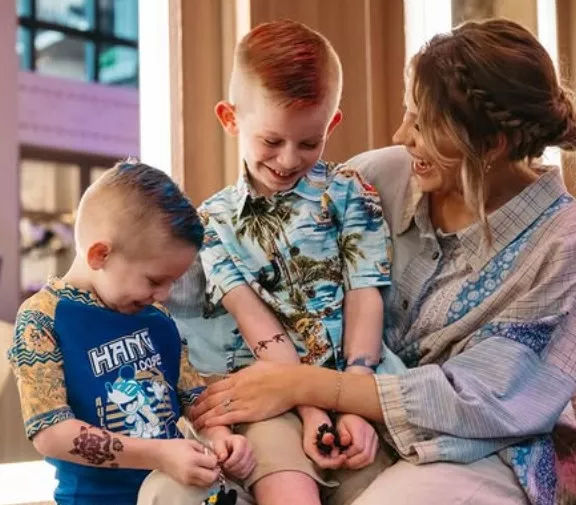
The first thing people noticed about Hannah Harper wasn’t the voice. It was the life attached to it. Three children. A marriage built through struggle. Church harmonies and bluegrass roots stitched into everyday survival. She didn’t walk into the spotlight carrying the usual Nashville mythology of perfect branding and curated mystery. She arrived looking like someone who still had laundry waiting at home. And somehow, that honesty made people stop scrolling.
At a time when country music often feels trapped between commercial polish and algorithmic trends, Hannah appeared almost out of place. No manufactured rebellion. No carefully sharpened persona. Just a woman singing stories that sounded painfully lived-in. Her performances didn’t feel engineered for virality. They felt like conversations overheard through a half-open kitchen door late at night when nobody has the energy left to pretend they’re okay.
What separated Hannah from many rising artists wasn’t perfection. It was recognition. Women saw themselves in her exhaustion. Mothers recognized the invisible emotional labor woven into her lyrics. Even people outside country music felt something unexpectedly human in the way she carried herself. She wasn’t presenting a fantasy. She was presenting survival, and audiences starving for authenticity responded immediately.
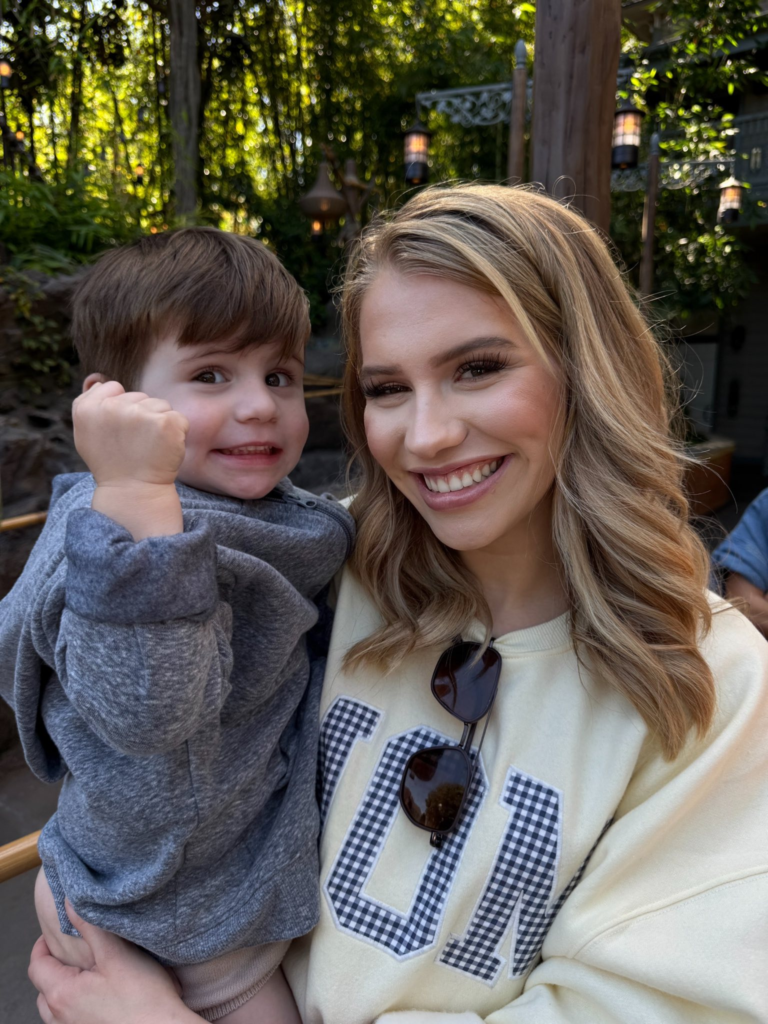
Then came the song about postpartum depression.
Not hinted at. Not softened for comfort. She sang about it directly, with the kind of vulnerability mainstream entertainment usually edits out before airtime. In a genre historically built on toughness and resilience, Hannah introduced something different: emotional exposure without shame. Suddenly, conversations around her weren’t just about vocals anymore. They became discussions about motherhood, mental health, sacrifice, and the hidden loneliness sitting inside many American homes.
That shift changed everything.
Because once audiences emotionally attach themselves to an artist’s reality, the music stops functioning as background noise. It becomes personal. Hannah’s rise wasn’t powered by spectacle. It was powered by emotional recognition. Fans didn’t simply admire her talent; they defended her existence inside an industry that often rewards image before substance. The more grounded she appeared, the more magnetic she became.
Ironically, the very qualities that once looked commercially risky became her greatest advantage. Her lack of polish began to feel revolutionary. While other artists chased crossover aesthetics and social-media perfection, Hannah leaned further into stillness, storytelling, and emotional clarity. She reminded audiences that country music was originally built on ordinary people carrying extraordinary emotional weight.
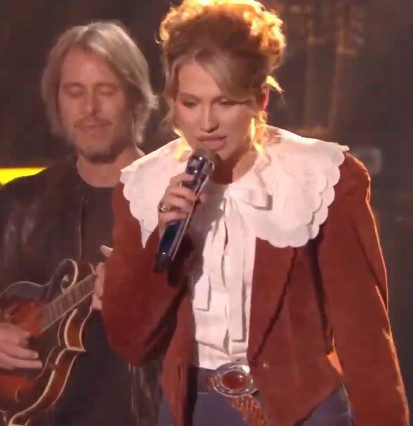
And perhaps that explains why her performances linger longer than louder competitors. Hannah doesn’t perform like someone trying to become famous. She performs like someone trying to tell the truth before the moment disappears. That difference changes the energy in the room. Viewers sense it immediately. You can hear it in the silence after certain notes land—the kind of silence created when people suddenly feel exposed themselves.
There is also something culturally symbolic happening around her rise. Hannah Harper represents a growing exhaustion with overly curated celebrity culture. Audiences no longer fully trust perfection. They trust fracture. They trust visible humanity. In many ways, her popularity says as much about modern America as it does about music itself. People are searching for figures who still feel reachable, recognizable, emotionally intact beneath the spotlight.
What makes her story especially compelling is that none of this appears calculated. Hannah doesn’t move like someone executing a branding strategy. She moves like someone balancing real life while accidentally becoming a national conversation. That tension—between domestic normalcy and sudden visibility—is what gives her narrative unusual emotional gravity. She never abandoned her identity to fit the stage. The stage adjusted itself around her instead.
And maybe that’s why so many people can’t stop watching. Not because Hannah Harper feels larger than life, but because she feels astonishingly close to it. In an era filled with carefully manufactured stars, she arrived carrying motherhood, exhaustion, faith, struggle, and honesty all at once. Somehow, against every modern industry expectation, that became more powerful than polish ever could.