
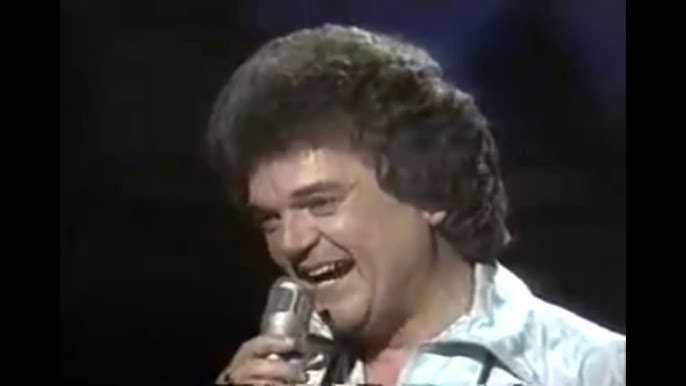
There are singers who become famous, and then there are singers whose voices seem to become part of the memories of an entire generation. Conway Twitty belonged to the second group. With a voice that could sound powerful one moment and deeply vulnerable the next, Twitty built a remarkable career by singing about the emotions people often struggle to put into words. Love, loneliness, desire, regret, heartbreak, and hope became the foundation of a musical legacy that continues to resonate decades after his passing.
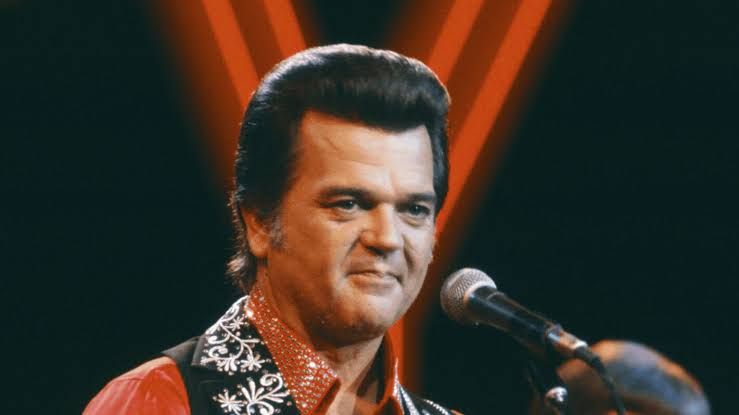
Born Harold Lloyd Jenkins in 1933, Conway Twitty did not begin his career as a country music icon. His earliest success came through rock and roll, a genre that was rapidly transforming American popular music during the 1950s. In 1958, he achieved a major breakthrough with “It’s Only Make Believe,” a song that demonstrated his extraordinary ability to connect with listeners. The success introduced him to a huge audience and established him as a performer capable of crossing musical boundaries.
But Twitty’s greatest chapter was still ahead. As his career developed, he gradually moved toward country music, a transition that would ultimately define his identity as an artist. His powerful yet warm vocal style seemed perfectly suited to country storytelling. Rather than simply singing words written on a page, Twitty had a way of making every lyric feel personal—as if the story belonged to him and, somehow, to the person listening.
By the 1970s, Twitty had become one of country music’s biggest stars. His catalog was filled with songs that explored the complicated side of relationships. He understood that love was rarely simple. Sometimes it was exciting, sometimes painful, and sometimes impossible to let go of. Songs such as “Hello Darlin’,” “You’ve Never Been This Far Before,” “Linda on My Mind,” and “Tight Fittin’ Jeans” helped establish the sound and image that audiences came to associate with him.
Perhaps what made Twitty particularly special was his understanding of emotional storytelling. His songs did not need extravagant production or complicated concepts to make an impact. A few carefully chosen words, a memorable melody, and that unmistakable voice were often enough. He could take an ordinary situation—a goodbye, a difficult relationship, a memory of someone who was gone—and turn it into something that felt deeply personal.
Twitty’s musical legacy also became closely connected with another legendary country performer, Loretta Lynn. Their partnership produced some of the most memorable country duets of their era. Songs such as “After the Fire Is Gone,” “Lead Me On,” and “Louisiana Woman, Mississippi Man” showcased the chemistry between their voices. Their recordings were not simply collaborations; they captured the tension, emotion, and storytelling that made classic country duets so compelling.
Behind the success was an extraordinary recording career. Twitty accumulated more than 50 No. 1 country hits, an achievement that places him among the genre’s most commercially successful performers. Yet numbers alone cannot explain why his music has endured. Charts can measure popularity, but they cannot measure the feeling a song leaves behind. Twitty’s greatest strength was his ability to make listeners believe that he understood the emotions they were experiencing themselves.
His influence extended beyond the traditional boundaries of country music. Having experienced success in both rock and roll and country, Twitty demonstrated that an artist did not necessarily have to remain confined to one musical identity. His career reflected the changing nature of American popular music, while his country recordings helped shape the romantic and emotionally driven sound that became enormously popular with audiences.
Then, in 1993, the story came to a sudden end. Conway Twitty died on June 5, 1993, at the age of 59, leaving behind a career that had already transformed him into a country music institution. His passing was a profound loss for fans and fellow musicians, but his recordings ensured that his voice would not disappear. Every time one of his classic songs plays, a piece of his artistic personality returns with it.
Recognition of Twitty’s contribution continued after his death. In 1999, he was inducted into the Country Music Hall of Fame, cementing his place among the most important figures in country music history. The honor reflected more than his commercial achievements; it recognized an artist whose voice, songwriting choices, performances, and emotional honesty had left a lasting impression on the genre.
Today, Conway Twitty’s music still carries an unusual ability to stop people in their tracks. The world around the listener may have changed completely, but the emotions inside his songs remain familiar. That is perhaps the greatest achievement an entertainer can hope for—not simply to be remembered, but to remain felt. Twitty understood that the most powerful songs are often the ones that tell us something about ourselves.
Conway Twitty’s journey from rock-and-roll performer to country music legend is ultimately a story about reinvention, emotion, and connection. He did not merely collect hit records; he created a body of music that became part of people’s lives. His voice gave heartbreak a sound, gave romance a language, and gave countless listeners a place to recognize their own stories. Decades after his final performance, Conway Twitty remains more than a name in country music history—he remains a voice people still remember when the heart has something it needs to say.