
Some victories are measured in trophies. Others are measured in the quiet moments that change a person forever. For elite race car drivers, speed has always been tied to obsession — the endless hunger to shave milliseconds off a lap, the willingness to sacrifice comfort, relationships, and even peace of mind for one perfect Sunday. But something unusual has happened in recent years. A surprising number of drivers have delivered career-defining performances shortly after becoming fathers. To outsiders, it sounds backwards. Parenthood should slow someone down. Sleepless nights, emotional responsibility, and the chaos of raising a child should weaken competitive focus. Yet for some athletes, fatherhood has unlocked a new kind of strength.
There is a psychological shift that happens when a man becomes responsible for someone beyond himself. In racing, where fear and pressure constantly collide at 200 miles per hour, that emotional transformation can alter the way a driver performs under stress. Before fatherhood, many athletes race with desperation. They need validation. They chase legacy like it is oxygen. Every mistake feels catastrophic because their identity depends entirely on winning. But after becoming fathers, some drivers stop racing from a place of fear. They begin racing from a place of purpose. That subtle difference changes everything.

Sports psychologists have quietly studied this phenomenon for years. Athletes who become parents often report improved emotional regulation, better patience, and a healthier relationship with failure. In motorsport, where panic destroys precision, emotional balance is priceless. A father may still crave victory, but he no longer views defeat as personal annihilation. Ironically, the less emotionally consumed a driver becomes by winning, the more freely he performs. Confidence becomes calmer. Decision-making sharpens. The steering wheel feels lighter in the hands of someone who no longer carries the burden of proving his worth to the world.
Fans rarely see this side of racing because the sport sells aggression, rivalry, and ego. Cameras focus on champagne celebrations and dramatic crashes, not on the exhausted father quietly video-calling his newborn before climbing into the cockpit. Yet behind many great performances are deeply personal emotional changes. Drivers often describe becoming more grounded after fatherhood. Suddenly, the chaos of competition becomes smaller than life itself. Media criticism hurts less. Online hatred matters less. The race no longer defines the man. And paradoxically, that emotional freedom can create the clearest mindset an athlete has ever experienced.

There is also a biological reality many people overlook. Fatherhood can trigger dramatic hormonal and neurological shifts in men. Studies suggest involved fathers often experience changes in testosterone and increased emotional responsiveness. While that may sound unrelated to racing, emotional intelligence plays a massive role in elite performance. Drivers must manage frustration, interpret danger instantly, and communicate effectively with teams under extreme stress. A calmer nervous system can mean faster recovery after setbacks and smarter decisions during crucial moments on track. The stereotype that great racers must be emotionally reckless is slowly being dismantled.
What makes this story resonate beyond sports is how universal the emotional journey feels. Millions of fathers understand the strange transformation that comes with holding a child for the first time. Priorities rearrange themselves overnight. Ambition does not disappear, but it evolves. The need to succeed becomes connected to providing stability, creating pride, and leaving behind something meaningful. That emotional evolution mirrors what audiences crave in modern storytelling. People no longer connect solely with invincible superhumans. They connect with vulnerability. They connect with growth. They connect with the idea that becoming softer emotionally can sometimes make a person stronger professionally.
Racing culture itself has also changed. Decades ago, athletes were encouraged to hide family life because vulnerability was viewed as weakness. Today’s audiences want authenticity. They want to see the exhausted airport arrivals, the family embraces after brutal defeats, and the tiny headphones placed over a toddler’s ears in the pit lane. Fatherhood has humanized athletes who once seemed robotic. The modern sports fan is not only watching lap times anymore. They are following emotional arcs. They are investing in people. That is why stories about athletes becoming parents spread far beyond traditional fan circles.
Of course, fatherhood does not magically transform every athlete into a champion. For some drivers, the added emotional weight creates distraction and anxiety instead of clarity. The fear of danger becomes more intense when someone is waiting at home. Motorsport remains brutally unforgiving, and not every competitor responds to life changes in the same way. But the larger pattern remains fascinating because it contradicts everything society assumes about high performance. We are taught that ruthless obsession creates greatness. Yet again and again, some athletes become their best selves only after discovering something more important than their careers.
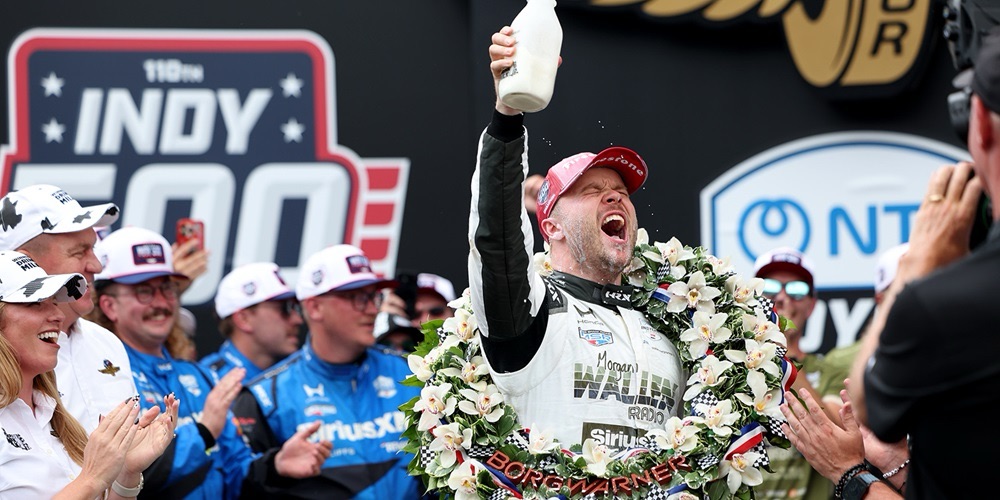
That contradiction is exactly why these stories stay with people. A driver standing on a podium after becoming a father is no longer just celebrating a race win. To many viewers, he represents a deeper fantasy — the hope that success and emotional fulfillment do not have to destroy each other. In a culture obsessed with burnout and relentless ambition, there is something deeply comforting about seeing someone become more complete as a human being and somehow more dangerous as a competitor at the same time.
Maybe that is the real secret behind why new dads sometimes win big races. It is not about superstitions or motivational clichés. It is about perspective. The moment life stops revolving entirely around personal achievement, pressure loosens its grip. Fear loses some of its power. The athlete becomes human first and competitor second. And sometimes, when a person finally stops racing only for themselves, they discover the fastest version of who they truly are.