
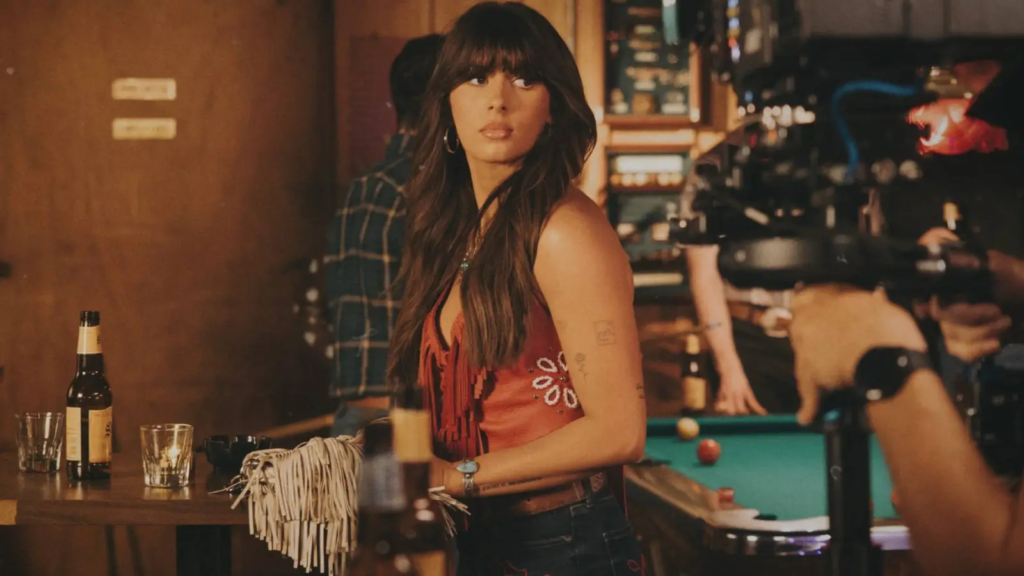
There are performances that entertain, and then there are moments that quietly redraw the map of an artist’s future. What Ella Langley delivered that night belonged firmly in the latter. It didn’t arrive with spectacle or overwhelming production—it began with something far more powerful: stillness, intention, and a voice willing to be heard without distraction.
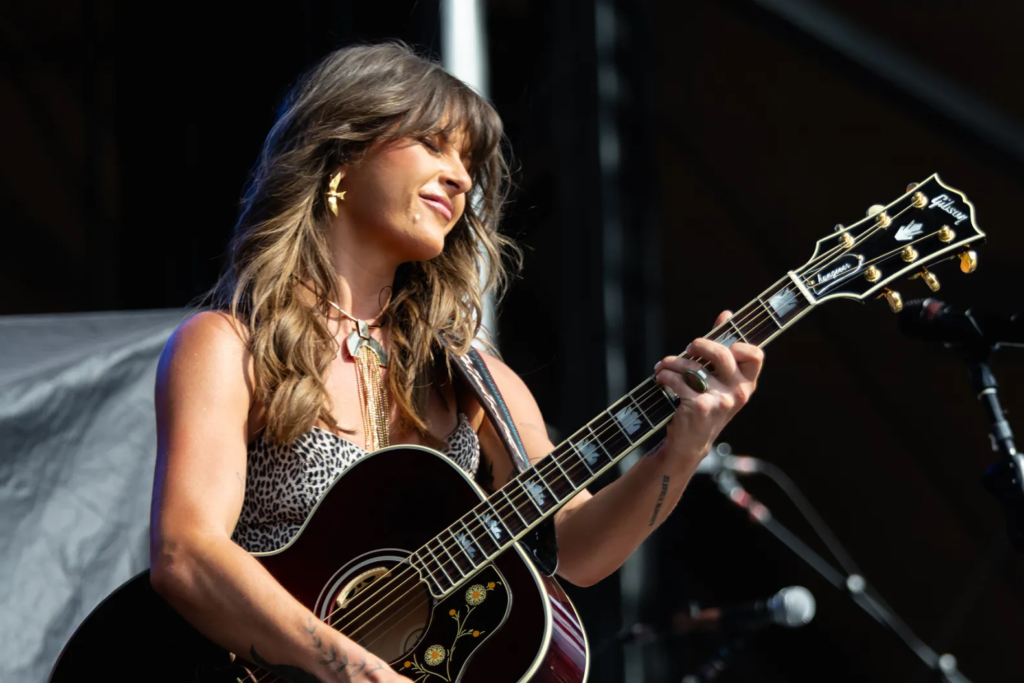
The opening notes of “Choosin’ Texas” felt almost disarmingly simple. A stripped-back acoustic arrangement can be risky in a room expecting grandeur, but Ella leaned into that vulnerability with precision. It wasn’t about filling space—it was about owning it. And in those first few lines, she did exactly that.
Her voice carried a kind of honesty that doesn’t ask for attention—it commands it. Every lyric felt lived-in, every pause deliberate. The audience didn’t just listen; they adjusted. Conversations faded, movement slowed, and for a few rare minutes, the room aligned itself entirely with her rhythm.
That’s the mark of an artist stepping into something bigger than performance. It’s the shift from singing a song to becoming its storyteller. Ella wasn’t just delivering “Choosin’ Texas”—she was inhabiting it, letting its narrative breathe through her in a way that felt both personal and universally understood.
What made the moment even more compelling was the control beneath the emotion. There’s a fine line between rawness and restraint, and Ella walked it effortlessly. Her vocal strength didn’t overpower the song; it elevated it. Each note landed with clarity, each transition carried intention. It was a masterclass in knowing when to hold back and when to let go.
By the time she reached the final lines, something had undeniably changed. The applause wasn’t just loud—it was knowing. The kind of reaction that signals recognition, not just appreciation. People weren’t clapping because the performance ended; they were responding to what it meant.
And then came the transition—from artist to honoree.
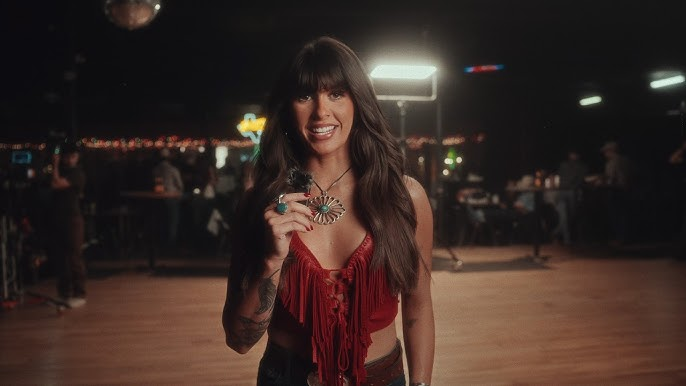
As she stepped forward to accept the Powerhouse Award, the energy in the room evolved again. Awards often celebrate achievement, but this one felt like acknowledgment. Not just of what Ella had done, but of what she was becoming. It carried the weight of timing—the sense that this wasn’t a peak, but a beginning.
Her presence in that moment spoke volumes. There was no need for overstatement, no exaggerated reaction. Instead, there was composure, gratitude, and a quiet confidence that suggested she understood exactly where she stood. Not at the finish line, but at the edge of something far more expansive.
Moments like these don’t exist in isolation. They are built on consistency, risk, and an unwavering sense of identity. Ella’s journey to that stage wasn’t accidental—it was the result of choices that favored authenticity over trend, substance over noise. And in a genre that often balances tradition with evolution, that kind of clarity stands out.
The Powerhouse Award, in this context, felt less like a trophy and more like a signal. A recognition that her voice—both literal and artistic—was carving out space in a crowded landscape. It wasn’t about arrival; it was about momentum.
And momentum, when it’s real, is impossible to ignore.
By the end of the night, the conversation had shifted. It was no longer just about a strong performance or a well-earned award. It was about trajectory. About what happens when an artist reaches the point where preparation meets opportunity in its purest form.
All eyes weren’t just on Ella Langley because of what she had done—they were on her because of what she made people anticipate. That’s a far more powerful position to be in. It means the story isn’t closing; it’s opening wider.
And if that night proved anything, it’s this: Ella Langley isn’t just part of the conversation in country music anymore.
She’s beginning to define it.