
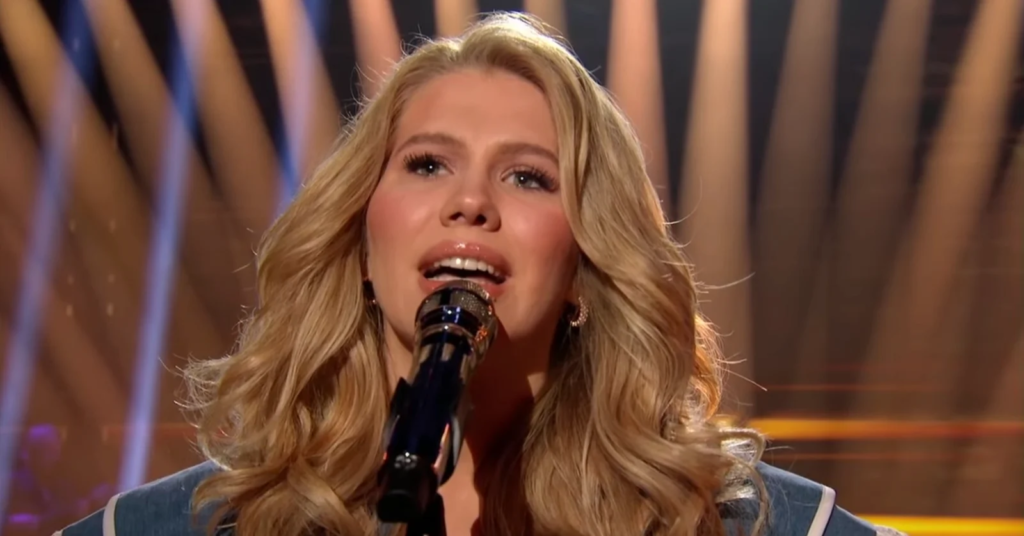
Every live show creates two kinds of moments. The first kind explodes instantly—big notes, flashy runs, dramatic finishes, standing ovations that arrive before the last chord fully settles. These moments are loud, visible, and easy to celebrate. The second kind is quieter. It may not shake the room right away, but it stays in the room after everyone leaves. It rides home with the audience, returns while dishes are being washed, and reappears unexpectedly the next morning. This is the difference between applause and imprint.

Many performances win the night. Fewer win the memory. That distinction matters more than most realize. In an age built on instant reactions, people often mistake immediate noise for lasting impact. But the performances that truly matter are not always the ones that generate the fastest response. They are the ones that continue unfolding in the listener long after the lights go dark.
Instant applause usually comes from obvious achievement. A difficult note was hit. A bold arrangement landed. A dramatic stage move surprised the crowd. These things deserve recognition. They create a shared burst of excitement, and excitement is contagious. Audiences love to reward effort they can clearly see and hear. It feels good to cheer greatness in real time.
But lingering emotional imprint is created differently. It happens when a performance reaches something deeper than admiration. Instead of making the audience say, That was impressive, it makes them ask, Why am I still thinking about that? That question signals a more profound connection. The performance has crossed from entertainment into emotional memory.
Often, the difference lies in truth. Polished performances can dazzle, but honest performances haunt. When a singer sounds as though they are revealing something real rather than demonstrating something rehearsed, listeners feel it instinctively. They may not analyze the phrasing or technique, but they sense sincerity. And sincerity has remarkable staying power.
There is also the role of restraint. Some artists try to force impact through constant intensity, but nonstop volume can exhaust attention. When everything is big, nothing feels singular. Performers who understand dynamics—softness before power, pause before release, stillness before motion—create contrast. Contrast helps the brain encode memory. It gives emotion shape.
Lyrics matter differently in lingering performances too. In many shows, words are vehicles for vocals. They exist mainly to carry melody. But unforgettable performers reverse that relationship. They make lyrics feel newly alive. A familiar line suddenly sounds personal. A common phrase feels freshly wounded or hopeful. Listeners carry those lines with them because they now mean something specific.
Timing is another invisible factor. Great artists know when to push and when to hold back. They understand that emotion arriving one second too early can feel manipulative, and one second too late can miss the heart entirely. When timing is exact, the audience experiences a moment that feels inevitable and surprising at once. Those are the moments that echo afterward.
Psychology also plays a role. The human mind remembers unresolved feeling more than completed spectacle. A flashy performance often resolves itself immediately: the big note lands, the audience cheers, the tension releases. But a vulnerable performance may leave something open-ended—longing, reflection, ache, tenderness. Because it remains emotionally unfinished, the mind keeps revisiting it.

This is why some contestants dominate social media clips while others dominate private conversations. One performer trends for an hour. Another becomes the one friends text about the next day. One creates reaction. The other creates resonance. Both have value, but only one tends to build deep loyalty.
Camera culture has intensified this divide. Shows are now consumed not only in theaters or living rooms, but in snippets, edits, and highlights. Instant-applause performances often thrive in short clips because they contain obvious peaks. Lingering performances can be harder to summarize. Their power may live in buildup, nuance, or atmosphere. Yet once experienced fully, they are harder to forget.
Judges and audiences sometimes sense this difference even when they cannot name it. They say things like, “There was something special about that,” or “I can’t stop thinking about it.” Those phrases usually describe emotional residue—the mark left when art bypasses surface reaction and settles somewhere deeper.
For contestants, this creates an important strategic lesson. Chasing applause can be tempting because applause is measurable. It is immediate proof. But chasing imprint requires courage. It may mean singing softer instead of louder, telling truth instead of showing off, trusting silence instead of filling every second. It means risking a slower reaction in exchange for a stronger one.
Many legendary performances were not universally understood in the exact moment they happened. Some received modest initial responses compared with louder competitors. But over time, they grew in stature because people kept returning to them. Memory became their amplifier.
This does not mean spectacle is shallow or emotion must be quiet. Sometimes a thunderous performance also leaves a deep mark. Sometimes the room erupts because something genuinely transcendent occurred. The real point is that volume alone does not determine value. Noise is not the same as depth.
The performances that follow you after the show ends usually share one trait: they made you feel seen. In the singer’s vulnerability, strength, confusion, grief, joy, or hope, you recognized something of yourself. Once that happens, the performance is no longer theirs alone. It becomes partly yours.
And that is why some performances fade the moment applause stops, while others walk beside you into the night. One entertained your senses. The other entered your memory—and found a place to stay.