

When audiences talk about competition performances, they usually remember the obvious things first. They mention the high notes, the dramatic endings, the standing ovations, the spotlight moments designed for replay. But some rounds are not won in the places everyone notices. They are won in the subtler spaces—the pauses before a lyric, the breath held just long enough, the silence that makes a single word hit harder than ten loud notes ever could. That is why Top 9 was not truly won on stage. It was won in the silence between lines.

Silence in performance is often misunderstood. Many see it as absence, a gap to be filled, an empty second between sounds. Great performers know better. Silence is not emptiness—it is tension, anticipation, emotion waiting to land. When used with intelligence, it becomes as expressive as melody itself. It allows the audience to feel what lyrics alone cannot explain.
In a high-pressure round like Top 9, every contestant is talented. By that stage, technical mistakes are fewer, voices are stronger, and confidence is visible. Raw ability no longer separates performers the way it did earlier in the competition. What begins to matter most is control—especially emotional control. The ability to command a room without constantly singing at full volume becomes a defining edge.
That is where pauses become powerful. A pause placed before a vulnerable lyric tells the audience to lean closer. A pause after a painful line gives them time to absorb it. A pause before the climax creates suspense that makes the release feel earned. Without those spaces, even beautiful vocals can rush past the heart. With them, every phrase gains weight.
Breath control plays an equally important role. To many viewers, breathing is invisible. They hear notes but rarely notice the mechanics supporting them. Yet breath is the hidden architecture of performance. It shapes steadiness, phrasing, tone, and emotional delivery. A singer with disciplined breath control can stretch a moment without strain, soften a line without losing clarity, and hold tension in the room with complete authority.
There is also psychology in the way audiences respond to breathing. When a performer takes a measured inhale before an emotional phrase, viewers unconsciously feel the preparation. They sense vulnerability arriving. When breath trembles slightly in a sincere moment, it can communicate humanity more powerfully than flawless perfection. When breath remains calm under pressure, it signals mastery. These cues register even when audiences cannot name them.
Emotional timing may be the rarest skill of all. Many contestants know what to sing. Fewer know when to let emotion arrive. Push too early, and the performance feels forced. Wait too long, and the song never fully opens. But when emotion enters at the exact right moment—after restraint, after buildup, after the audience has been drawn inward—it can transform a good performance into a defining one.
That is why some Top 9 moments feel larger than their runtime. They are structured like stories. The opening lines invite trust. The middle deepens feeling. Then a pause appears. A breath settles the room. One lyric lands with unexpected force. Suddenly the audience is no longer evaluating technique. They are experiencing something personal. That shift is where votes are won.
Many performers mistake constant output for impact. They believe they must fill every second with sound, movement, or visible intensity. But relentless delivery can flatten emotional peaks. If everything is urgent, nothing feels urgent. Silence creates contrast, and contrast creates memory. The quiet second before the storm often becomes more unforgettable than the storm itself.
Judges often respond strongly to this kind of control because they recognize how difficult it is. Anyone can sing louder under pressure. Not everyone can risk softness. Not everyone can trust a pause in front of millions. Not everyone can stand still, breathe, and let the audience come to them. That restraint requires maturity beyond talent.
Television also amplifies these moments. Cameras love stillness. Microphones capture breath. Close-ups turn a pause into drama and a glance into narrative. What might feel small in a rehearsal room becomes enormous on screen. A tiny inhale before a final line can read like courage. A held silence after it can feel like truth settling over the room.
This is why viewers often say a performance “felt different” even when they cannot explain why. They may mention emotion, authenticity, or connection. What they are often reacting to is invisible craftsmanship: pacing, pauses, breath placement, timing. The architecture beneath the feeling. The performer created space for emotion instead of rushing past it.
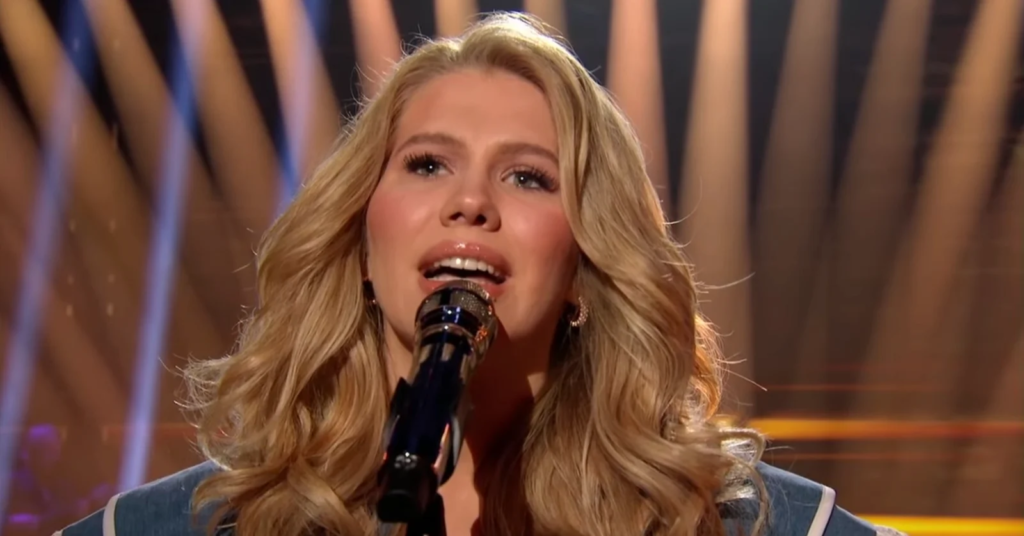
In elite rounds, margins are thin. Everyone can hit notes. Everyone can rehearse entrances and exits. Everyone can choose a strong song. But not everyone knows how to use silence as strategy. Not everyone understands that the unsung second between lines can carry more meaning than the line itself.
Top 9 performances are remembered because they reveal who is merely skilled and who is artistically dangerous. The dangerous ones know how to slow time. They know how to make an audience hold its breath with them. They know how to place a pause so perfectly that the next lyric arrives like revelation.
So no, Top 9 was not won only by what happened under the lights. It was won in the still spaces no scoreboard can measure. In the inhale before the truth. In the pause before the pain. In the silence between lines, where the best performers stop singing for a second—and start owning the room.