
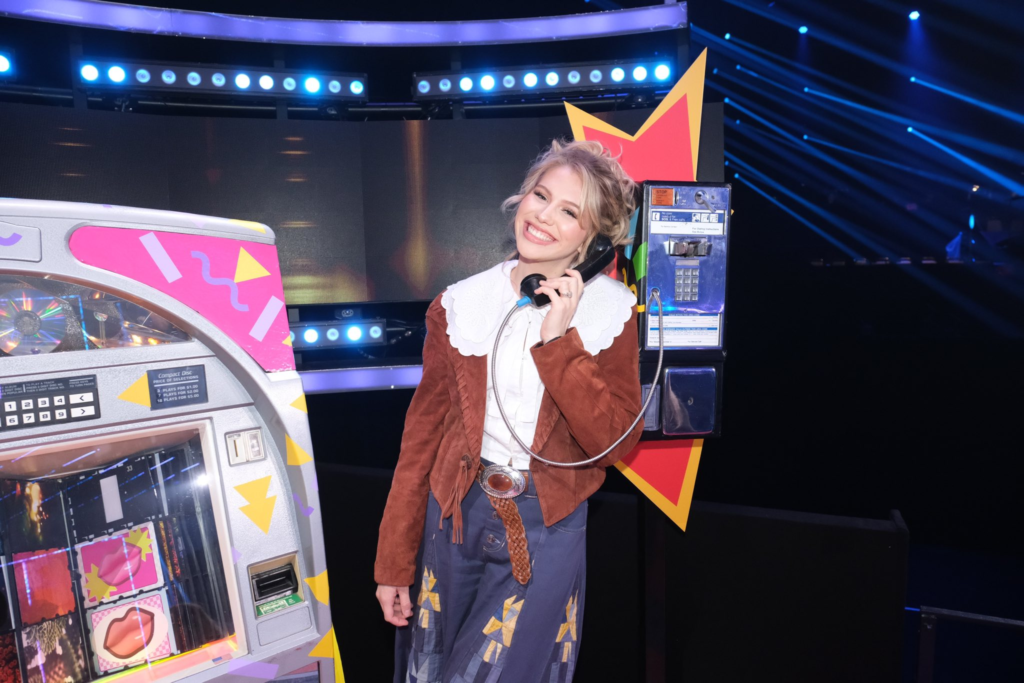
She did not know, at first, what the box was. It sat on the narrow table in the backstage corridor, wrapped in a ribbon the color of winter dusk, and the fluorescent lights above hummed a low, indifferent note. Hannah Harper stopped walking. The world had been noise for weeks—screaming, static, the metallic click of cameras, her own heartbeat hammering through every high note. But here, in this sudden pocket of silence, she heard only the soft crush of her own breath.
Her fingers hesitated above the ribbon. Someone had told her to come here, but not why. The corridor was empty except for a single production assistant who turned away, as if granting her a privacy no one backstage ever truly had. When she lifted the lid of the box, the light inside was not from a bulb but from the pale gleam of Tiffany blue, and beneath it, a smaller box. She opened that too. Silver. A necklace, perhaps, or a bracelet—something that caught the overhead tube light and scattered it into tiny, unassuming stars.
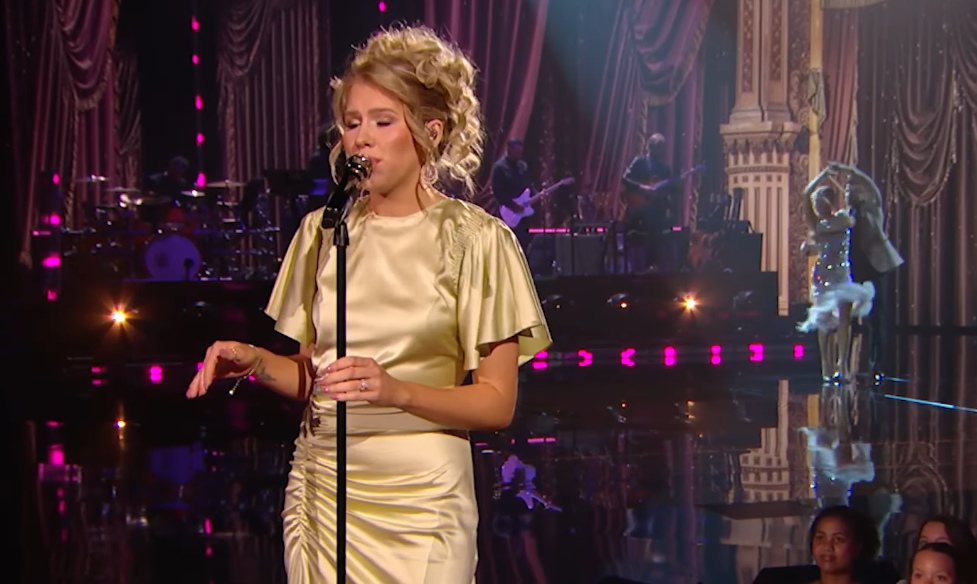
Then she saw the note.
It was folded once, the paper thick and cream-colored, the kind that feels like an heirloom before you even read a word. She unfolded it slowly, the way you open a letter you already know will change you. The handwriting was slanted and certain, each loop pressed firmly into the page. Hannah, it began. And then the sentence that stopped time: You are an inspiration to mothers everywhere.
Carrie Underwood had written this. Carrie, who had stood in these very wings years ago, who had held a microphone and trembled and won. Carrie, who had somehow seen Hannah—not the contestant, not the singer, but the woman who had walked onto that stage with three children’s names echoing in her chest. The woman who had nursed a baby in a tour bus bathroom and written a song called “String Cheese” because some days survival looked like a snack and a prayer.
Hannah’s throat closed. Not with the theatrical sob of television, but with the quiet, terrifying weight of being truly seen. She stared at the word mothers for a long time. It was not a compliment about her voice. It was not about her range or her stage presence or the way she had finally learned to move during “Almost There.” It was about the 3 a.m. feedings. The missed bedtimes. The guilt that lived like a second skin. Someone had seen that, and instead of saying you should be home, they had said you are enough.
The necklace—for that is what it turned out to be, a slender chain with a small, unassuming charm—rested in its velvet bed. She did not put it on immediately. Instead, she held it in her palm, feeling the cool metal warm against her skin. A gift from a woman who had once been her, or some version of her: young, hungry, far from home, wearing her heart so openly that strangers felt entitled to judge it. But Carrie had survived that. Carrie had built something. And now Carrie was reaching back.
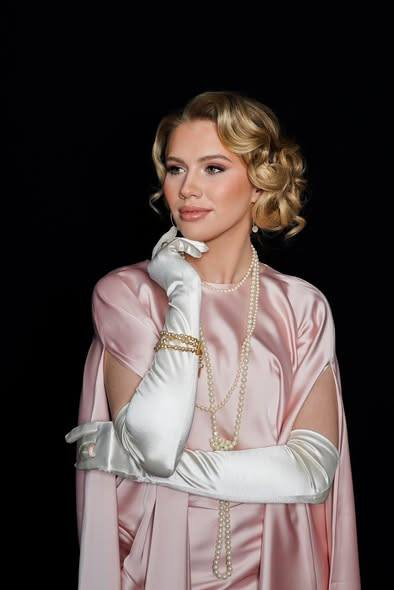
No camera crew had followed her to this moment. The corridor remained empty. Somewhere beyond the walls, an audience was waiting, and a stage was lit, and a song was about to begin. But here, in this small parenthesis of quiet, Hannah Harper closed her eyes. She thought of her children, probably asleep by now, probably dreaming of things that had nothing to do with Hollywood or silver necklaces. She thought of the note she would write back, though she did not yet know the words. She thought of Carrie’s name signed at the bottom, and how it looked less like a signature and more like a door left open.
When she opened her eyes, the fluorescent light had not changed. The hum had not stopped. But everything else had shifted, almost imperceptibly, the way the air changes before rain. She slipped the necklace into her pocket—not to hide it, but to keep it close, against her hip, where she could press her hand and feel the small hard truth of it.
Later, she would wear it. Later, she would tell no one what the note said, because some things are too tender for the microphones. Later, she would walk onto that stage and sing, and the audience would cheer, and the judges would smile, and the world would keep spinning. But first, standing alone in a backstage corridor with a Tiffany box in her hands and a handwritten sentence burning in her memory, Hannah Harper let herself cry—not for sadness, not for joy, but for the strange, fierce miracle of being handed a torch she had not known she was carrying.
And somewhere, in a room far away, Carrie Underwood probably never knew the exact moment the note was read. But the light from that moment never quite left. It stayed in the silver of the necklace, the crease of the paper, the quiet before every song Hannah would ever sing again. It stayed like a hand on the back. Like a woman saying, I made it through. You will too.