
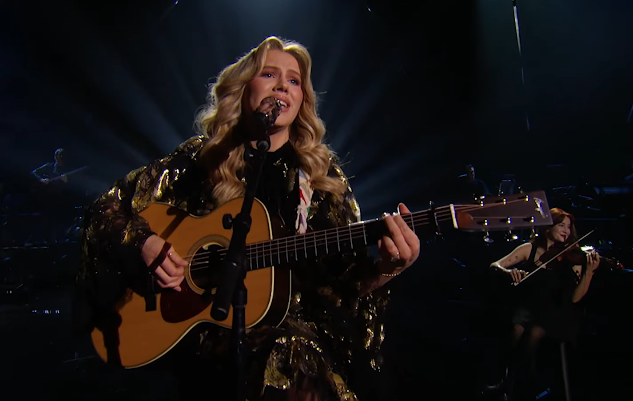
Some performances entertain for a few minutes. Others rearrange the energy in an entire room. What Hannah Harper delivered during Top 9 Rock & Roll Night was the second kind. It was not loud for the sake of attention, dramatic for the sake of television, or safe for the sake of survival. It was bold, controlled, deeply felt—and impossible to forget.

Choosing Landslide on a night built around rock energy was already a statement. While others may have chased volume, spectacle, or predictable crowd-pleasers, Harper moved in the opposite direction. She selected vulnerability over noise. In a competition environment, that can be risky. But risk is often where artists stop being contestants and start becoming contenders.
There is a difference between singing a famous song and understanding why it became famous in the first place. Harper seemed to understand that Landslide has never been about vocal gymnastics. It has always been about emotional truth. The song asks for honesty, maturity, and restraint. Too much performance can break it. Too little feeling can flatten it. Harper found the narrow path between both.
From the first note, the room reportedly shifted. Audiences can sense when something authentic is happening in real time. The usual chatter fades. Reactions pause. Even applause waits because people are listening more closely than they expected to. That is one of the rarest compliments a performer can earn: silence born from attention.
Her control throughout the performance was especially striking. Many emerging singers mistake intensity for power. Harper showed the opposite. She trusted softness. She let phrases breathe. She resisted the temptation to oversing emotional moments. That kind of discipline often separates polished vocalists from true interpreters. She was not trying to conquer the song. She was trying to live inside it.
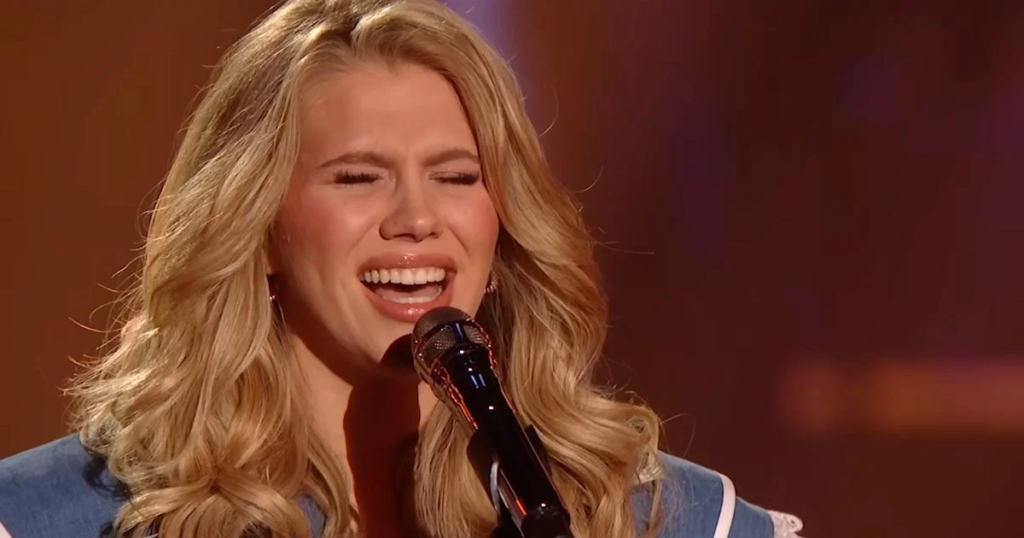
Then came the emotional center of the performance—the point where technique disappears and connection takes over. Harper’s delivery reportedly carried the kind of ache that makes listeners revisit their own memories while hearing someone else’s story. Great singers communicate notes. Great artists communicate recognition. She gave the audience a mirror more than a melody.
And then there was the reaction everyone noticed: Carrie Underwood left speechless. In talent competitions, judges praise often. It is part of the rhythm of television. But genuine surprise is harder to stage. When a seasoned star appears momentarily without words, viewers understand something unusual has happened. It signals that the performance crossed beyond expectation.
That moment matters strategically for Harper’s trajectory. Competitions are filled with strong voices. What advances artists long-term is identity. Fans need a reason to remember someone after the episode ends. Harper may have found hers in a single song: fearless emotional intelligence. She did not merely sing well—she revealed taste, instinct, and self-awareness.
There is also something culturally powerful about a younger performer reclaiming a classic like Landslide. Songs that endure across generations do so because they can be reinterpreted without losing their soul. Harper did not imitate what came before. She translated it through her own experience. That is how classics stay alive—and how new artists inherit legacy without being trapped by it.
Top 9 rounds often become turning points. At this stage, technical ability is expected. What changes rankings is emotional impact. Which performance lingers after the credits? Which contestant creates conversation the next morning? Which moment gets replayed, reposted, and discussed? Harper’s Landslide appears built for exactly that kind of afterlife.
The smartest move she made may have been stepping outside theme expectations. Rock & Roll Night invites a certain type of performance—big, flashy, aggressive, familiar. Harper expanded the definition of what rock can mean. Real rock spirit has always included courage, individuality, and refusing the obvious path. In that sense, her choice may have been one of the most rebellious of the night.
What viewers saw was not someone playing it safe. They saw an artist trusting stillness in a noisy room. They saw confidence that did not need to shout. They saw someone stepping up by stepping out. Those moments are memorable because they reveal character, not just capability.
Whether or not trophies, titles, or finals follow, something has already shifted for Hannah Harper. She is no longer simply another talented name in a crowded field. She has entered the more valuable category: artist to watch.
And if one quiet performance could freeze a crowd and stun a superstar into silence, the bigger question now is simple—what happens when Hannah Harper gets even louder?