
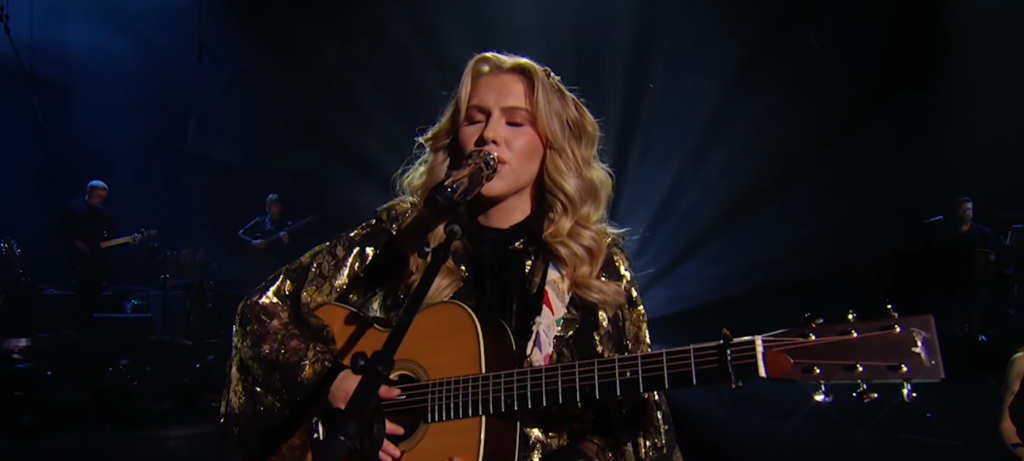
Three minutes is a strange amount of time. It is too short for a conversation that matters, too brief for a memory to fully settle, yet somehow long enough to change minds. In talent competitions, those three minutes can become the sharpest battlefield of all. No speeches, no second chances, no lengthy explanations—just a stage, a spotlight, and a performer standing in front of millions of undecided people. That is exactly where Hannah Harper found herself, and what she did in those three minutes turned applause into action.

When Hannah Harper first walked onto the stage, she did not carry the loud confidence many viewers expect from a contestant chasing votes. There were no dramatic gestures, no forced smile designed for cameras, no rehearsed arrogance. Instead, she carried something rarer: calm certainty. It was the kind of presence that made people pause before she had even begun. Viewers often decide quickly whether they care enough to watch. Hannah’s first victory was making them stay.
The opening seconds of any performance are brutally important. Audiences scroll mentally. They compare instantly. They judge tone, body language, wardrobe, and energy before a single lyric or note fully lands. Hannah understood this better than most. Rather than exploding into the moment, she invited people into it. Her first note did not demand attention—it earned it. That subtle difference changed everything.
As the performance unfolded, what separated Hannah from others was not perfection. It was connection. Perfection can impress, but connection converts. There were singers with wider ranges, dancers with sharper technique, and personalities with louder entrances. Yet Hannah created the feeling that she was singing directly to one person at a time. In living rooms, on phones, in crowded kitchens, viewers felt seen through a screen. That emotional intimacy is powerful currency in public voting.
Then came the middle minute—the most dangerous stretch of any stage performance. This is where energy usually dips, where audiences drift, where the mind wanders toward snacks, side conversations, or social media. Hannah did the opposite. She deepened the story. Her voice grew warmer, her expressions more vulnerable, and every phrase felt more personal than the last. Instead of peaking early, she built trust minute by minute.
What many people miss about voting behavior is that talent alone rarely decides it. Viewers vote when they feel ownership. They vote when someone’s success starts to feel personal. Hannah’s performance quietly created that psychological shift. By the final chorus, people were no longer simply evaluating her. They were rooting for her. That is the moment spectators become supporters.
The last thirty seconds were where strategy met instinct. Rather than overpowering the ending with noise, Hannah let the emotion breathe. She delivered a finish that felt complete without feeling final—as if this performance was one chapter of a bigger story audiences could help write. That matters. People vote not just for what happened, but for what they want to happen next.
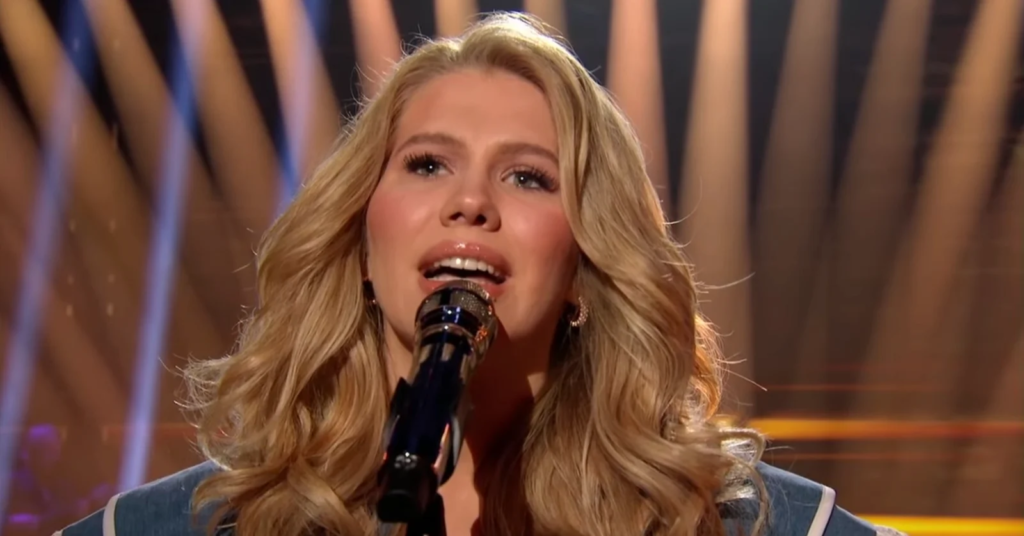
Social media reacted the way it often does when something genuine cuts through polished entertainment. Clips spread quickly. Comments repeated the same themes: “I felt that.” “She made me stop everything.” “I wasn’t planning to vote, but I did.” Those responses reveal the real impact of the three-minute test. The goal was never only to be admired. It was to move passive viewers into active participants.
Hannah Harper’s brilliance was understanding that modern audiences are overloaded. They have endless options, endless distractions, and endless reasons not to care. To win them over, a performer must do more than perform well. They must create a moment strong enough to interrupt indifference. Hannah did exactly that. She did not shout louder than the noise—she became more human than it.
There is also something timeless in her approach. Long before algorithms, hashtags, and televised vote counts, audiences have always responded to honesty when it is delivered with skill. Technique opens the door, but sincerity makes people walk through it. Hannah blended both. She was polished enough to command respect and authentic enough to invite loyalty.
For aspiring contestants, her performance offers a lesson more valuable than any vocal run or camera trick. Do not chase votes directly. Chase truth, clarity, and emotional precision. If people believe what they are seeing, votes often follow naturally. Hannah Harper did not look like someone begging for support. She looked like someone worth supporting.
That is why the three-minute test matters so much. Anyone can fill three minutes with sound. Few can fill it with meaning. Fewer still can turn it into momentum. Hannah Harper stepped onto a stage with limited time and endless pressure, then left with something bigger than applause. She left with decisions made in homes she would never see, by people she had never met, who suddenly felt certain enough to vote.
And in entertainment, certainty is the rarest standing ovation of all.