
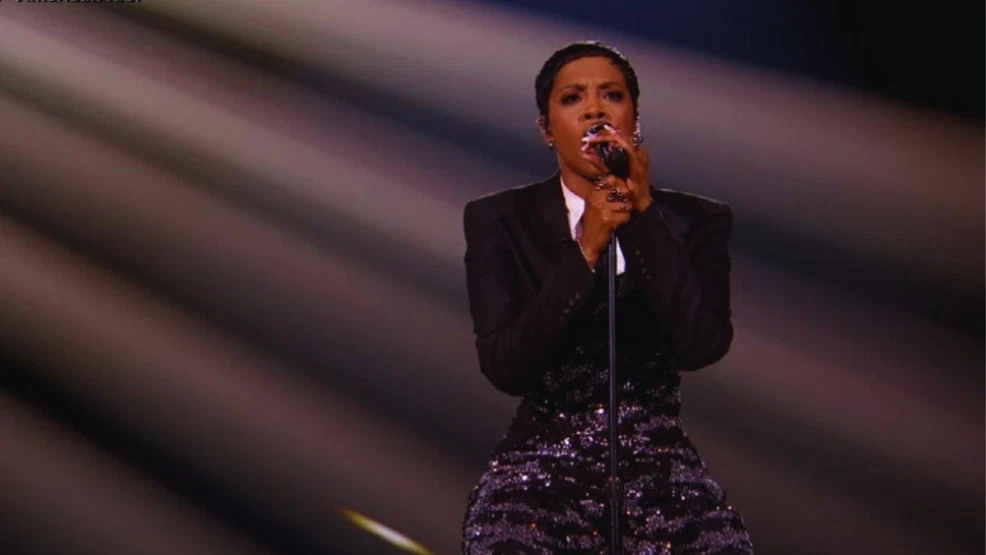
Every season of American Idol follows a familiar rhythm—standout performances, emotional stories, viral moments, and the steady narrowing of the field. But every so often, a different kind of storyline emerges. Not one built on unanimous praise, but one shaped by tension, division, and something far more unpredictable: controversy. And right now, that storyline seems to be forming around Keyla Richardson.
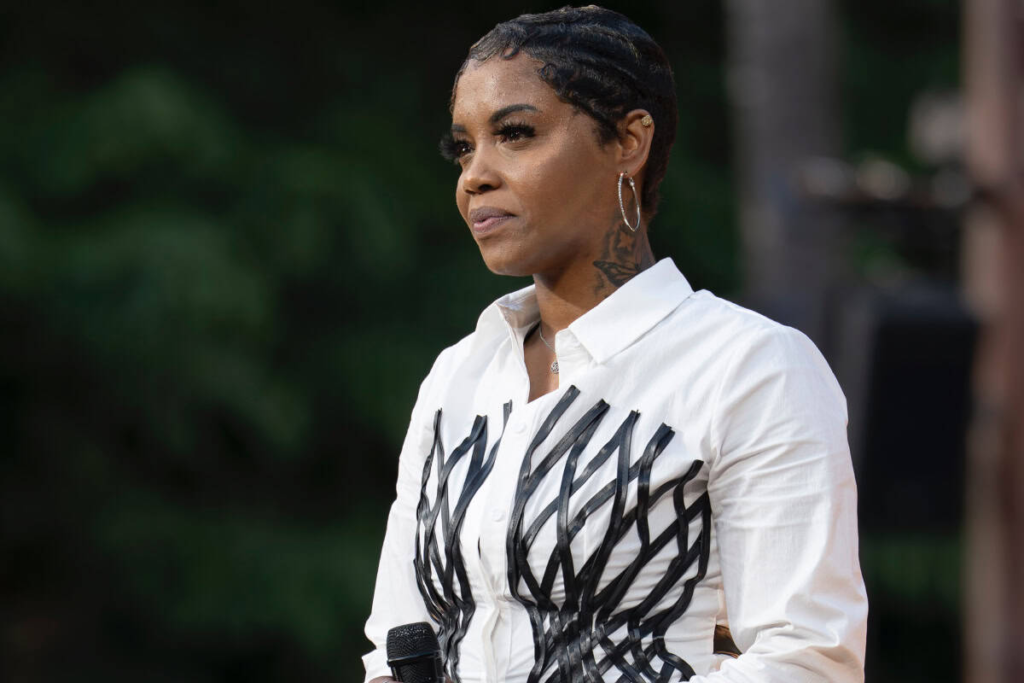
At first glance, the narrative looks simple. Hannah Harper walks on stage, delivers emotionally resonant performances, and earns standing ovations that feel almost inevitable. Her journey is clean, steady, and widely embraced. In contrast, Keyla’s performances often ignite something different—debate. Comment sections split. Opinions sharpen. Praise collides with criticism. It feels chaotic.
But chaos, in the ecosystem of modern television voting, is rarely just noise.
There is a pattern that long-time viewers are beginning to recognize. The louder the debate, the deeper the engagement. The more divided the audience becomes, the more invested they are in proving their side right. And in a show where votes determine survival, engagement is not just valuable—it is powerful.
This is where the idea of the “backlash effect” begins to take shape.
It’s a phenomenon that doesn’t always announce itself clearly. It builds quietly beneath the surface. A contestant receives criticism—sometimes fair, sometimes exaggerated. Supporters feel the need to defend. Casual viewers become curious. People who weren’t paying attention start watching just to understand the conversation. And suddenly, a contestant who seemed uncertain in the rankings begins to gain something far more dangerous than approval: momentum.
Fans have seen versions of this before. Names like Jamal Roberts are often brought up as examples of contestants whose journeys were not smooth, but were undeniably compelling. Controversy didn’t end their run—it fueled it. What started as division transformed into a wave of sympathy, curiosity, and ultimately, votes.
Because here’s the uncomfortable truth about audience psychology: people don’t just vote for perfection. They vote for stories.
And Keyla’s story right now is not simple—it’s charged.
When viewers see someone being criticized, especially repeatedly, something instinctive kicks in. Some want to challenge the criticism. Others want to protect potential. And many begin to ask a quiet question: “What if everyone else is missing something?” That question alone can shift behavior. It turns passive viewers into active voters.
Meanwhile, contestants like Hannah Harper represent a different kind of strength. Her performances feel safe in the best possible way—consistent, emotionally grounded, widely respected. But paradoxically, that consistency can sometimes reduce urgency. When everyone agrees someone is great, fewer people feel the need to “save” them. They assume others will.
That is where the dynamics become fascinating.

Keyla’s situation creates urgency. Her supporters feel like they must act. They must vote. They must counterbalance the negativity. And in a competition where voting is the only currency that matters, urgency can outweigh approval.
This doesn’t mean criticism is always strategic or beneficial. In many cases, backlash can overwhelm and damage a contestant’s trajectory. But when it reaches a certain threshold—when it becomes conversation rather than dismissal—it can evolve into something else entirely.
It becomes visibility.
And visibility, in a crowded field of talented performers, is everything.
There is also the role of the modern internet to consider. Social media doesn’t just reflect opinions—it amplifies them. Algorithms reward engagement, not agreement. A polarizing performance is far more likely to trend than a universally liked one. This means that even negative reactions can push a contestant into wider audiences, introducing them to viewers who might not have noticed them otherwise.
So the question isn’t just whether Keyla is struggling.
The question is whether she is being pushed—intentionally or accidentally—into the exact kind of spotlight that creates winners.
Because at a certain point, the narrative shifts. It stops being about vocal perfection or technical precision. It becomes about who people are talking about, who they are defending, who they are arguing over. In other words, who they are emotionally invested in.
And right now, Keyla is at the center of that storm.
This doesn’t guarantee an outcome. Reality competitions remain unpredictable. One performance, one moment, one shift in public perception can change everything overnight. But patterns exist for a reason, and the “backlash effect” has proven before that controversy is not always a barrier—it can be a bridge.
So is history repeating itself?
Or is the internet, without realizing it, building the very momentum that could carry Keyla to the crown?
The answer may not be clear yet.
But if the noise keeps growing, the debate keeps intensifying, and the engagement keeps rising—then what looks like struggle today might quietly become the foundation of something much bigger tomorrow.