
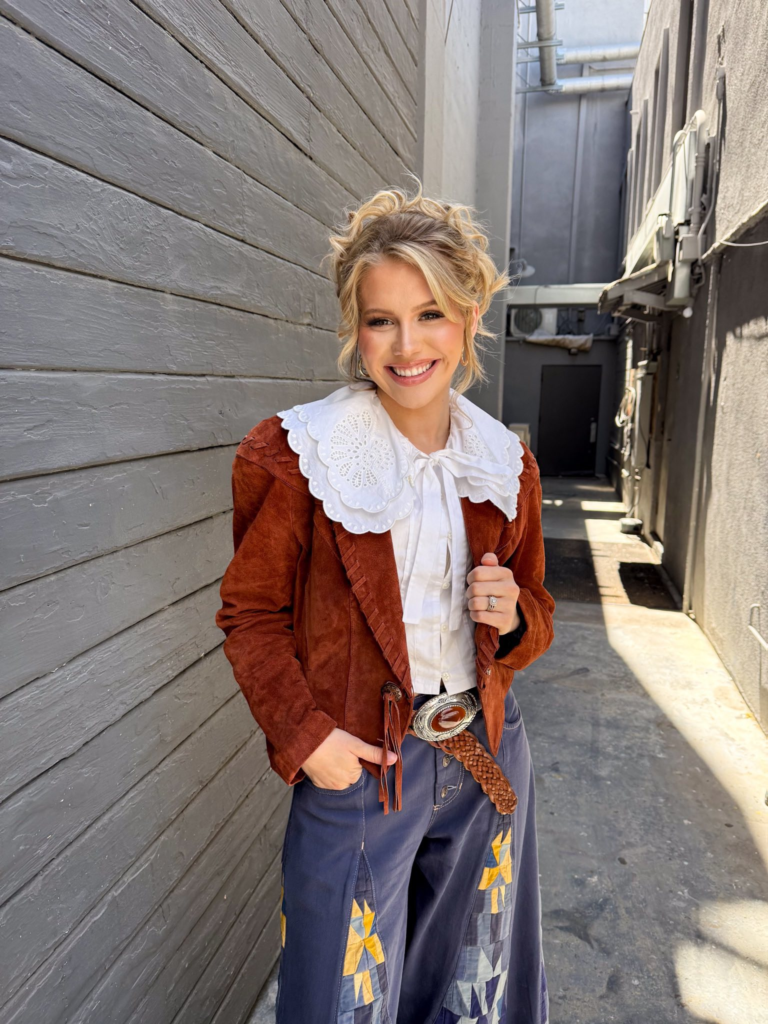
When Hannah Harper chose Taylor Swift’s “Mean” for Top 7 night, the internet prepared for karaoke. What it got was a repossession notice. Harper did not cover the song. She took it back.
The original “Mean” is a pop-country hybrid, polished with studio sheen and delivered with the kind of smirk that belongs on a Grammy stage. Harper stripped that smirk off. In its place, she left a raw, banjo-driven bluegrass arrangement that sounded older than the Nashville skyline.
Here is the fact everyone missed: Taylor Swift wrote “Mean” about a critic who dismissed her early country work. The song is a revenge fantasy from inside the system. Harper, by contrast, performed it as someone who has never been inside the system at all. That changes everything.
The banjo is not a prop. On mainstream country radio, the banjo has become an ornament—trotted out for thirty seconds of “authenticity” before returning to synth pads and drum loops. Harper handed the banjo the entire song. No safety net. No pop bridge. Just fingerpicks and fury.
This is what music analysts call “deconstruction.” But Harper went further. She performed an act of musical repossession. She treated “Mean” not as Taylor Swift’s property, but as a Appalachian standard that had merely been borrowed by Nashville for a few years. And now she was bringing it home.
The cultural debate underneath this performance is fierce and rarely spoken aloud. For two decades, country purists have watched their genre drift toward pop. Stadium tours. Electronic beats. Lyrics that mention “trucks” but have never seen a dirt road. Harper’s banjo is a direct indictment of that drift.
When she sang “someday I’ll be living in a big old city,” her voice carried no irony. The original Swift version played that line as a promise. Harper played it as a threat. She is not dreaming of the city. She is warning the city that the hills are sending someone back.
The audience reaction split along fascinating lines. Younger viewers familiar only with Swift’s “1989” era found Harper’s version “too twangy.” But older country fans, the ones who remember bluegrass before bro-country, wept. One commenter wrote: “She didn’t sing Taylor’s song. She sang the song Taylor’s song wanted to be.”
This is the uncomfortable truth that entertainment media avoids. Pop-country has become a genre that borrows rural aesthetics without rural ethics. Harper’s banjo exposes that theft. By repossessing “Mean,” she forces a question: who actually owns country music—the labels or the land?
Hannah Harper will likely never top the Billboard Country charts. Those charts belong to a different machine. But her banjo-driven “Mean” is already being shared in bluegrass forums, Appalachian music groups, and rural living communities. She did not win a singing competition that night. She won a cultural argument. And a banjo, once a punchline, has become a weapon.