

Nobody expected a song joking about “string cheese” lunches and half-drunk coffee cups to become one of the most emotionally dissected audition moments online. Yet that is exactly what happened when a young mother stepped onto the talent-show stage and sang less like a contestant chasing fame and more like someone quietly confessing survival. Viewers did not hear polish first. They heard fatigue that sounded painfully familiar.
For years, reality television trained audiences to reward technical excellence above all else. Bigger runs, cleaner belts, impossible control. But this audition disrupted that formula in a way producers probably could not manufacture if they tried. Her voice cracked in places where emotional pressure outweighed performance instincts, and strangely, those imperfections became the reason people stayed glued to the screen instead of scrolling away.
The song itself was deceptively simple. It painted motherhood through tiny domestic fragments: forgotten groceries, repetitive routines, untouched dreams, and the strange loneliness of always being needed. None of it sounded cinematic. That was the point. Millions of mothers online recognized themselves in those ordinary details because exhaustion rarely arrives with dramatic music. It arrives while packing lunches and reheating cold dinners after midnight.
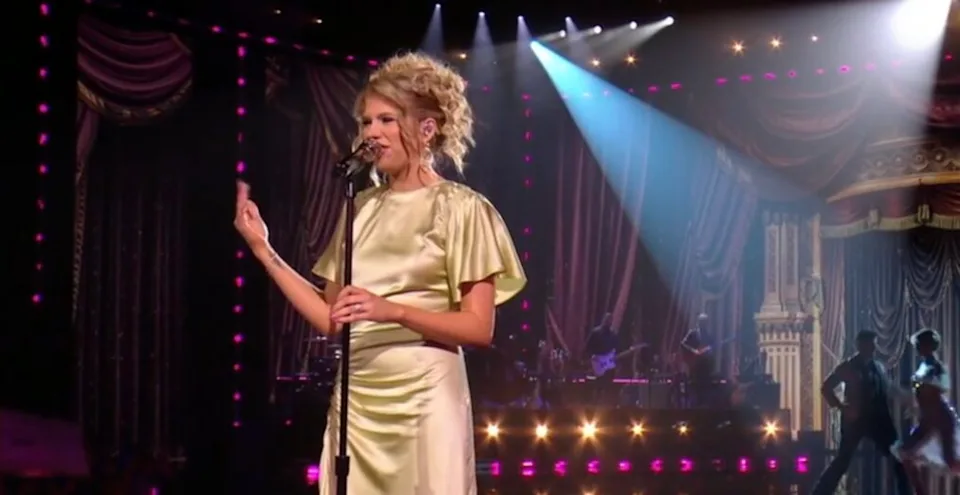
Social media exploded not because audiences believed she was the greatest singer in the competition, but because the audition accidentally exposed an emotional economy audiences are starving for. People are increasingly suspicious of perfection online. Curated motherhood influencers, filtered routines, and productivity culture have made vulnerability feel revolutionary. Her performance cut through all of it with startling honesty.
The internet especially latched onto one uncomfortable truth hidden inside the song: mothers are often applauded for sacrifice while simultaneously disappearing inside it. Comments flooded platforms from women admitting they cried unexpectedly during the audition because it felt like someone finally acknowledged the invisible labor they carry every day. The tears had little to do with melody and everything to do with recognition.
That is why the performance became bigger than entertainment. It functioned almost like emotional validation therapy disguised as a television audition. Viewers were not evaluating range or breath control in those viral clips. They were measuring how accurately the song reflected their own internal exhaustion. In a culture overloaded with noise, relatability suddenly carried more power than flawless execution.

There is also a deeper shift happening within reality television itself. Audiences no longer just want stars who seem untouchable. They want people who feel emotionally reachable. The old model celebrated aspiration; the new one rewards emotional transparency. Her audition succeeded because she did not present herself as extraordinary. She presented herself as overwhelmed, and that honesty felt radical.
Ironically, some critics dismissed the performance for lacking technical brilliance, which only strengthened its cultural impact. The conversation unintentionally proved the exact tension the audition represented. Traditional talent metrics still prioritize precision, while modern audiences increasingly prioritize emotional truth. The divide revealed how entertainment is evolving from spectacle toward emotional intimacy.
What made the moment unforgettable was not sadness alone, but permission. The song quietly allowed mothers to admit they are tired without framing that exhaustion as failure. That subtle distinction mattered enormously online. Many viewers described feeling seen instead of pitied, understood instead of inspirationalized. In a media landscape obsessed with strength, vulnerability became the real standing ovation.
In the end, the “String Cheese” effect was never about one contestant or one competition. It exposed a larger cultural hunger for authenticity powerful enough to interrupt polished entertainment formulas. People did not replay the audition because they heard perfection. They replayed it because somewhere between the trembling lyrics and exhausted honesty, they finally heard themselves.