

There are performances that meet expectations… and then there are performances that quietly dismantle them. On American Idol, Hannah Harper delivered something far more dangerous than a good performance—she delivered control. And control, in a competition built on unpredictability, is power.
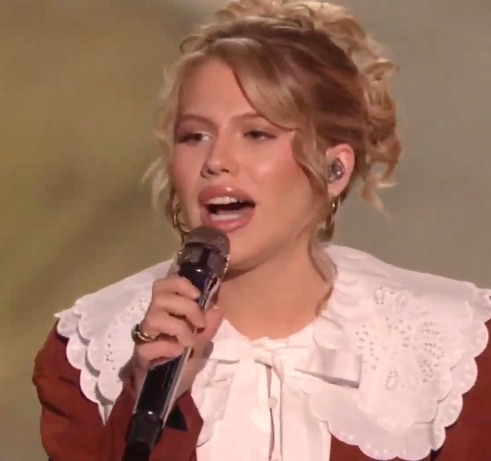
From the first second she stepped into “Heads Carolina, Tails California,” there was no hesitation in her presence. It didn’t feel like she was hoping the performance would land. It felt like she already knew it would. That subtle difference changed everything.
The song itself carries a playful, almost carefree energy—a narrative of choice, movement, and spontaneity. But Hannah didn’t treat it lightly. She understood the deeper thread within it: the courage to choose, even when the outcome is uncertain. And somehow, she mirrored that same energy in her delivery.
Her voice didn’t chase perfection.
Instead, it carried intention.
Each line felt placed, not just sung. She wasn’t trying to prove her range or outshine the arrangement. She was telling a story—and more importantly, she was letting the audience step inside that story with her. That’s what separates a singer from an artist. And in that moment, Hannah made the transition clear.
The crowd responded before the performance even reached its peak.
That’s always the tell.
When an audience reacts mid-performance, it means they’re no longer evaluating—they’re experiencing. Cheers broke through not as interruptions, but as natural reactions to something unfolding in real time. The energy in the room didn’t build slowly; it ignited.
And then there were the judges.
You could see it—the shift from analysis to engagement. They weren’t just watching her; they were drawn into the rhythm of what she was creating. Their body language said everything before their words did. This wasn’t just another contestant delivering another strong week. This was someone stepping into a different tier.
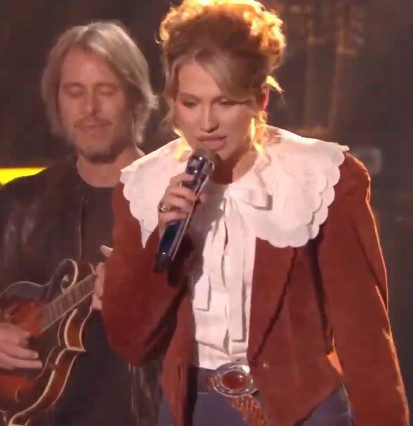
What makes Hannah’s performance particularly compelling is her restraint.
She knows when not to push.
In a competition where many try to overpower moments with vocal intensity, she leans into control. She allows space. She trusts silence. And in doing so, she creates tension—the kind that holds attention without demanding it.
That’s a rare instinct.
And it’s also a dangerous one for everyone else competing.
Because performances like this don’t just earn applause—they reshape perception. After a moment like this, audiences don’t just ask, “Did she do well?” They start asking, “Can anyone else match that?”
That shift is where real momentum begins.
But beyond the technical and strategic layers, there’s something deeper at play—authenticity. Hannah doesn’t feel constructed. She doesn’t feel like someone adapting to the show. She feels like someone bringing her world into it. And that authenticity creates trust. Viewers don’t just watch her—they invest in her.
And investment is what drives outcomes.
This performance wasn’t loud for the sake of being loud. It wasn’t flashy for the sake of standing out. It was deliberate. Measured. Confident. The kind of performance that doesn’t beg to be remembered—it simply refuses to be forgotten.
And that’s where the real shift happened.
Because in a single performance, Hannah Harper didn’t just confirm expectations.
She elevated them.
She positioned herself not as someone trying to survive each round, but as someone shaping the trajectory of the competition itself. And when a contestant reaches that point, they’re no longer just part of the story.
They start becoming the story.