
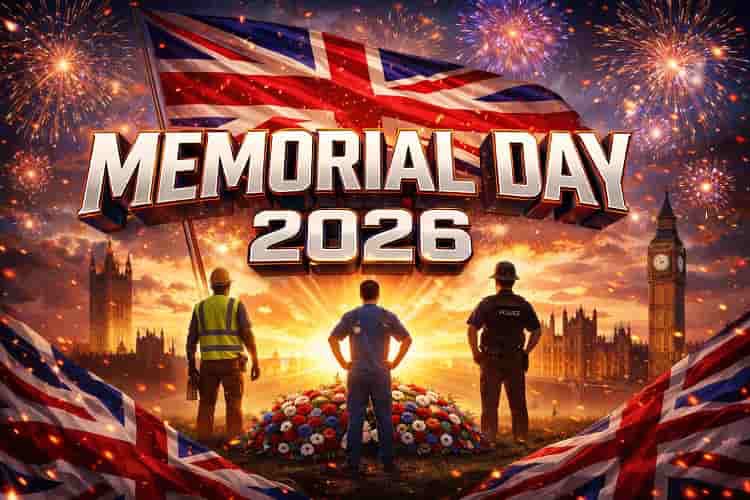
How a 1968 Law Quietly Killed the Soul of Memorial Day
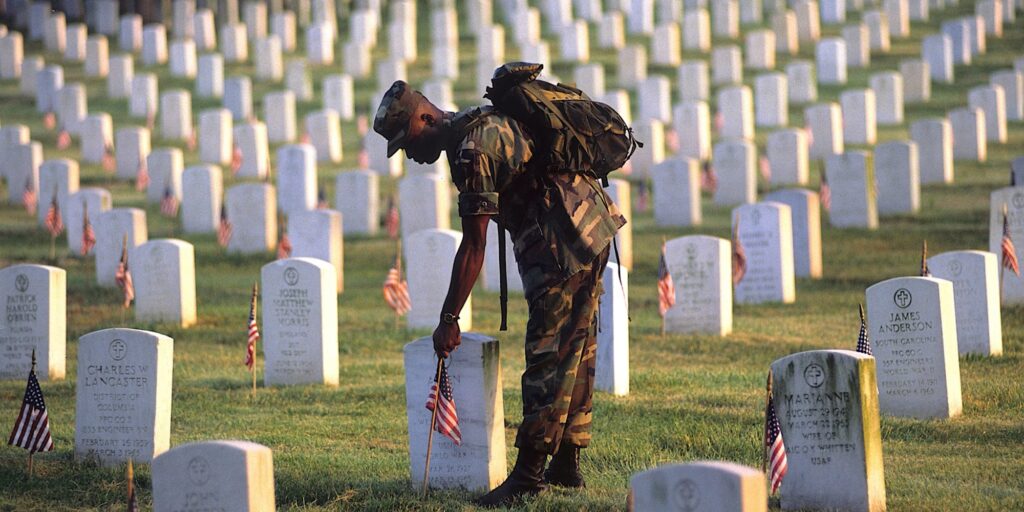
There is a grave somewhere in this country with no visitor today. No flowers. No folded flag pressed gently against a headstone. No family member standing in silence, lips moving in a prayer that never quite feels like enough. Just wind, and grass, and a name carved in stone that most people driving past the nearest mall could not tell you anything about. That grave belongs to someone who died so you could have this Monday off. And somewhere between 1968 and now, we forgot to mention that part.
Memorial Day did not always smell like sunscreen and charcoal. For nearly a century after the Civil War, it carried the full weight of what it was — a day of national mourning, observed every May 30th regardless of what day of the week it fell on. Communities gathered at cemeteries. Schools closed. Church bells rang. The inconvenience was almost the point. Grief is not supposed to be convenient. It is supposed to stop you in your tracks, pull you out of your routine, and force you to reckon with something larger than yourself. May 30th did exactly that, year after year, until Congress decided inconvenience was bad for the economy.
The Uniform Monday Holiday Act of 1968 was sold to the American public as a gift. More three-day weekends. More time with family. More rest for the working class that had earned it. And it was, in many ways, a genuinely appealing proposal. But the driving force behind it was never sentimental. Travel organizations had been lobbying for fixed Monday holidays since the 1950s, calculating — correctly, as it turned out — that long weekends meant Americans would spend money. Hotels, airlines, car dealerships, and retailers all stood to gain. Employee unions signed on. Federal workers signed on. The math made sense to almost everyone who was counting dollars instead of graves.
What no one counted, apparently, was the cost of moving grief. When Memorial Day shifted to the last Monday of May, it did not just change the date — it changed the meaning. A floating Monday is psychologically different from a fixed date. May 30th was a destination. The last Monday of May is a placeholder, a long weekend that exists primarily to be filled. And fill it we did — with barbecues, with mattress sales, with road trips and music festivals and the unofficial opening of summer. The day exhaled its solemnity slowly, like air leaving a balloon, and most people did not notice it happening until it was already gone.
The numbers today are not subtle. Surveys consistently show that only about 28 percent of Americans can accurately describe what Memorial Day is actually meant to commemorate. Not veterans broadly — that is Veterans Day’s territory — but specifically the men and women who died in military service to this country. Twenty-eight percent. That means nearly three out of four Americans are treating a national day of mourning as something closer to a seasonal celebration, not out of malice, but simply because no one told them otherwise, and the culture they inherited did not make it obvious. Legislation shaped memory, and memory shaped culture, and culture is now what we are left trying to reverse-engineer.
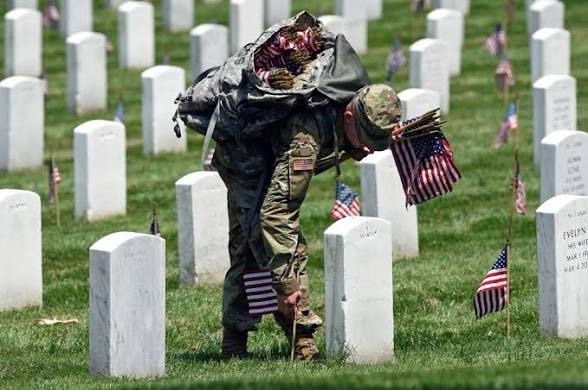
It is worth pausing here to resist the easy cynicism. The Americans firing up grills this weekend are not villains. They are products of a system that gradually drained the ritual from the day and replaced it with leisure, then handed that version of the holiday to the next generation as though nothing had been lost. You cannot mourn what you were never taught to mourn. The failure is not personal — it is institutional, structural, and it was authored in a congressional chamber by people who were thinking about tourism revenue and almost certainly not thinking at all about a mother placing flowers on her son’s grave in a small town cemetery on a Tuesday that no longer officially mattered.
There have been attempts to push back. In 2000, Congress passed a resolution asking Americans to pause at 3:00 PM on Memorial Day for a National Moment of Remembrance — sixty seconds of silence in the middle of whatever they were doing. It was a gentle suggestion, not a law, and polls suggest most Americans have never heard of it. Some veterans’ organizations have spent decades lobbying to move the holiday back to May 30th, arguing that the fixed date carried a gravity the floating Monday simply cannot replicate. None of it has gained significant traction, because the commercial machinery built around the long weekend is now far too large and far too profitable to dismantle over something as quiet as meaning.
Here is what strikes hardest about all of this: the soldiers being commemorated today did not die for convenience. They did not fall on foreign soil so that a travel lobby could optimize the American vacation calendar. Many of them were teenagers. Many of them were terrified. Many of them wrote letters home that arrived after they did. The distance between what they gave and what the day has become is not just ironic — it is a kind of slow, institutional forgetting that should unsettle us more than it does. History does not always get erased dramatically. Sometimes it just gets rescheduled to Monday and quietly buried under a holiday weekend sale.
None of this means you must spend today in misery. Grief and gratitude are not enemies of summer, and no one is suggesting that barbecues are incompatible with remembrance. But there is a difference between a day that includes a moment of reflection and a day that never gets around to it. There is a difference between teaching your children why the flags are out and simply letting them enjoy the day off school. The ritual does not have to be long or elaborate. It just has to happen — a name spoken aloud, a story passed down, a pause that costs nothing but thirty seconds and means everything to the dead who are owed it.
Congress moved a date in 1968 and, in doing so, quietly moved a nation’s relationship with its own grief. The law was not malicious. It was just indifferent — indifferent to the possibility that some things lose everything when you make them more convenient. Memorial Day is still on the calendar. The graves are still there. The names are still carved in stone. The only thing missing is the stillness that used to come with May 30th — that mandatory, inconvenient, deeply human pause. We gave it up for a long weekend. The least we can do, even now, is remember what we traded.