
The Erased Black Origin Story of Memorial Day
Before the wreaths. Before the white crosses lined up in perfect military rows. Before the parades and the sales and the long weekend barbecues — there was a racetrack in Charleston, South Carolina, and there were thousands of Black Americans who loved the dead enough to honor them first.
Most people have never heard this story. That’s not an accident.
It is May 1, 1865. The Civil War has just breathed its last. Charleston — the very city where the first shots of the war were fired — sits in the stunned quiet of aftermath. Inside the Washington Race Course, the Confederate Army had converted the track into a makeshift prison camp. Union soldiers who died in captivity were buried hastily, unceremoniously, in a mass grave behind the grandstand. No markers. No mourning. Just bodies folded into Southern soil by the men who had imprisoned them.
But the newly freed Black residents of Charleston saw those graves. And they refused to let that be the end of the story.
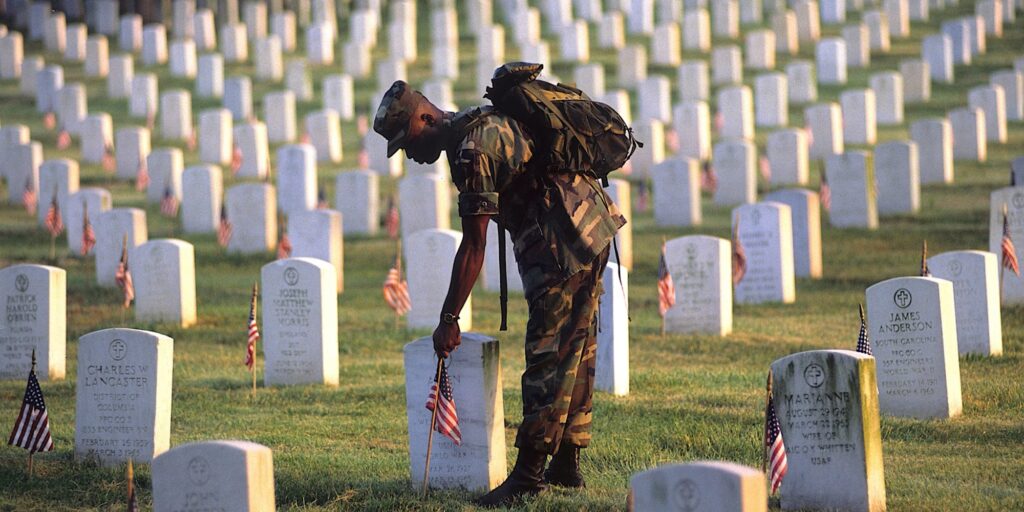
Over two weeks, a group of formerly enslaved men and women did something extraordinary — they gave those soldiers a proper burial. They exhumed the mass grave. They built a fence around the new cemetery. They constructed an archway above the entrance with words painted in large letters: “Martyrs of the Race Course.” On May 1st, nearly ten thousand people gathered — Black residents, freedmen, women, children, clergy, members of the 54th Massachusetts Regiment. They sang. They prayed. They decorated every grave with flowers. And then they marched. A procession of thousands, moving in honor around a track that had once been used for the amusement of a society built on their backs. It was the first Memorial Day. Not declared by a government. Not orchestrated by a general. Willed into existence by people who had every reason to be bitter but chose, instead, to be gracious to the fallen.
Here is where history performs one of its cruelest tricks. The story didn’t fade because it was insignificant. It was actively buried. As Reconstruction collapsed and white Democrats reclaimed power in South Carolina by 1876, the cultural narrative of the South began its long, deliberate reconstruction — one that had no room for Black founding moments. The racetrack ceremony was quietly erased from local memory, replaced by Confederate memorial traditions and later absorbed into a sanitized national holiday that attributed its origins to Northern towns like Waterloo, New York. The credit was redistributed. The founders were disappeared.
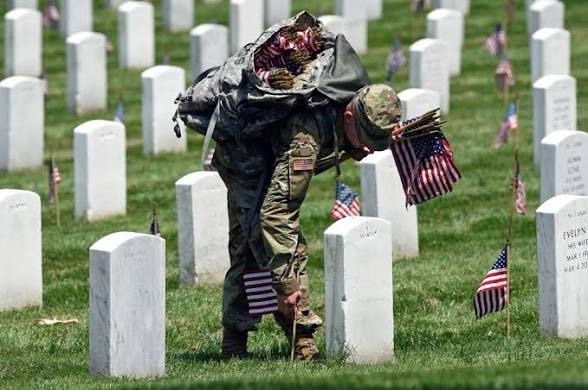
What makes this theft so breathtaking is the specific nature of what was stolen. This wasn’t just recognition. It was a profound moral act — freed people, many of whom had been legally classified as property just months before, choosing to honor the soldiers who died to liberate them. There is no more powerful gesture in American history. The fact that this gesture was then used against its creators, folded into a holiday that gave them no authorship, no credit, no name — that is the kind of historical wound that doesn’t show up on a battlefield map but cuts just as deep.
Historian David Blight of Yale University uncovered and documented this origin story through research into contemporaneous Black newspaper accounts and eyewitness records — evidence that survived precisely because those who would have destroyed it didn’t know it existed in the margins of the archive. Blight’s work gave the story its first serious modern audience. But a historian’s book and a nation’s memory are two very different things. Most American schoolchildren still learn nothing of the racetrack. Most Memorial Day coverage still gestures vaguely toward the post-Civil War period without naming who actually started it.
There’s something almost unbearable about the symbolism here. A racetrack — a place literally built for watching bodies move in circles and return to where they started — became the site of the most radical act of commemoration this country has ever seen. And then history did exactly what the racetrack was built to do: it ran in circles and brought us right back to erasure. The same people who had been denied humanity were then denied authorship of their own most humane act.
This Memorial Day, when the flags go up and the music plays and the moment of silence settles over the crowd, consider what’s underneath the silence. Consider ten thousand people on a spring morning in 1865, moving through a former prison yard with flowers in their hands, singing over graves of men they’d never met but understood completely — men who’d died for the idea that they deserved to exist freely. They built this holiday out of grief and gratitude. The least history owes them is the truth. Say their story out loud. That’s the only monument that was never built — and the only one that actually matters.