
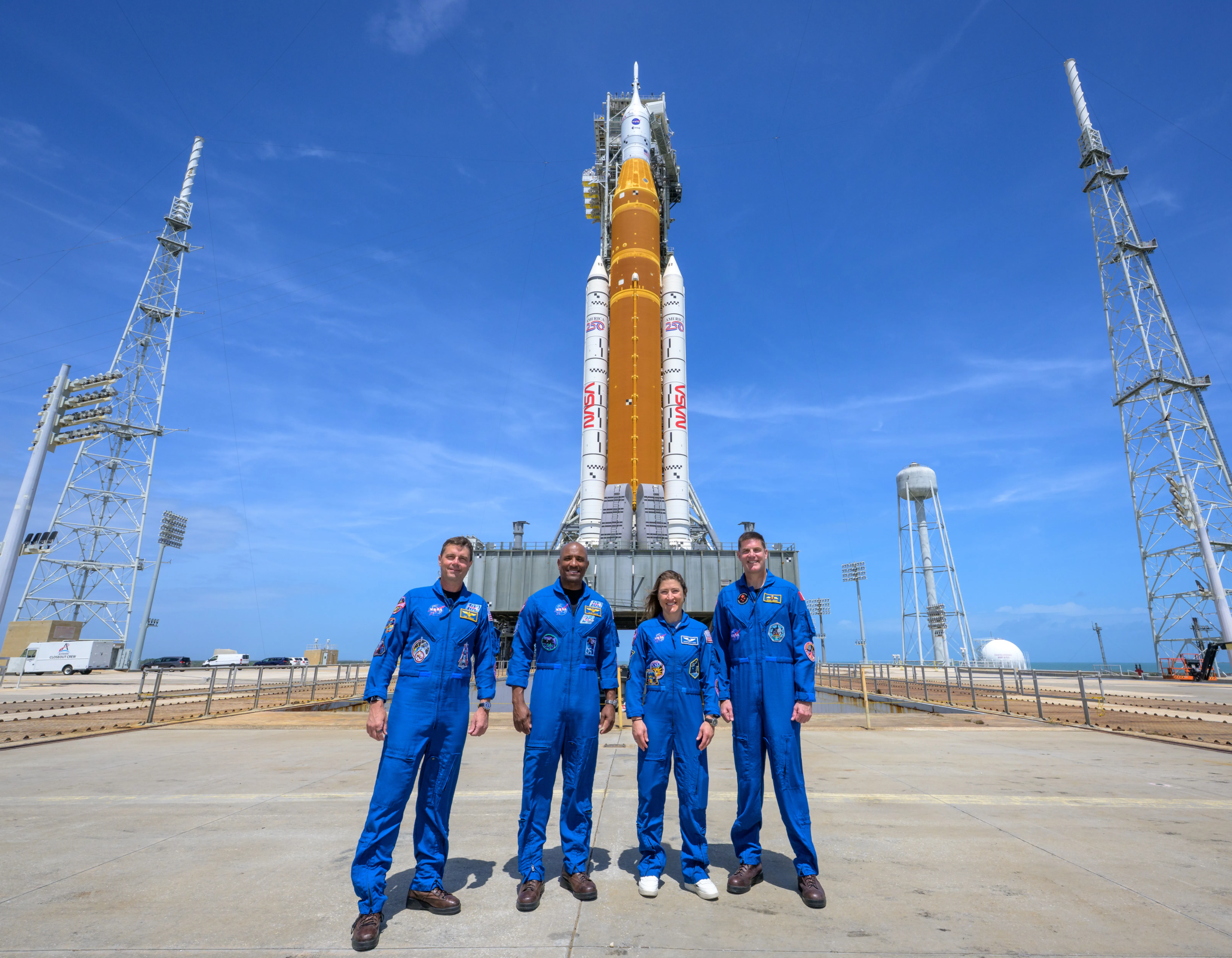
There are moments in history that don’t just move forward—they reach back. They reconnect generations, revive forgotten ambitions, and remind humanity of what it once dared to believe. The launch of Artemis II was one of those moments, a powerful return to a path that had remained untouched for more than half a century.
For over 50 years, no human had traveled beyond low-Earth orbit.
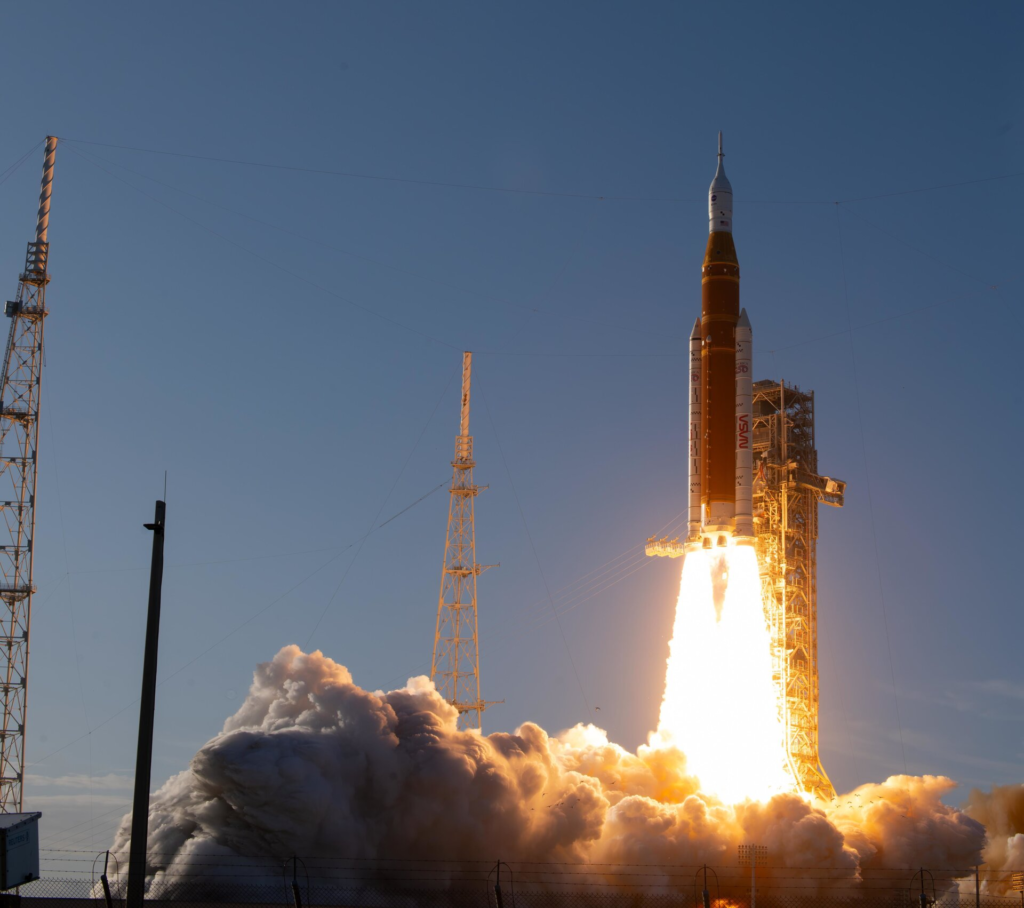
That boundary had quietly become a limit, not because we couldn’t cross it, but because we had stopped trying in the same way. Space exploration continued, but it shifted inward—toward orbit, toward stations, toward what felt safe and sustainable.
Until now.
The roar of the engines that carried NASA’s Orion spacecraft into the sky wasn’t just mechanical. It was symbolic. A sound that echoed decades of waiting, of planning, of imagining what the next step could look like if humanity chose to reach outward again.
And this time, it wasn’t just about technology.
It was about courage.
Inside that spacecraft sat a crew that understood the weight of what they were doing. This was not a routine mission. It was a statement. A reminder that exploration is not defined by comfort, but by the willingness to move beyond it.
As Orion left Earth behind, something shifted—not just physically, but emotionally.
Because the moment humanity leaves its familiar orbit, it begins to see itself differently.
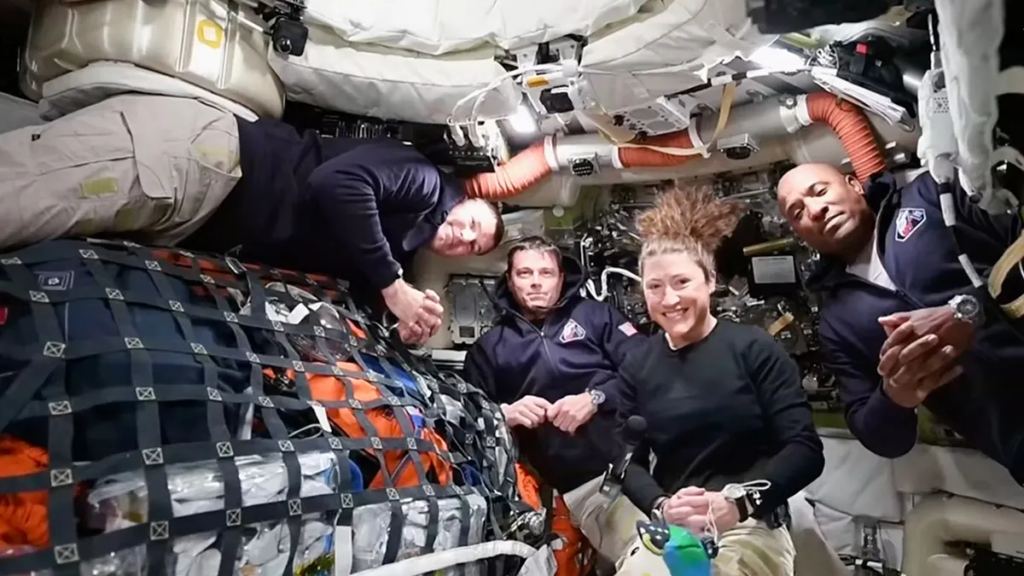
The Earth, once vast and all-encompassing, becomes something smaller. Fragile. Distant. A blue sphere suspended in an endless black. And in that perspective, something profound emerges—the realization that everything we know exists within that tiny horizon.
And yet, we still choose to go farther.
That’s what makes Artemis II remarkable.
It is not driven by necessity, but by curiosity. By the same instinct that once pushed early explorers across oceans they could not fully understand. The difference now is scale. The unknown is no longer a distant shore—it is the vast, silent expanse of space.
And the destination this time carries its own history.
The Moon is not new to humanity. It has been visited, studied, and remembered. But the significance of returning after more than five decades changes the meaning entirely. It is no longer about firsts.
It is about continuation.
A bridge between what was and what will be.
As the Orion spacecraft arcs toward the Moon, it carries more than instruments and supplies. It carries questions. About where we go next. About how far we can push the boundaries of human presence. About whether this mission is not just a return, but a beginning.
Because Artemis II is not the final step.
It is the opening chapter of something larger.
Future missions will aim not just to visit, but to stay. To build. To create a sustained presence that transforms space from a destination into an extension of human existence. And from there, the path stretches even further—toward Mars, toward deeper exploration, toward possibilities that still feel distant.
But every journey needs a moment like this.
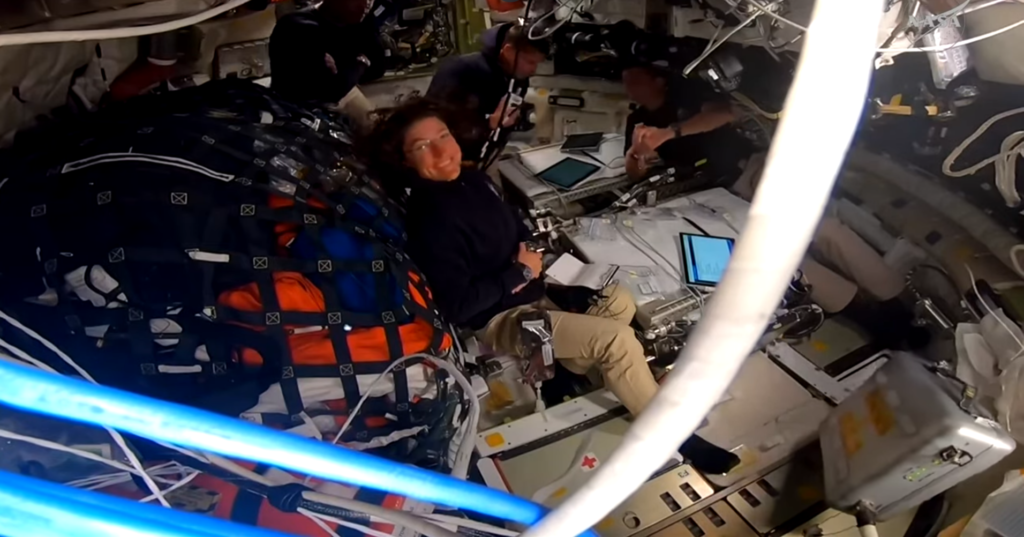
A moment where the direction becomes clear again.
The Artemis II launch reminded the world that exploration is not a relic of the past. It is an ongoing choice. One that requires investment, vision, and the belief that the unknown is worth pursuing.
And perhaps most importantly, it reminded us of something simple yet powerful.
We are still capable of wonder.
As the spacecraft continues its journey around the Moon, millions watch from Earth—not just tracking a mission, but reconnecting with a feeling that had faded over time. The sense that humanity, despite its challenges and divisions, can still come together to achieve something extraordinary.
Because space has always done that.
It pulls perspective back. It quiets the noise. It reminds us that beyond the borders and conflicts that define our daily lives, there is something vast and shared that belongs to all of us.
The night Artemis II launched, it didn’t just send astronauts into space.
It sent a message.
That even after decades, even after pauses and setbacks, the human spirit to explore remains unchanged. And as long as that spirit exists, the story of where we go next is still being written.