
There are moments in spaceflight that pass in seconds but echo for decades. Two minutes after liftoff, as the Artemis II mission surged through the sky at unimaginable speed, one of those moments unfolded—quietly, precisely, and yet overwhelmingly powerful.
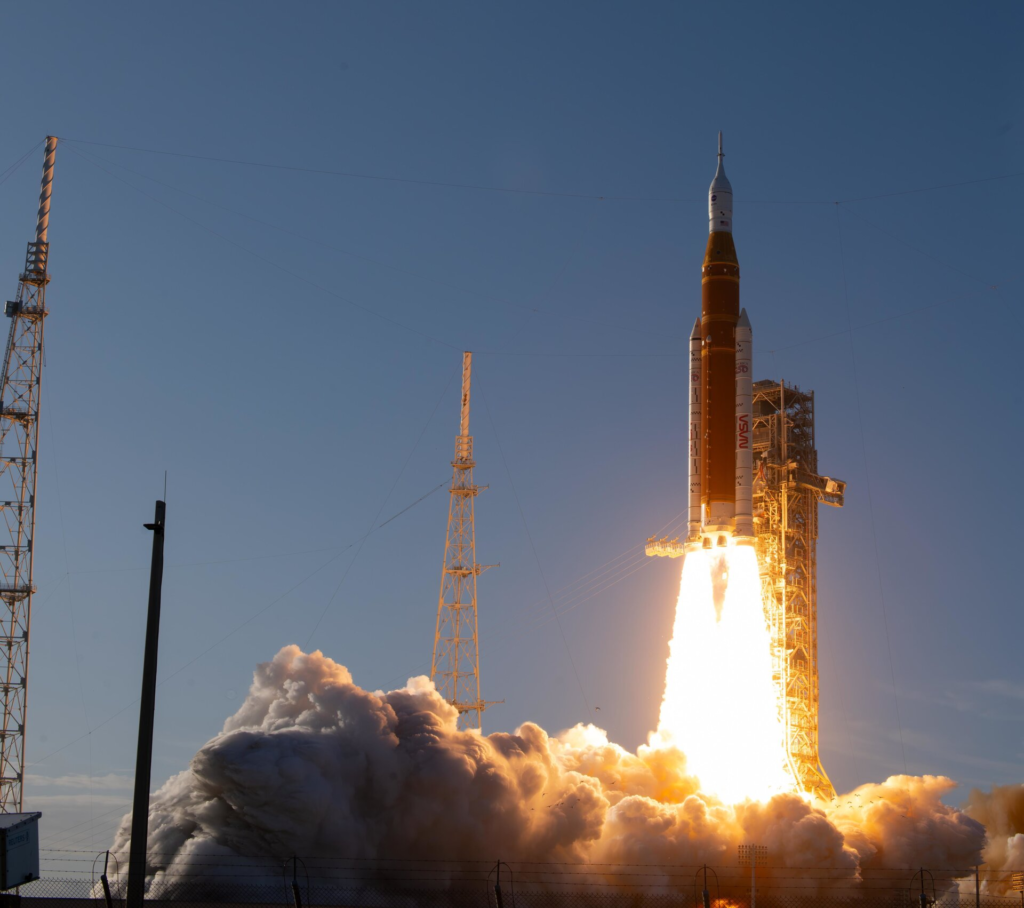
Captured through the lens of photographer Brian Lail, the scene freezes time at an altitude of roughly 30 miles above the Atlantic Ocean. What the image reveals is not just a technical milestone, but a turning point in human exploration. The twin solid rocket boosters, having completed their task, begin to separate from the core stage.
It looks almost effortless.
But nothing about it is.
Those boosters had just delivered over 7 million pounds of thrust, a force so immense it defies ordinary comprehension. That power was necessary to break free from Earth’s gravity, to carry the Orion spacecraft and its crew into a trajectory that had not been experienced by humans in more than half a century.
And then, suddenly, they were no longer needed.
That is the paradox of spaceflight.
The most powerful components are often the first to leave.
As the boosters detached and fell away, their job complete, the responsibility shifted seamlessly to the four RS-25 engines. These engines, refined from decades of engineering evolution, took over the ascent, guiding the spacecraft with a quieter but equally critical precision.
In that transition, something profound occurs.
The mission moves from raw power to controlled purpose.
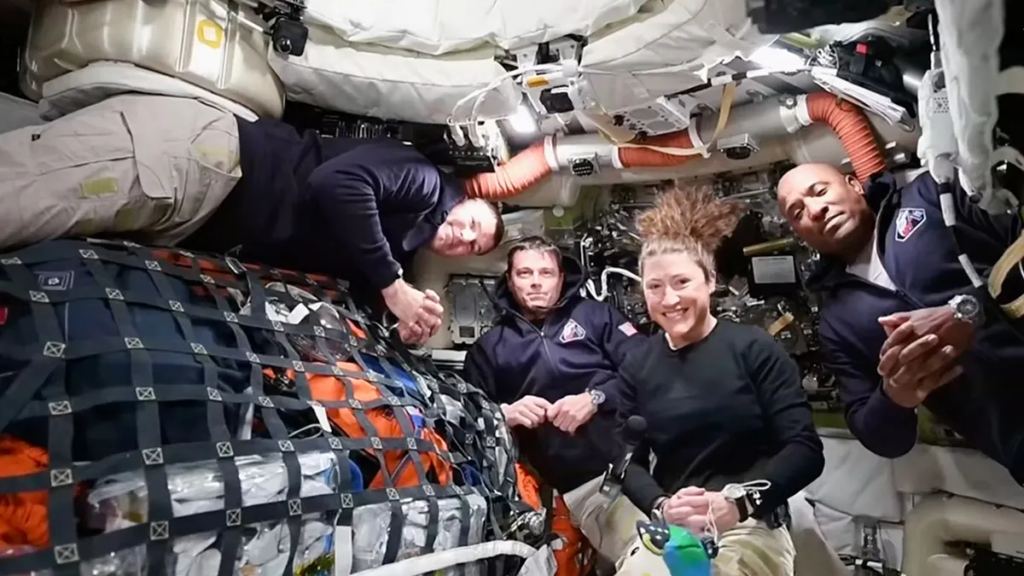
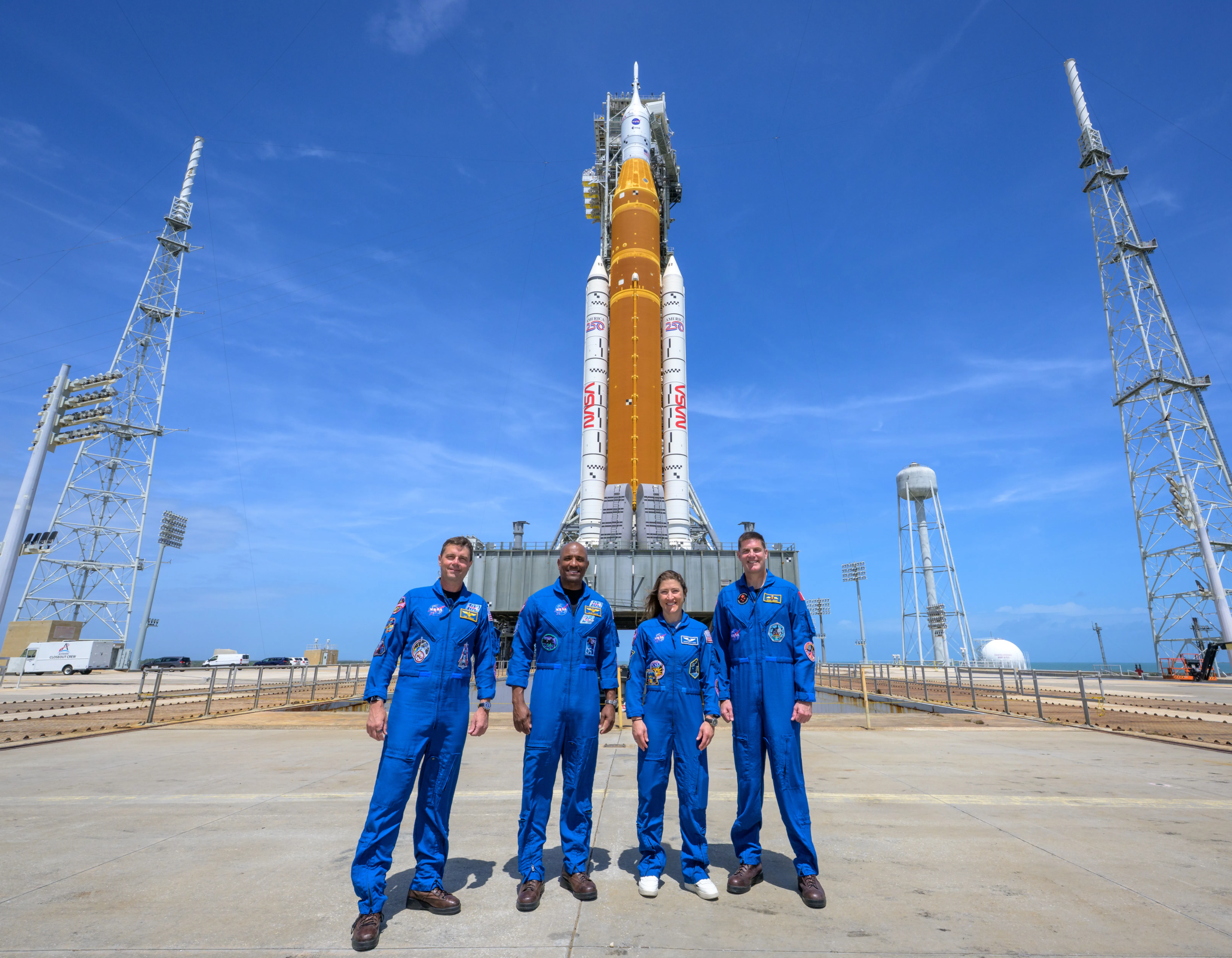
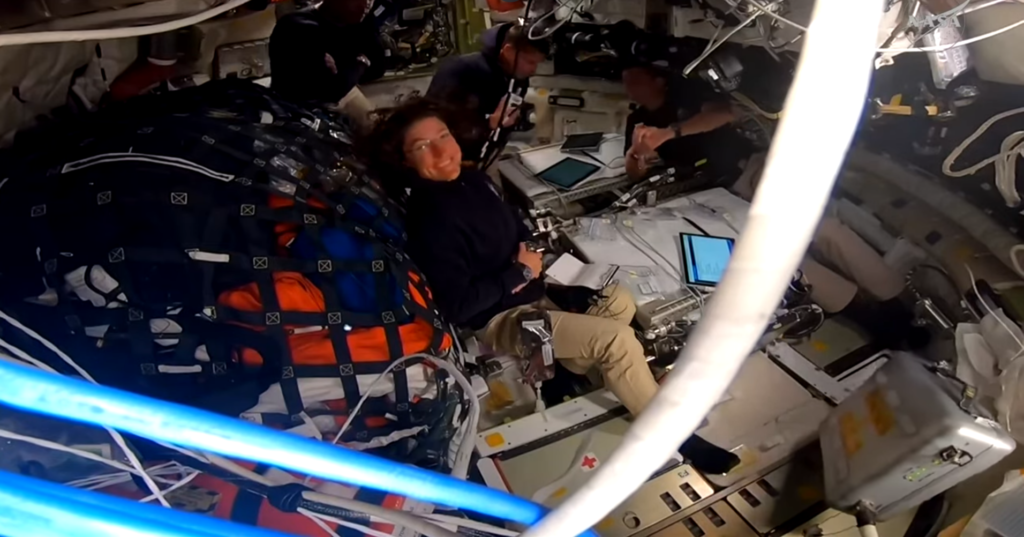
Inside the Orion capsule, the crew was not just observing this sequence—they were experiencing it. For the first time since the final Apollo mission in 1972, humans were witnessing booster separation from within the spacecraft itself. It wasn’t just a view.
It was a return.
A reconnection to a moment in history that had remained untouched for generations. The last time astronauts felt that shift—the sudden release, the subtle change in motion—was during an era that has since become legend.
And now, it was happening again.
What makes this moment extraordinary is not only its technical significance, but its emotional weight. For decades, humanity has looked back at Apollo footage, imagining what it must have felt like to leave Earth behind in such a definitive way.
Artemis II turned imagination into experience.
The separation of the boosters marked more than a phase of flight. It marked a threshold. A point where the spacecraft, now lighter and more focused, could continue its journey toward Earth orbit and beyond, carrying with it the hopes of a new era of exploration.
Because this mission is not isolated.
It is part of something larger.
Artemis II is a bridge between what humanity once achieved and what it is preparing to achieve again. The journey toward the lunar far side is not just about revisiting the Moon—it is about redefining our relationship with space.
And that begins with moments like this.
Moments where engineering precision meets human ambition. Where thousands of calculations align perfectly to create a sequence that lasts only seconds but determines the success of everything that follows.
From the outside, the image captured by Brian Lail is breathtaking. The contrast of fire and sky, motion and stillness, power and release—it feels almost artistic.
But from the inside, it is something else entirely.
It is sensation.
The shift in force. The change in vibration. The realization that one phase has ended and another has begun. For the crew, this is not just a visual memory—it is a physical one, etched into their experience of leaving Earth.
And that makes it unforgettable.
Because spaceflight is not just about where you go. It is about how you get there. The transitions, the thresholds, the moments that redefine the journey in ways that no single destination ever could.
The booster separation is one of those moments.
It is the instant where the mission proves itself. Where the immense effort of design, testing, and preparation reveals its purpose. Where the spacecraft continues forward, lighter, faster, and fully committed to the path ahead.
And perhaps most importantly, it is a reminder.
That even in an age of advanced technology and routine launches, there are still moments that feel like the first time. Moments that carry the same sense of awe, the same sense of risk, and the same sense of possibility that defined the earliest days of space exploration.
Two minutes into the Artemis II mission, humanity didn’t just leave the ground.
It remembered how to reach again.