
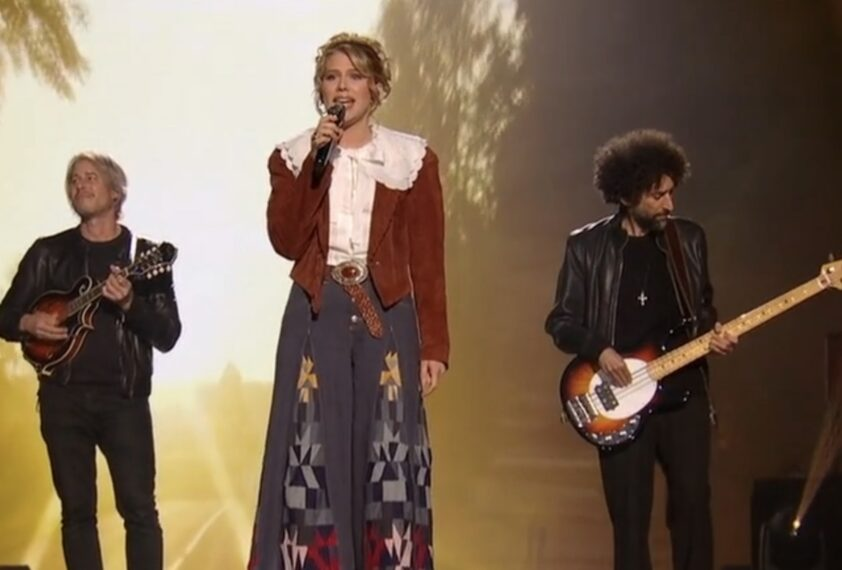
There are performances that win applause, and then there are performances that settle somewhere deeper—where words don’t quite reach, but feeling does. Hannah Harper’s cover of “Gratitude” by Brandon Lake belongs to the latter. It didn’t happen under the bright lights of American Idol. There were no judges’ critiques, no live voting pressure, no stage designed to amplify impact. And yet, somehow, it may have said more about her as an artist than any televised moment so far.
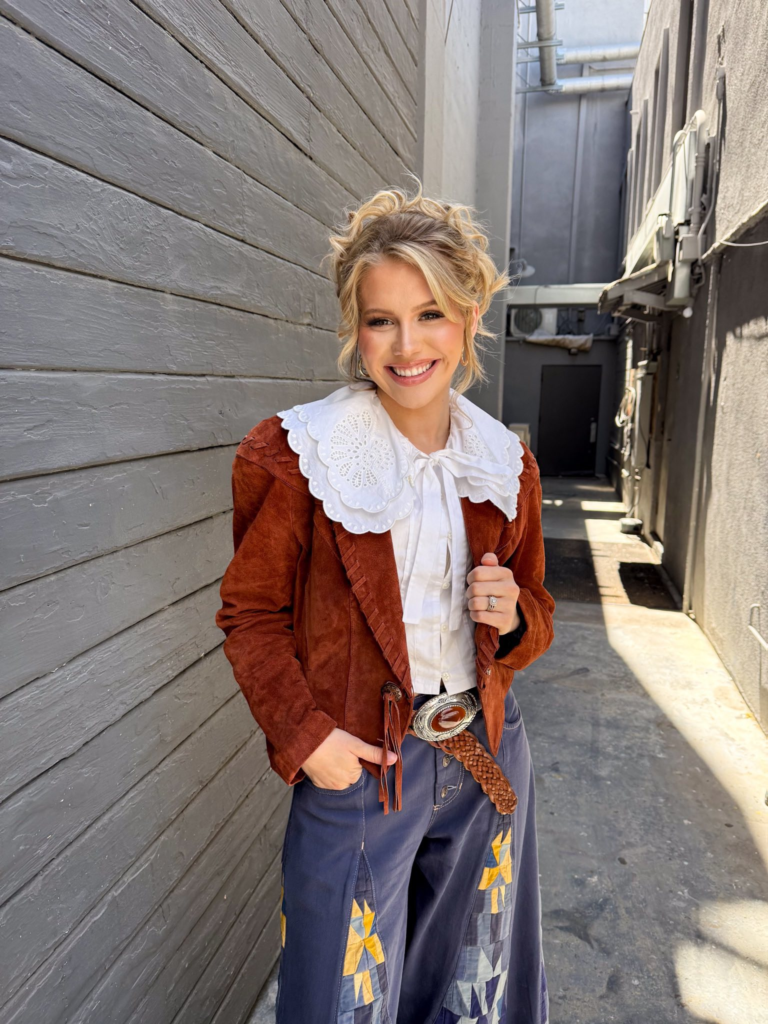
Because what Hannah did here wasn’t about performance—it was about presence.
From the first note, there is a stillness that feels almost intentional, as if she understands that this song doesn’t ask to be sung loudly, but honestly. “Gratitude” is not built for vocal gymnastics. It is built for surrender. And Hannah doesn’t try to control it—she allows herself to sit inside it, to breathe with it, to feel it before delivering it. That distinction is subtle, but powerful.
Her voice doesn’t rush. It unfolds.
There’s a kind of restraint in her delivery that reflects maturity beyond the competition. Many singers, especially in high-stakes environments, feel the need to prove something—to demonstrate range, power, precision. But Hannah does something far more difficult. She trusts simplicity. She trusts that emotion, when it’s real, does not need embellishment.
And in doing so, she creates something undeniably intimate.
It feels less like a performance and more like a private moment that somehow found its way into public view. That’s what makes it so compelling. You’re not watching Hannah Harper try to impress—you’re witnessing her connect. And in today’s landscape, where so many performances are engineered for impact, that kind of authenticity stands out almost immediately.
But perhaps what makes this cover even more significant is where it exists in her journey.
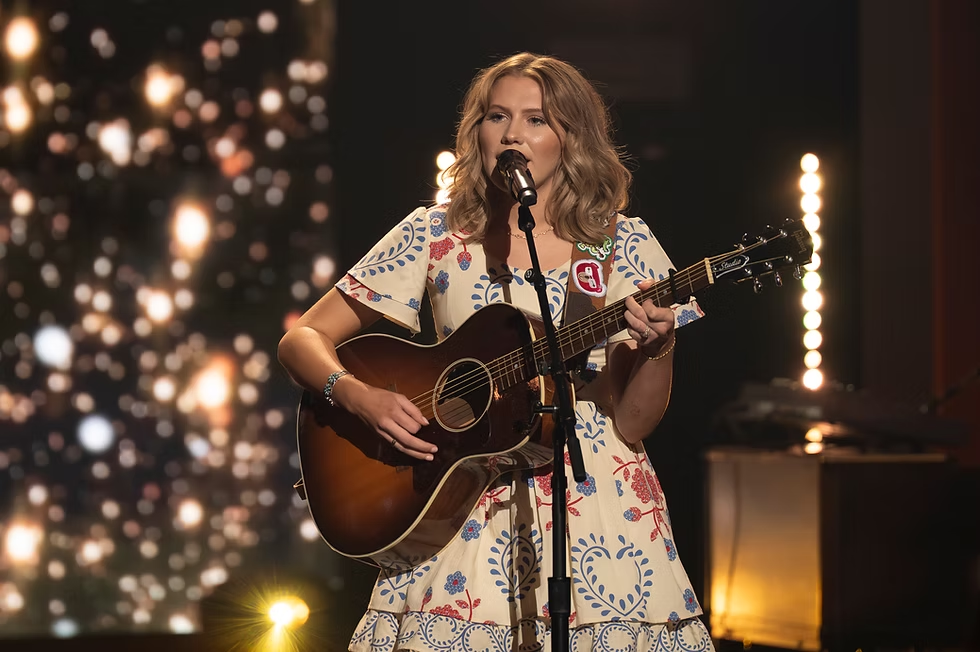
It wasn’t on the Idol stage, yet it carries weight that extends directly into the competition. Because this is where narratives are built—not just through weekly performances, but through moments that reveal who an artist truly is when no one is scoring them. Hannah’s decision to share this song, outside the structure of the show, feels intentional. It feels like a quiet statement: this is me, beyond the format.
And that matters more than people think.
Audiences don’t just vote for talent—they vote for connection. They vote for the feeling that an artist understands something about life, about emotion, about truth. And Hannah, through this cover, taps into that universal space where music becomes more than sound—it becomes reflection.
There is also something deeply aligned between the song itself and Hannah’s identity.
Her roots in gospel and bluegrass have always been present in her artistry, but “Gratitude” allows those roots to surface in a more unfiltered way. There’s no need to adapt, no need to reinterpret. This is her natural ground. And when an artist performs from a place that feels like home, the difference is unmistakable.
You hear it in the softness of her phrasing.
You feel it in the pauses she allows.
You notice it in the way she doesn’t rush to fill silence, but lets it exist, letting the emotion carry through even when the music momentarily steps back. That kind of control—the ability to hold space rather than fill it—is rare. And it signals something important: Hannah isn’t just learning how to perform. She already understands how to communicate.
Which brings us to the bigger question—what does this mean for her place in the competition?
If “American Idol” were purely about stage performances, then perhaps this moment would remain separate. But the reality is, today’s competition extends beyond the stage. Social media, off-stage performances, personal storytelling—they all shape how audiences perceive contestants. And in that expanded space, Hannah’s “Gratitude” cover becomes more than just a side performance.
It becomes evidence.
Evidence that she possesses something deeper than technical ability. Evidence that her artistry isn’t dependent on production, lighting, or audience reaction. Evidence that when everything is stripped away, what remains is still compelling.
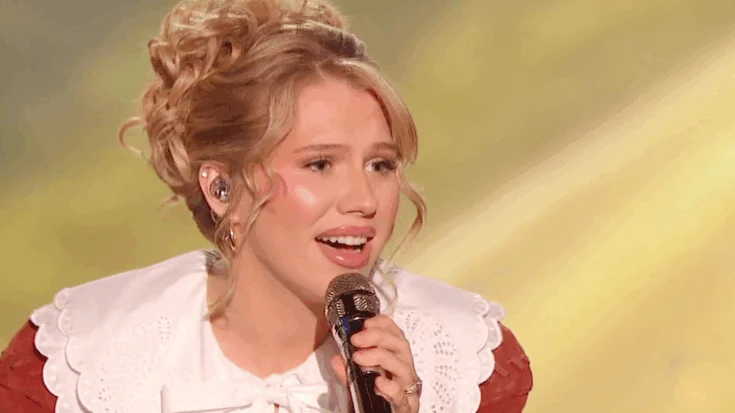
And that is exactly what separates a contestant from an artist with longevity.
There is a quiet confidence in what Hannah is building. She isn’t chasing moments—she’s creating them, even in spaces where they’re not expected. And that kind of consistency, that ability to evoke emotion regardless of setting, is what keeps audiences invested over time.
Because at the end of the day, people remember how you make them feel.
And Hannah Harper, with nothing more than her voice and a song rooted in something deeply human, has once again made it impossible to look away.
Not because she demanded attention—but because she earned it.