
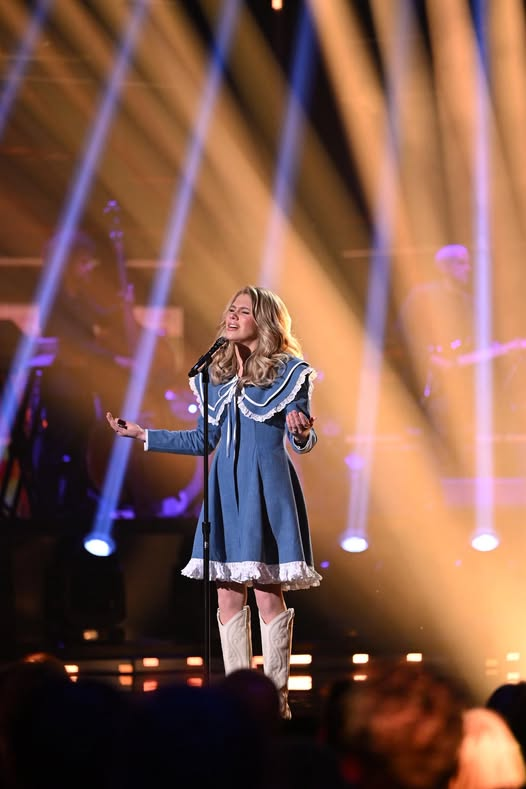
There’s a version of every contestant that exists only on screen — not entirely real, not entirely constructed, but carefully assembled. In a show like American Idol, what the audience sees isn’t just performance; it’s perspective. And that perspective is shaped long before a single vote is cast.
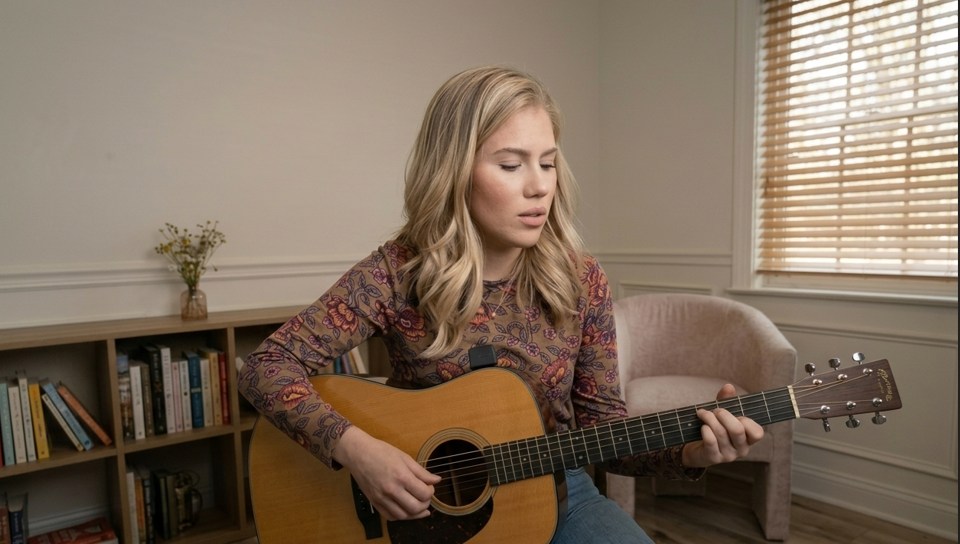
Because not all moments are shown.
And what isn’t shown can matter just as much as what is.
The “safe contestant” is one of the most misunderstood roles in the competition. They’re often labeled as predictable, consistent, or steady — sometimes praised, sometimes dismissed. But what if that perception isn’t entirely about performance?
What if it’s about exposure?
Screen time doesn’t just display talent. It frames it. A contestant who receives extended backstory, rehearsal footage, emotional interviews — they feel layered, dynamic, evolving. The audience sees their struggle, their risk, their growth. Even their imperfections are contextualized.
They become a story.
But a contestant who is shown only through performance clips, brief feedback, and minimal narrative framing begins to feel different. Not because they are different — but because they are less explained.
And what isn’t explained is often simplified.
This is where the illusion of “safety” begins to form.
Without visible risk, the audience assumes there is none. Without visible struggle, the journey appears flat. Without narrative peaks, the performance feels steady — even if it isn’t. The contestant hasn’t changed.
But the perception has.
Because television doesn’t just present reality.
It edits meaning.
The invisible edit is not about manipulation in the obvious sense. It’s not about altering what happened — it’s about choosing what matters enough to show. And in that selection, entire narratives are shaped. A bold performance might be shortened. A nuanced moment might be overlooked. A contestant’s most vulnerable side might never make it to air.
And without those layers, the audience fills in the gaps.
Often incorrectly.

A contestant who is actually taking subtle risks — changing tone, adjusting delivery, experimenting within their style — may still appear “safe” if those nuances aren’t highlighted. Meanwhile, another contestant who is framed through visible risk, even if inconsistent, may feel more dynamic simply because their story is being told more fully.
Visibility becomes value.
And invisibility becomes neutrality.
There’s also a psychological pattern at play. Audiences tend to equate screen time with importance. The more someone is shown, the more significant they feel. The less they appear, the easier it becomes to categorize them quickly.
Reliable.
Predictable.
Safe.
But those labels often say more about editing than about the contestant themselves.
Because “safe” is not always a reflection of performance.
Sometimes, it’s a reflection of absence — the absence of narrative, of context, of visibility.
This creates a subtle imbalance. Contestants who are heavily featured are given the opportunity to be understood. Those who are not must rely solely on their performances to communicate everything — their identity, their growth, their risk.
And performance alone is rarely enough to tell a full story.
Which means some contestants are not just competing on stage.
They’re competing against perception.
Yet, there’s a quiet advantage hidden within this dynamic. When a contestant isn’t overexposed, they avoid overdefinition. The audience may not fully understand them — but they also haven’t fully judged them. There’s space. Space for interpretation. Space for curiosity.
And curiosity can be powerful.
Because when the audience begins to question what they’re not seeing, engagement deepens. They start paying closer attention. Listening more carefully. Looking for details that weren’t explicitly shown.
The invisible edit, in this way, can create mystery.
And mystery sustains attention.
But it’s a delicate balance. Too little visibility, and the contestant fades. Too much, and they become predictable in a different way — overexplained, overanalyzed, overexposed.
The most compelling contestants exist somewhere in between.
Seen enough to be recognized.
Hidden enough to be discovered.
So when we label someone as “safe,” it’s worth asking:
Are they truly playing it safe?
Or are we simply seeing less of what makes them complex?
Because in a competition shaped as much by editing as by performance, perception is never accidental.
It’s constructed.
Quietly.
Carefully.
And often, invisibly.