
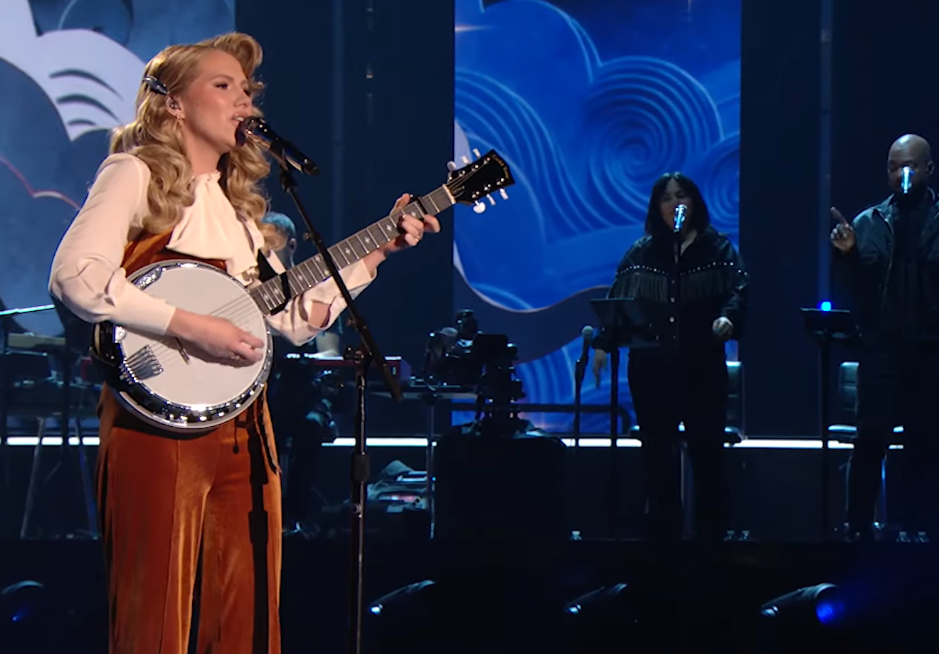
Every generation of music eventually asks the same question: who will carry timeless grace into the future? Audiences search for voices that do more than entertain. They look for artists who soothe, uplift, and leave something meaningful behind long after the final note fades. When people wonder whether Hannah Harper might be the next Alison Krauss for gospel music, they are really recognizing something rare already present in her sound.

Alison Krauss became beloved not through noise, spectacle, or force, but through purity, elegance, and emotional truth. Her voice carried softness without weakness and power without strain. She proved that gentleness can command attention when it is real enough. If Hannah Harper inspires similar comparisons, it suggests listeners hear those same treasured qualities rising in a new form.
Gospel music, perhaps more than any other genre, depends on sincerity. Listeners can tell immediately whether a performance is merely polished or genuinely felt. The strongest gospel voices do not simply sing notes—they minister through them. They create calm, hope, reflection, and healing. Hannah Harper appears to possess the kind of voice that could thrive in that sacred space because warmth and honesty seem built into her delivery.
There is something naturally comforting in Hannah’s tone. Some voices impress the ear; others reach the spirit. Gospel music has always leaned toward the second kind. It asks for voices that can carry burdens, joy, gratitude, and faith all at once. If Hannah’s voice consistently moves people in that deeper way, then comparisons to icons become less surprising and more understandable.
What makes Alison Krauss timeless was not only technical excellence but restraint. She never needed to oversing to be unforgettable. Hannah seems to carry a similar instinct. There is beauty in singers who know that emotion often lands strongest when delivered with grace rather than excess. In gospel music, that restraint can be especially powerful because the message matters as much as the melody.
Another reason the comparison resonates is genre crossover potential. Alison Krauss moved seamlessly across bluegrass, country, and broader audiences because authenticity travels well. If Hannah Harper brings sincerity and spiritual depth, she could similarly connect beyond one lane. Great voices often transcend categories because people respond to truth before labels.

Still, it is important to understand comparisons correctly. Saying Hannah might be the next Alison Krauss for gospel music does not mean she should imitate anyone. It means listeners detect a lineage of qualities: purity, emotional clarity, timeless tone, and the ability to make softness feel unforgettable. Those are traits worth inheriting, not copying.
Hannah’s greatest opportunity would be to bring those qualities into a voice entirely her own. Gospel music does not need replicas. It needs fresh artists who honor tradition while speaking to the present. If Hannah can blend grace with originality, reverence with personality, and timeless tone with modern reach, she could create something deeply meaningful for today’s audience.
From a strategic perspective, artists who embody calm excellence often build unusually loyal followings. Loud trends rise quickly, but spiritually resonant artistry lasts longer. In an era where many listeners feel overwhelmed, a voice that offers peace can become invaluable. Hannah’s potential in gospel music may lie precisely there—not only in vocal beauty, but in emotional refuge.
There is also symbolic power in a younger artist stepping into sacred music with authenticity. It reminds audiences that faith-rooted artistry still has a future. Gospel has always renewed itself through fresh voices carrying eternal themes. If Hannah Harper becomes part of that renewal, the impact could stretch far beyond charts or applause.
Whether or not she is ever called the next Alison Krauss may matter less than what listeners already sense: she has a gift capable of moving hearts. Titles and comparisons fade. What remains is the ability to comfort, uplift, and stay with people when the song ends.
And if Hannah Harper can do that consistently, gospel music may not be looking at the “next” anyone.
It may be witnessing the first Hannah Harper.