
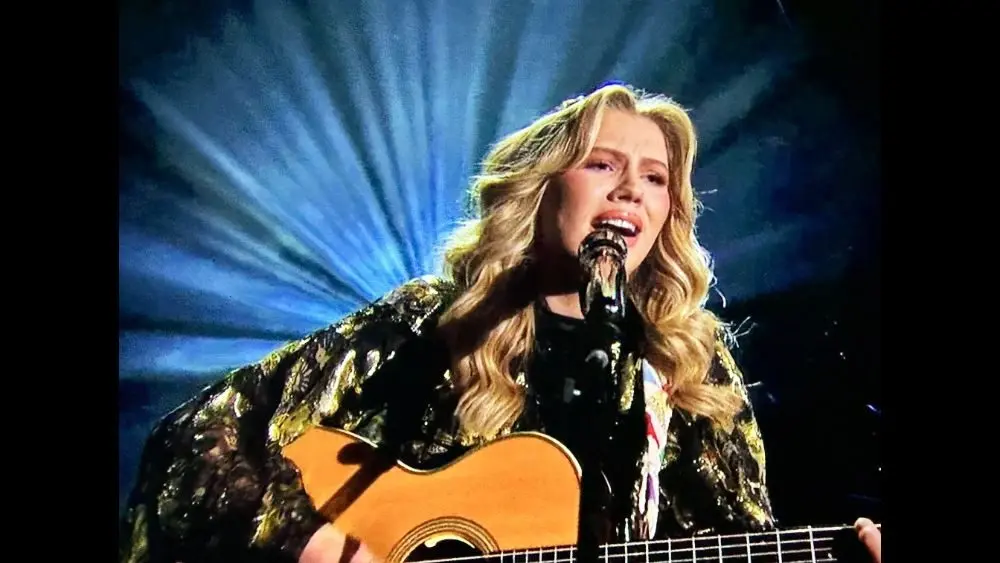
Competition shows are often built on pressure, but every season there are a few nights that reveal who is truly ready to rise above it. On the latest episode of American Idol, Rock and Roll Hall of Fame Night gave contestants a challenge designed to test versatility, confidence, and identity. For many, it meant stepping far outside familiar territory. For Hannah Harper, it became something else entirely — an opportunity to show exactly why she is becoming one of the most compelling names in the competition.
The Top 11 were asked to perform songs made famous by Hall of Fame nominees, a theme that carries weight the moment it is announced. These are songs tied to legacy, artists tied to history, and performances audiences already know by heart. That kind of challenge can intimidate even talented singers. It invites comparison, raises expectations, and leaves little room for uncertainty.

Yet Hannah Harper approached the night differently. Rather than trying to imitate legends or chase the obvious dramatic route, she leaned into what has made her stand out from the beginning. She stayed rooted in her mountain bluegrass identity, trusting the sound and spirit that first introduced her to viewers. In doing so, she transformed the challenge from a test of imitation into a statement of originality.
That choice mattered.
Many contestants on televised competitions lose momentum when they begin moving too far from the qualities that made audiences care about them in the first place. Harper appears to understand something important: growth does not require abandoning authenticity. It requires expanding it. By bringing her own musical roots into a theme night built around rock history, she found a balance between respect for the material and confidence in herself.
The result was a performance that reportedly felt fresh, emotional, and impossible to overlook. From the first note, there was a sense that she was not simply covering a known song. She was reinterpreting it through a voice shaped by tradition, lived feeling, and unmistakable character. That is often the difference between a pleasant performance and a memorable one.
Her tone remains one of her greatest strengths. There is something textured and sincere in the way she sings — the kind of quality that can make even familiar lyrics sound newly personal. On a night built around iconic music, Harper did not compete with the originals through volume or theatrics. She competed through honesty. That approach can be far more powerful.
It also explains why judges and viewers continue responding to her so strongly. Since her first audition, Harper has steadily built support not through flashy moments alone, but through consistency. Week after week, she has offered performances that feel grounded. In an environment where contestants often chase viral moments, that steadiness can become a major advantage.
There is also a clear emotional intelligence in the way she chooses and delivers songs. Great contestants do more than sing well — they understand how to make an audience feel included in the moment. Harper often performs with the sense that she is sharing something rather than displaying something. That subtle distinction builds loyalty, because audiences connect more deeply with artists who invite rather than impress.
Rock and Roll Hall of Fame Night may have sharpened another key point: Hannah Harper is not easy to place in a single lane. While her roots are clearly bluegrass and mountain-country influenced, she has shown an ability to adapt those influences into broader themes. That versatility is valuable in any competition, especially one where weekly challenges can expose limitations quickly.

At the same time, she has avoided sounding generic. Many singers become versatile by losing identity. Harper seems to be doing the opposite — stretching artistically while keeping her signature intact. That is the mark of someone who could move beyond the show itself and into a lasting career.
As the season moves forward, frontrunner conversations naturally intensify. Rankings shift, fan bases mobilize, and each episode can reshape expectations. But some contestants create momentum that feels deeper than weekly voting patterns. Harper increasingly seems to belong in that category. She is not just surviving rounds; she is building a narrative of growth, authenticity, and reliability.
That narrative matters because viewers do not only vote for technical skill. They vote for who they trust to represent the season. They vote for who feels real, who improves, who surprises without losing themselves. Hannah Harper has been checking those boxes more consistently with each appearance.
There is also something strategic in the way she stands apart from the field. In seasons crowded with powerhouse belts and pop reinventions, a contestant who brings rooted musicianship and emotional clarity can become unforgettable. Harper’s sound gives audiences something distinct to remember after the credits roll.
Whether she ultimately wins the competition remains uncertain, as all reality competitions carry unpredictability. But winning is only one measure of success. Some contestants leave with titles. Others leave with identity, fan loyalty, and momentum that lasts longer than the trophy itself. Harper appears well positioned for the latter, regardless of final placement.
Still, it is becoming harder to ignore her chances. Nights like Rock and Roll Hall of Fame Night do more than entertain — they reveal who can meet a challenge without losing themselves. Harper did exactly that. She entered a theme built around legends and exited with her own identity stronger than ever.
That may be why her rise feels increasingly significant. She is no longer just a contestant with a standout voice or an interesting style. She is becoming one of the season’s defining artists.
And if she continues turning difficult theme nights into signature moments, Hannah Harper may not just be chasing the finale — she may be shaping the story of the season itself.