

Every season of a competition show reaches a moment when one contestant stops being just a contestant. They become the conversation. Not because they asked for it, not because the judges declared it, but because the audience cannot stop reacting to them. That is where Hannah Harper now stands. She is no longer simply performing on stage—she is shaping the season around her.

The numbers are impossible to ignore. Her performances are pulling in millions of views while others are still struggling to break through the noise. In the modern entertainment world, attention is its own scoreboard. Views become headlines, clips become talking points, and momentum becomes narrative. Hannah is winning all three at once, and that has created a question louder than any note she has sung: is this still a fair competition?
For some critics, the answer feels complicated. They argue that Hannah entered the season with a level of polish, instinct, and star quality that creates an uneven field. To them, it looks less like a weekly contest and more like a contestant already operating several steps ahead of everyone else. While others are learning how to command a stage, Hannah appears to arrive already knowing how to own one.
That perception matters because shows like American Idol are built on possibility. Viewers love growth arcs. They love watching uncertain singers become confident artists. They love the feeling that anyone with enough courage and talent can rise in real time. When one contestant seems fully formed from the beginning, some fans wonder if the story becomes less suspenseful.
But there is another side to the argument, and it may be even stronger.
Standing out is not a flaw in a competition. It is the purpose of one. No contestant is asked to blend in. No viewer votes for “most evenly matched participant.” The entire structure rewards distinction. Contestants are supposed to separate themselves from the pack, create unforgettable moments, and make the audience care enough to vote. If Hannah is doing that more effectively than others, supporters argue, then she is not breaking the system—she is succeeding within it.
That is what makes this debate so fascinating. It is really two ideas competing with each other. One side values parity, the belief that the race should feel close and uncertain. The other values excellence, the belief that when someone rises clearly above the field, they deserve to be recognized for it. Hannah Harper has become the point where those two philosophies collide.
Even commentary from past winner Robert Jamal has added more fuel to the fire. When former champions weigh in, their opinions carry extra gravity because they understand the pressure, scrutiny, and emotional demands of surviving the format. Their words do not just reflect fandom—they reflect experience. And when experienced voices join an active debate, the conversation naturally grows louder.
Still, the heart of this issue is not about fairness at all. It is about discomfort with dominance.
Audiences often claim they want greatness, but when greatness appears too clearly, reactions become mixed. Some celebrate it. Others resist it. We see this in sports, music, film, and television. Once someone starts pulling ahead, the discussion shifts from admiration to whether their lead should exist in the first place. Success becomes suspicious simply because it is visible.
Hannah’s rise follows that pattern. Her momentum is overshadowing others not because rules were changed for her, but because momentum naturally casts shadows. When one contestant consistently creates the most replayed moments, the rest of the field feels dimmer by comparison. That is not unfairness—it is competition at its sharpest.
There is also an uncomfortable truth many avoid saying aloud: some contestants are not competing against Hannah. They are competing against the version of themselves they have not reached yet. Hannah’s consistency may be exposing gaps in preparation, confidence, or artistic identity elsewhere in the lineup. That can feel harsh, but high-level competition often reveals truths before it rewards anyone.
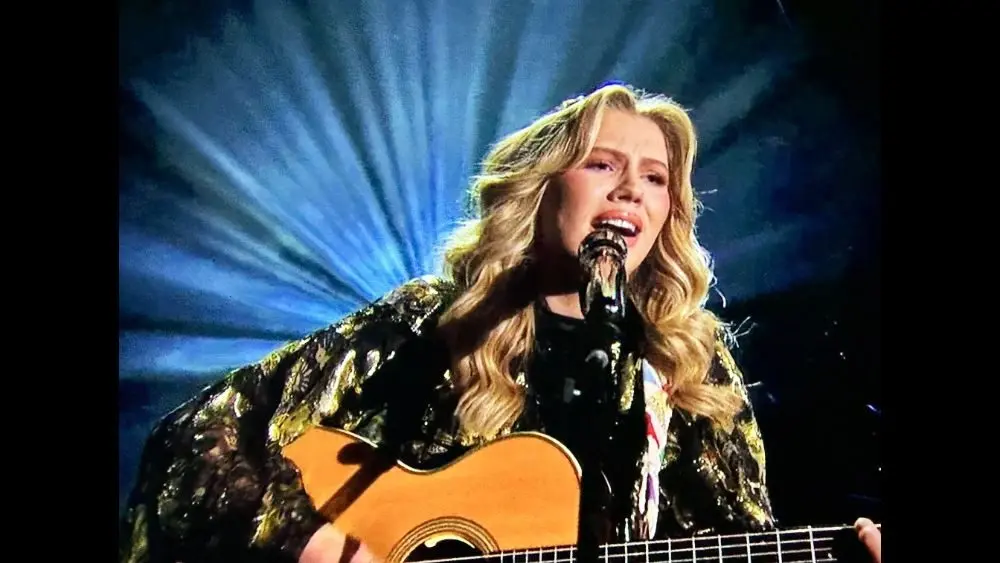
At the same time, frontrunner status can be fragile. Being ahead early invites heavier expectations. Every performance is judged against your last success. Every small misstep becomes a headline. Every rival gets the underdog narrative while you carry the pressure of proving your lead is real. What looks like advantage from the outside can become burden on the inside.
That is why the “too far ahead” label may be misleading. It suggests comfort. There is nothing comfortable about becoming the contestant everyone is chasing. It means you no longer get surprise on your side. You must deliver while others gain sympathy, hunger, and urgency.
So what is Hannah Harper right now?
She may be exactly what a frontrunner looks like: visible, divisive, impressive, and impossible to ignore. The best leaders in competitions rarely receive universal agreement. They attract praise from those who value excellence and skepticism from those who value balance. Hannah is receiving both, which may be the clearest sign of her position.
And that may be the real answer to the debate.
She is not too far ahead because the show failed.
She seems far ahead because she keeps giving people reasons to believe it.