

Every season of a singing competition promises suspense, discovery, and the belief that anyone can break through. But sometimes a contestant arrives who changes the atmosphere entirely. The conversation stops being about weekly performances and starts becoming about something bigger. That is exactly where Hannah Harper now stands. Her rise on American Idol has become so dominant, so visible, and so debated that many viewers are asking whether this is still a fair competition at all.

The controversy did not begin with a dramatic scandal or a judge’s outburst. It began with something quieter. One viral moment. One lingering look on stage. One calm confidence that seemed to say more than words ever could. Social media exploded almost instantly, turning a subtle gesture into a symbol of everything people believe about Hannah—either proof of undeniable star power or evidence that she is operating on a different level than everyone else.
That is the fascinating tension surrounding her success.
To supporters, Hannah Harper is simply what talent looks like when it cannot be ignored. They see a contestant with poise, emotional intelligence, stage command, and the rare ability to make viewers feel invested the second she appears. They argue that every major competition is meant to uncover someone extraordinary, and if Hannah is outperforming expectations, that should be celebrated rather than questioned.
To critics, however, the issue feels more complicated.
Some believe Hannah’s momentum has grown so large that the season itself feels unbalanced. Massive views, constant online discussion, repeated viral moments, and a polished presence have created the impression that she is playing a different game from the rest of the contestants. In their eyes, suspense begins to fade when one person dominates the narrative too early and too consistently.
That is where whispers of an “unfair edge” begin.
Often, those whispers are not about cheating or anything literal. They are about perception. Viewers notice who gets the biggest reactions, who trends fastest, who appears most camera-ready, and who commands attention without effort. When one contestant seems to own the spotlight, audiences naturally wonder whether the competition is rewarding talent alone—or something else alongside it.
The truth is, perception matters in televised competitions.
These shows are not judged in a vacuum. They exist at the intersection of performance, storytelling, editing, fan culture, and momentum. A contestant may sing beautifully, but if another contestant becomes the season’s emotional center, the balance shifts. Suddenly, one performer is not just competing—they are becoming the story everyone follows.
That appears to be Hannah Harper’s current position.
She has become more than a contestant with strong vocals. She is now a symbol onto which viewers project bigger questions. What should these competitions reward? Raw talent? Growth? Authenticity? Technical brilliance? Relatability? Marketability? Hannah’s rise forces fans to confront their own answers, and those answers are not always aligned.
Then came Robert Jamal’s unexpected reaction, which widened the conversation even further.
When another notable voice enters a debate like this, it changes the scale of the story. Suddenly, it is no longer just fan chatter in comment sections. It becomes something the broader audience notices. Whether his reaction was supportive, skeptical, or simply surprised, the effect was immediate: attention shifted from Hannah’s performances alone to the system around her rise.
That is why so many people say this controversy is no longer just about Hannah.
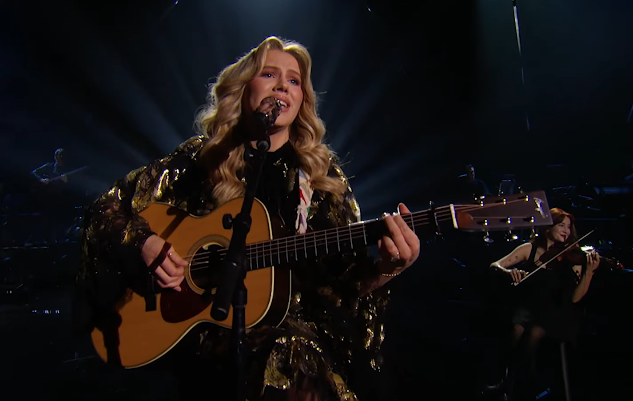
It is about the mechanics of modern competition television. In today’s world, a contestant can dominate far beyond the stage itself. Streaming clips, viral edits, fan pages, reaction videos, and constant social media engagement can create momentum stronger than weekly episodes. Some contestants compete only during airtime. Others compete every hour online. That difference can feel enormous.
Yet there is another perspective worth considering.
Sometimes what looks like an unfair advantage is simply charisma meeting opportunity. Certain performers possess a magnetism that cameras love and audiences instantly recognize. They do not need help standing out. They just do. History across music, film, and sports is full of figures who seemed ahead of their peers not because the system favored them, but because they had something difficult to teach and impossible to fake.
That quality may be exactly what Hannah’s fans believe they are witnessing.
Still, frontrunner status comes with its own risk. The stronger a contestant appears, the more resistance they attract. Viewers who normally love excellence may begin rooting elsewhere simply to restore unpredictability. Some will question every compliment, every spotlight moment, every wave of applause. Success can become both crown and target at the same time.
For Hannah, the path forward may depend less on numbers and more on nuance.
Can she continue connecting emotionally rather than merely dominating metrics? Can she remain relatable while carrying frontrunner energy? Can she prove week after week that the conversation around her exists because of substance, not just momentum? Those are the questions great contestants eventually face.
For the other competitors, this moment can still become opportunity.
When one person commands attention, everyone else has a clear challenge: create a moment so undeniable it interrupts the narrative. Competition shows often shift when underdogs deliver brilliance at the perfect time. Nothing is final until votes close and finales end. Momentum is powerful, but it is never guaranteed.
So is this an unfair competition now?
Perhaps not. Perhaps it is simply a competition confronting an uncomfortable truth: sometimes one contestant rises faster than the format expects. When that happens, audiences must decide whether they are witnessing imbalance—or excellence.
And that decision may shape the rest of the season more than any single performance ever could.