

There’s a moment on live television that doesn’t trend, doesn’t explode, and doesn’t demand applause—but somehow, it lingers longer than anything else. That’s where Hannah Harper lives. In a competition built on vocal fireworks, she chose silence’s closest cousin: restraint. And strangely, that choice didn’t make her disappear—it made her unforgettable.

While others chased volume like it was a currency, Hannah treated it like a temptation she didn’t need. Her performances didn’t arrive like a storm; they settled like a memory. And in a show where “bigger” is often mistaken for “better,” she quietly rewrote the equation.
The psychology behind this is simple—but rarely executed well. Audiences don’t just vote for what they hear; they vote for what they feel. Loud singers impress the ear, but quiet singers—when done right—reach something deeper. Hannah didn’t compete for attention; she created space for connection.
Every note she sang felt intentional, almost like she was withholding something on purpose. That restraint created tension—the kind that keeps viewers leaning forward instead of sitting back. It wasn’t about what she gave; it was about what she didn’t. And that absence became her signature.
In contrast, louder contestants often fell into a predictable pattern. Big notes, big moments, big reactions. But predictability, even when powerful, fades fast. Hannah’s unpredictability came from subtlety. You never knew when she’d let a line breathe or when she’d pull back instead of pushing forward.
That’s where voting behavior shifts in a competition like American Idol. The audience at home isn’t just evaluating technique—they’re choosing who feels real in their living room. Hannah’s stillness translated through the screen as authenticity, not hesitation. It felt human, not rehearsed.
There’s also an overlooked factor: fatigue. When every contestant is trying to out-sing the next, the audience becomes overwhelmed. Volume loses its impact when everyone is loud. Hannah, by contrast, became a relief. A reset. A moment where the noise stopped—and something honest could begin.
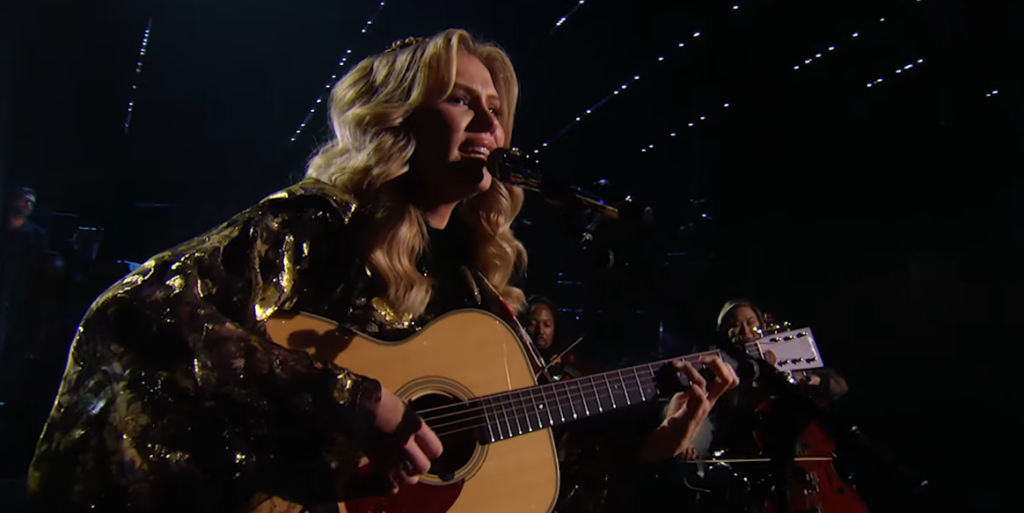
Her performances carried a quiet confidence that didn’t need validation. She didn’t sing like she was trying to win. She sang like she already knew who she was. That subtle difference changes everything. Because when an artist isn’t asking for approval, the audience feels invited instead of persuaded.
And then there’s storytelling. Not the kind built on dramatic runs or vocal gymnastics, but the kind built on presence. Hannah didn’t decorate her songs—she inhabited them. Each pause, each softened phrase, felt like a decision rooted in meaning rather than performance.
This is where strategy meets instinct. Whether intentional or not, Hannah tapped into a rare advantage: emotional contrast. In a lineup of intensity, she became intimacy. In a sea of spectacle, she became stillness. And contrast, more than perfection, is what audiences remember.
It’s tempting to believe that competitions are won by the loudest voices, the highest notes, or the biggest reactions. But Hannah Harper’s journey suggests something different. Sometimes, what stands out isn’t what demands attention—it’s what quietly earns it.
In the end, she didn’t out-sing the competition in the traditional sense. She out-felt them. And in a show built on voices, that might be the most powerful move of all.