

In a competition built on spectacle, risk often masquerades as courage. Big notes, bold arrangements, vocal acrobatics—these are the currencies contestants are told will buy them a future. But beneath that glittering surface lies a quieter truth: not every risk pays off, and not every “safe” choice is a retreat. Sometimes, what looks like safety is something far more dangerous—a calculated stillness that refuses to be ignored.

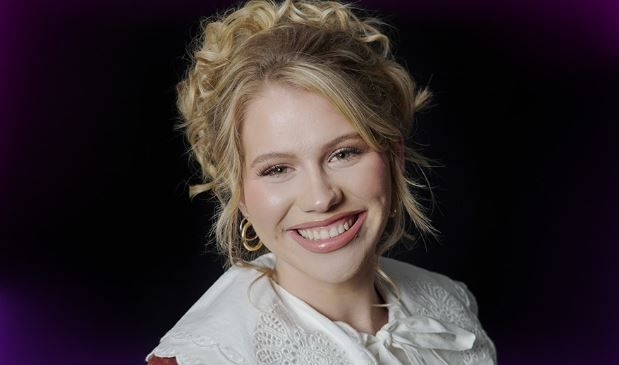
That’s where Hannah Harper changed the conversation.
At first glance, her choices seemed conservative. Familiar songs. Controlled delivery. No unnecessary vocal gymnastics. In a season where others chased viral moments, she appeared to step back. And yet, that step back was not hesitation—it was positioning. Because in a room full of noise, the rarest thing is not volume. It’s clarity.
What many labeled as “safe” was, in reality, deeply strategic. Familiarity in song choice wasn’t about comfort—it was about connection. When an audience already knows a melody, they stop listening for what’s next and start feeling what’s being said. Hannah didn’t just perform songs; she inhabited them. And that shift—from performance to presence—is where votes are quietly decided.
There’s a misconception in shows like American Idol that growth must always be loud. That evolution is only visible when it’s explosive. But Hannah’s growth was internal, almost invisible unless you were paying attention. Her phrasing deepened. Her pauses grew more intentional. Her control wasn’t static—it was sharpening.
And here’s the reason why that matters: audiences don’t vote for effort. They vote for feeling.
A risky performance can impress judges. A controlled one can move millions. Hannah seemed to understand that emotional recall outlasts technical admiration. People may forget the highest note of the night, but they rarely forget how a moment made them feel. By staying grounded, she ensured her performances lingered long after louder acts faded.
There’s also a psychological edge to her approach. In later stages of competition, unpredictability becomes a double-edged sword. One wrong risk can unravel weeks of momentum. By choosing stability, Hannah removed volatility from her trajectory. She didn’t just perform—she protected her narrative.
Because that’s what this becomes in the end: not just a singing contest, but a story.
And Hannah’s story wasn’t about chasing moments. It was about becoming one.
Her restraint created contrast. When others escalated, she centered. When others expanded, she distilled. That contrast made her stand out more than any vocal run could. Ironically, by doing less, she revealed more—more intention, more identity, more truth.
Critics often mistake subtlety for limitation. But subtlety is one of the hardest disciplines to master. It requires confidence to not over-sing, discipline to not over-perform, and trust—trust that the audience will lean in rather than tune out. Hannah didn’t demand attention. She earned it.
And that’s the deeper strategy at play.
Because in a format where viewers are overwhelmed with choices, the contestant who feels most real often wins over the one who feels most impressive. Authenticity, when done right, doesn’t shout—it resonates. Hannah’s so-called “safe” choices weren’t about avoiding risk; they were about choosing the right risk—the risk of being still in a world addicted to noise.
What makes this approach powerful is its long-term effect. Flashy performances can spike attention, but grounded performances build loyalty. And loyalty is what carries contestants through elimination rounds. Hannah wasn’t playing for a single night. She was playing for endurance.
That’s why her “safe” wasn’t safe at all.
It was surgical.
Every note, every pause, every decision was calibrated—not to impress in the moment, but to remain in memory. And in a competition where memory often outweighs moment, that distinction becomes everything.
In the end, the danger wasn’t that she played it safe.
The danger was that she understood the game better than everyone else.