
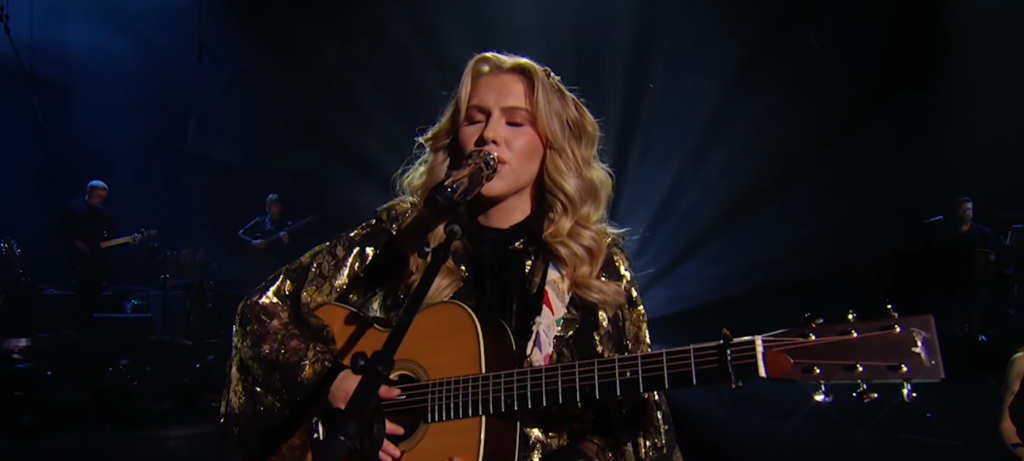
There’s a moment in every competition where perfection stops being impressive—and starts feeling distant. The Top 9 stage isn’t just about hitting notes anymore; it’s about holding people. And in that quiet, almost invisible shift, Hannah Harper didn’t just perform… she understood the room in a way others didn’t.
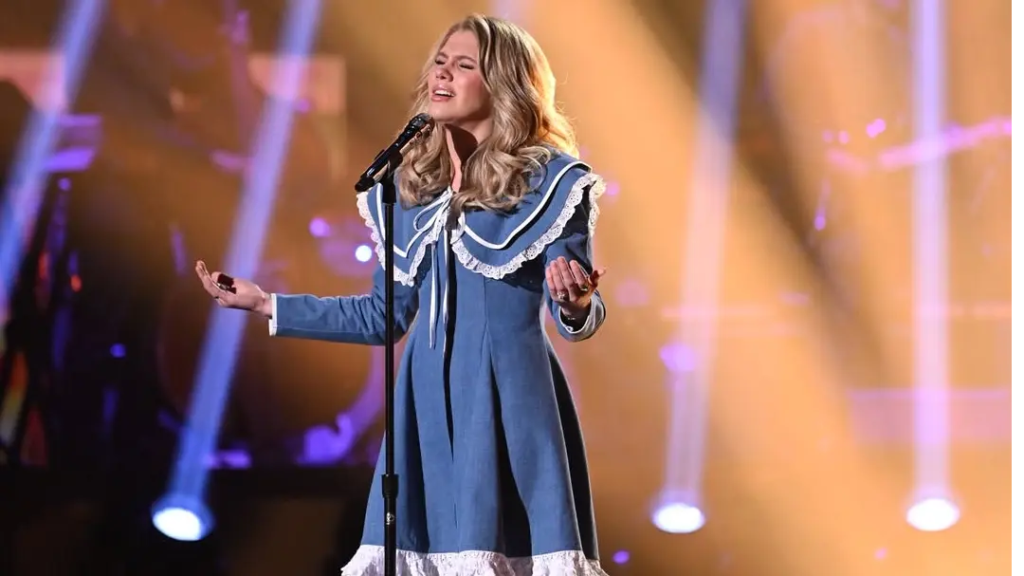
While some contestants leaned into vocal acrobatics—stretching runs, chasing flawless control, stacking notes like trophies—Hannah chose restraint. Not because she couldn’t do more, but because she knew more wasn’t the point. There’s a difference between singing to be admired and singing to be remembered. She chose the latter.
What makes this trade-off so powerful is that it goes against instinct. Competitions reward precision. They celebrate the technically gifted—the ones who can bend notes, sustain power, and deliver near-perfect executions under pressure. But what often gets lost is the human side of music: the imperfections that make a voice feel lived-in rather than practiced.
Hannah leaned into that humanity. Her phrasing wasn’t always textbook. Her transitions weren’t aggressively polished. But every line carried intention. Every pause felt like it meant something. She wasn’t just singing lyrics—she was letting them land, slowly, almost deliberately, as if trusting the audience to meet her halfway.
And that trust? That’s the risk most contestants avoid.
Because emotion is unpredictable. It doesn’t follow scales or rehearsed patterns. You can’t rehearse sincerity the same way you rehearse a high note. And yet, Hannah built her entire Top 9 moment around that very unpredictability. She didn’t aim for control—she aimed for connection.
There’s a subtle psychology behind why this works. When a performance feels too perfect, it creates distance. The audience watches, impressed but detached. But when something feels real—slightly fragile, slightly unguarded—it invites the audience in. It becomes shared rather than observed. Hannah didn’t perform at people. She performed with them.
This is where the hidden trade-off becomes clear: technique demands attention, but emotion earns memory.
And in a voting-based format, memory wins.
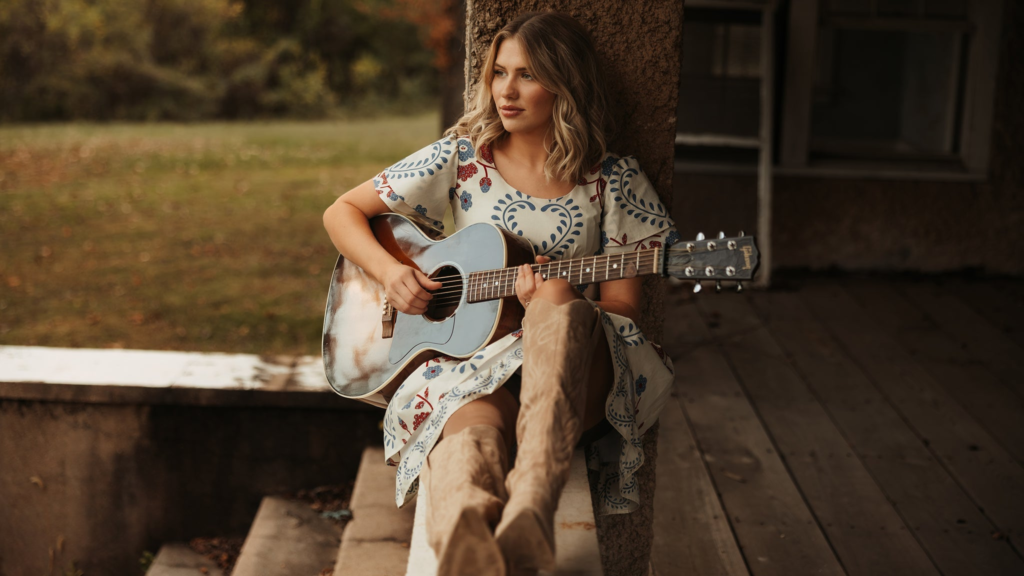
People don’t vote for the cleanest note—they vote for the feeling that stayed with them after the performance ended. The line they kept replaying in their head. The moment that felt like it was meant just for them. Hannah’s strength wasn’t in overpowering the stage—it was in softening it.
Even the judges’ reactions hinted at this shift. There’s a certain kind of silence that follows a technically perfect performance—respectful, appreciative. But what followed Hannah was different. It was reflective. Almost personal. The kind of pause that suggests something deeper just happened, even if no one can quite explain it.
That’s not accidental. That’s strategy disguised as instinct.
Because choosing emotion over technique isn’t about lacking skill—it’s about prioritizing impact. It’s knowing when to hold back instead of push forward. It’s understanding that sometimes the strongest note is the one you don’t sing.
Hannah’s Top 9 push wasn’t louder, bigger, or more technically complex than others. But it was more felt. And in a competition where everyone is good—where everyone can technically deliver—that difference becomes everything.
There’s also a long-term implication here. Artists who rely solely on technique often struggle to evolve beyond the competition. But those who build their identity around emotional authenticity? They carry something that lasts beyond a single stage. Hannah isn’t just positioning herself to advance—she’s positioning herself to matter.
And maybe that’s the real story beneath all of this.
Because the Top 9 isn’t just about survival—it’s about definition.
It’s about deciding who you are when the spotlight gets sharper and the margin for error gets thinner. Hannah didn’t choose perfection. She chose presence. She chose honesty. She chose the kind of performance that doesn’t scream for attention—but somehow refuses to be ignored.
And in doing so, she didn’t just navigate the trade-off between emotion and technique…
She quietly proved which one actually wins.